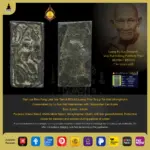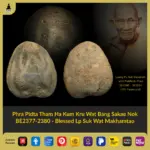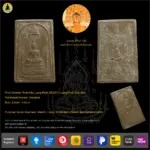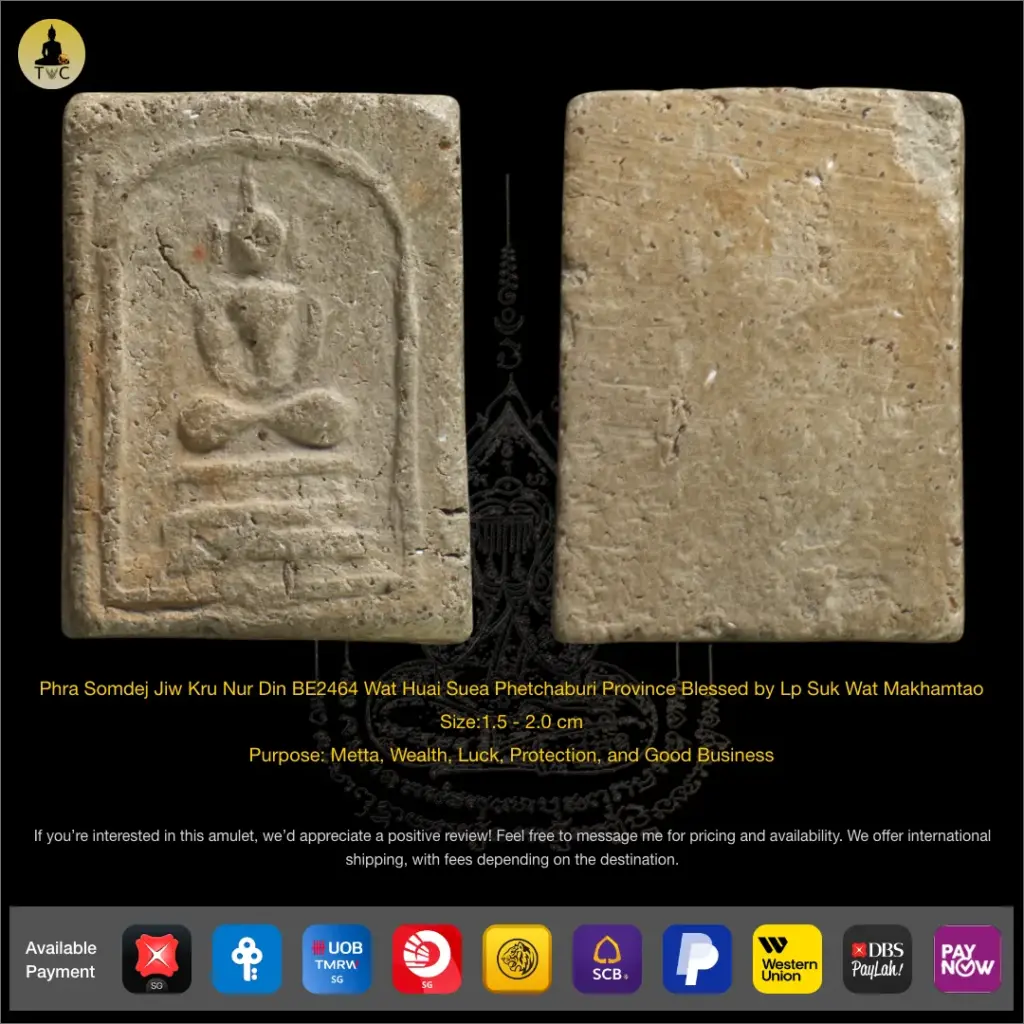
Phra Somdej Jiw Kru Nur Din BE2464 Wat Huai Suea Phetchaburi Province Blessed by Lp Suk Wat Makhamtao
| Type | Phra Somdej |
| Monk | Luang Phor Suk |
| Temple | Wat Makhamtao |
| B.E. Year | 2464 |
| Material | Din |
| SKU | TAC-0304 |
Authentic Phra Somdej Luang Phor Suk, Wat Makhamtao BE 2464. Din kru piece recovered from Wat Huai Suea, Phetchaburi.
What is the Phra Somdej Luang Phor Suk from Wat Makhamtao, BE 2464?
The Phra Somdej Luang Phor Suk is a din (pressed earth/clay) amulet consecrated in BE 2464 at Wat Makhamtao, Phetchaburi Province. This specific piece is a kru (temple-crypt recovery) specimen, recovered from Wat Huai Suea, and is among the documented pieces blessed directly by Luang Phor Suk of Wat Makhamtao.
Luang Phor Suk and why his blessing carries weight
Luang Phor Suk of Wat Makhamtao is one of the most respected masters from Phetchaburi Province. His reputation among collectors rests on decades of serious Wicha (esoteric Buddhist practice) and a documented lineage that is traceable through temple records and the pieces he personally consecrated.
In the broader Thai Buddhist amulet tradition, a monk’s personal involvement in the pluk sek (consecration ceremony) matters enormously to collectors. Pieces attributed to Luang Phor Suk are not simply temple-issued items — they are linked to his direct participation in the phutthaphisek (mass consecration). That distinction is what collectors argue over, and what drives the premium on genuine examples.
The nuea and what this kru piece tells us
The nuea (material/substance) here is din — plain pressed earth, no lacquer, no gilding. For many collectors, din nuea from this period is the more honest read of a piece’s age and authenticity. Sacred powder blends, long rak pit thong (lacquer-and-gold-leaf finish), and added decoration can obscure what is underneath. A din piece shows you exactly what you have.
This piece is a kru specimen — meaning it was recovered from a temple crypt, in this case at Wat Huai Suea in Phetchaburi Province. Kru recoveries from this era carry a particular gravity for collectors: the encapsulation inside a crypt acts as a controlled environment, and the provenance of the recovery site becomes part of the authentication story. Phetchaburi Province has a concentrated tradition of this, and Wat Huai Suea is a named recovery site, not an unnamed cache.
The pim (mould form collectors authenticate against) is the Jiw form — a proportionally compact Somdej silhouette that experienced collectors recognise at a glance. Authenticating the pim correctly against known reference pieces is the first step any serious buyer takes.
What a collector should check before buying
Din pieces from BE 2464 are over a hundred years old. The surface should show natural aging consistent with kru recovery — mineral deposits, soil patina, and in some cases micro-cracking along the edges. Artificially aged pieces tend to show uniform discolouration rather than organic variation.
- Pim accuracy: compare the Jiw silhouette against documented niyom (collector-standard reference) examples from Luang Phor Suk’s output.
- Surface patina: look for consistent kru soil deposits and natural mineral staining, not applied dirt or uniform browning.
- Base and back: check the reverse for age-consistent texture; pressed din from this period has a characteristic density and fine grain.
- Provenance: confirm the Wat Huai Suea recovery attribution against available documentation or committee records.
No certificate is listed for this piece. Collectors should factor that into their assessment and, where possible, seek a gammakan (committee) opinion from a recognised Thai amulet authentication body before purchase.
This is a din kru Phra Somdej in the Jiw pim, recovered from Wat Huai Suea in Phetchaburi Province and consecrated by Luang Phor Suk of Wat Makhamtao in BE 2464 — making it over a century old. For collectors focused on Phetchaburi Province masters or early twentieth-century din nuea pieces, this is a straightforward example of why Luang Phor Suk's output remains a reference point — the material is honest and the attribution is specific.
Attributes reflect Thai Buddhist devotional tradition and are not measurable claims.