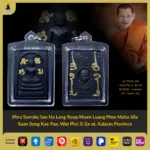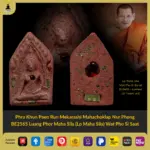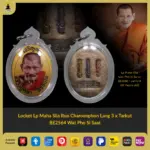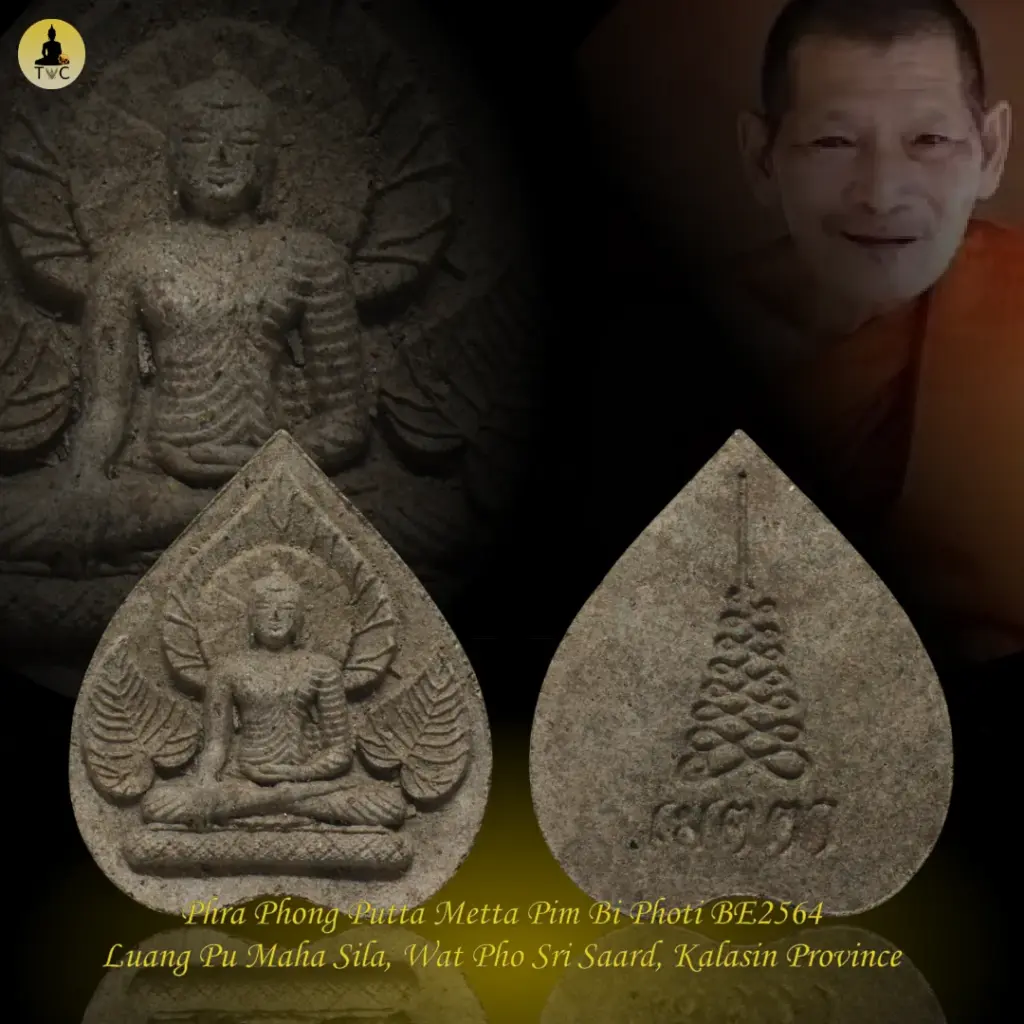
Phra Phong Putta Metta Pim Bi Photi Nur Phong Wahn BE2564 Luang Pu Maha Sila, Wat Pho Sri Saard, Kalasin Province
| Type | Phra Somdej |
| Monk | Luang Pu Maha Sila |
| Temple | Wat Pho Sri Saard |
| B.E. Year | 2564 |
| Material | Phong Wahn |
| SKU | TAC-0091 |
Authentic Phra Somdej by Luang Pu Maha Sila, Wat Pho Sri Saard, BE 2564. Pressed in Phong Wahn, Pim Bi Photi format, metta intention. No certificate.
What is the Phra Somdej Luang Pu Maha Sila from Wat Pho Sri Saard, BE 2564?
The Phra Somdej Luang Pu Maha Sila is a powder-based Buddha amulet issued in BE 2564 by Luang Pu Maha Sila of Wat Pho Sri Saard, Kalasin Province, Northeast Thailand. Pressed in the Pim Bi Photi format from Phong Wahn — a sacred herb-infused powder blend — it carries a metta (เมตตา, goodwill) intention and is documented without a third-party certificate.
Luang Pu Maha Sila and the metta tradition behind this piece
Luang Pu Maha Sila is a provincial forest-lineage monk based at Wat Pho Sri Saard in Kalasin, one of the quieter Isan provinces where monastic practice tends to stay close to community roots. Amulets attributed to him are typically named with clear devotional intent rather than power-heavy branding — and “Putta Metta” (พุทธเมตตา) is exactly that. The name translates roughly as Buddha-anchored goodwill: a moral orientation, not a miracle claim.
Within the broader Thai Buddhist amulet tradition, metta-focused pieces have a consistent place. They are chosen by people who deal with others daily — client-facing work, leadership, negotiations — because the intention is about softening the atmosphere rather than forcing outcomes. The “Putta” framing adds a grounding note: goodwill paired with conduct, not charm divorced from character.
The nuea and pim — what the powder body tells you
The nuea (material/substance) here is Phong Wahn, a phong (sacred powder blend) derived from herb-based sacred powders. Phong Wahn compositions vary by temple and batch, but the category is well understood in collecting circles: powder amulets of this type emphasise devotional carrying over display. The piece is pressed in the Pim Bi Photi (พิมพ์บีโพธิ์) format — “Photi” referencing the Bodhi tree, quietly aligning the design with awakening symbolism and mental steadiness.
For a BE 2564 piece, collectors look at two practical things first. Does the surface hold together cleanly — no chalky shedding, no patchy crumbling at the edges? And does the relief read consistently across the central image and border? Some metta-focused batches are pressed with a softer finish by design; the real check is coherence, not sharpness. A stable body with a readable relief is the baseline for cabinet documentation.
- Nuea: Phong Wahn — herb-infused sacred powder blend
- Pim: Bi Photi format — Bodhi-leaf framing, calm proportions
- Surface read: look for body stability and readable relief; edges should show honest handling
- Wear logic: keep dry, avoid prolonged heat; a simple casing protects the powder body in daily use
The listing does not specify a named run (batch/edition) or a documented phutthaphisek (consecration ceremony) programme. In Northeast Thai temple practice, powder issues of this kind are commonly produced to support community merit projects. The correct collector posture is to hold the attribution clearly — monk, temple, year, material — and note what is not yet documented rather than fill gaps with assumption.
Collector value and what no certificate means in practice
No third-party certificate accompanies this piece. That is a stated fact, not a defect to paper over. For a modern BE 2564 provincial issue, the absence of certification is common. Supporting materials from this period — batch cards, kata leaflets, temple announcements — often still exist, and a collector who sources them later can upgrade this from a clean listing record into a fully referenced batch entry.
Value here rests on four documented anchors: identifiable monk attribution, named temple, stated year, and a clear intention name. Pieces like this are typically kept in practice lines — daily-wear rotations chosen for specific intentions — rather than major investment lines. At SGD 48, it sits in accessible devotional territory. The mintage is not stated, so no scarcity claim is made.
We acquired this Phra Somdej Luang Pu Maha Sila from Wat Pho Sri Saard as part of our BE 2564 Isan provincial documentation series — it represents exactly the kind of clean, clearly attributed devotional piece we think belongs in a well-kept practice line. No third-party certificate accompanies this piece, which is typical for a modern provincial issue at this price point; the strength of the entry is the clarity of the attribution — monk, temple, year, and material are all documented.
Attributes reflect Thai Buddhist devotional tradition and are not measurable claims.