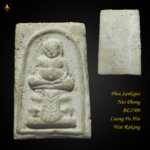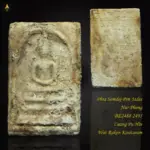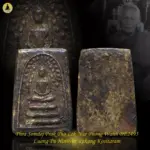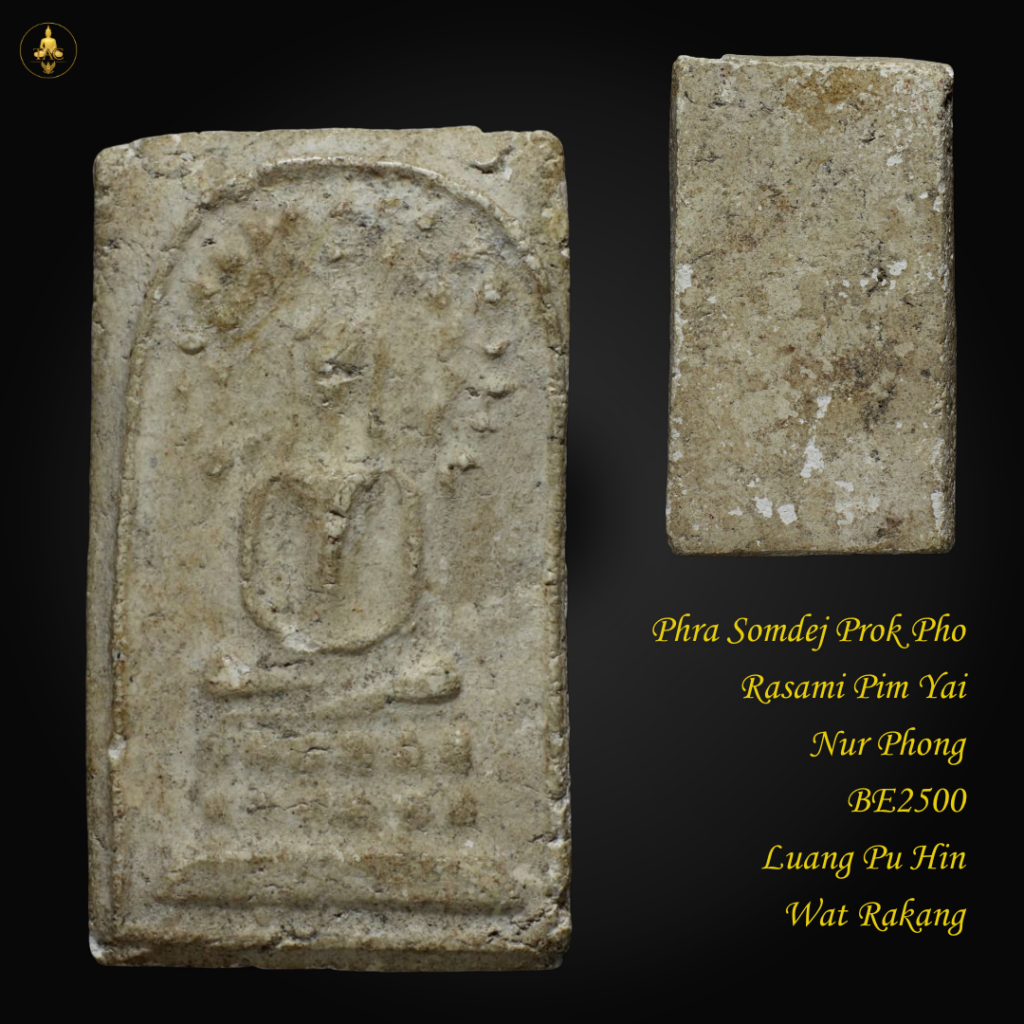
Phra Somdej Prok Pho Rasami Pim Yai Nur Phong BE2500 Luang Pu Hin Wat Rakang
| Type | Phra Somdej Prok Pho Rasami Pim Yai |
| Monk | Luang Pu Hin Wat Rakang Kositaram |
| Temple | Wat Rakang |
| B.E. Year | 2500 |
| Material | Nur Phong |
| Pim / Mold | Prok Pho Rasamee |
| Condition | Fair |
| SKU | TAC-PhraSomdejProkPhoRasamiPimYai-LpHin-001 |
Authentic Phra Somdej Prok Pho Rasami Pim Yai by Luang Pu Hin Wat Rakang Kositaram, BE 2500, Nur Phong. No certificate.
What is the Phra Somdej Prok Pho Rasami Pim Yai by Luang Pu Hin Wat Rakang Kositaram?
The Phra Somdej Prok Pho Rasami Pim Yai Luang Pu Hin Wat Rakang Kositaram is a sacred powder amulet pressed in the large pim (mould) format at Wat Rakang in BE 2500. Made from nuea phong — consecrated sacred powder — it was produced during the 2,500th anniversary of the Buddha’s enlightenment, a milestone that collectors across Asia continue to regard as exceptionally auspicious.
Why BE 2500 matters for this piece
BE 2500, corresponding to 1957 CE, was not an ordinary year in Thai Buddhist history. It marked exactly 2,500 years since the Buddha’s enlightenment — a half-millennial milestone that prompted large-scale religious observances across Thailand. Amulets consecrated that year carry a significance in collector circles that goes beyond the monk or temple alone; the year itself is part of the provenance.
The Thai Buddhist amulet tradition places heavy weight on the pluk sek (consecration ceremony) and the conditions surrounding it. A phutthaphisek conducted in BE 2500, at a temple with Wat Rakang’s standing, is the kind of combination that makes a piece genuinely hard to replace. Supply has only tightened over the past two decades.
The pim format here — Pim Yai, the large mould — means a broader surface, more visible iconographic detail, and generally stronger collector preference over smaller variants of the same edition. “Prok Pho” places the central Buddha image seated beneath the Bodhi tree at the moment of enlightenment. “Rasami” refers to the radiant aura surrounding the image, a design feature that distinguishes this face from plainer Somdej formats.
Luang Pu Hin and his connection to Wat Rakang
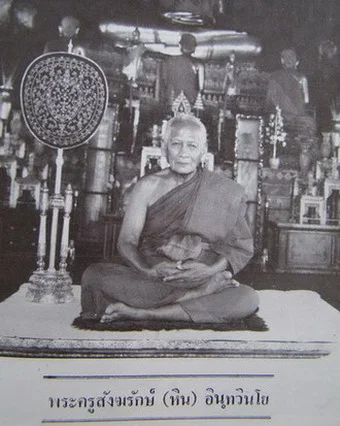
Luang Pu Hin Wat Rakang Kositaram was a monk whose mastery of wicha — the esoteric knowledge applied in Thai amulet consecration — earned him deep respect among practitioners and collectors. His work at Wat Rakang placed him within one of the most significant lineages in Thai amulet history. The temple on the west bank of the Chao Phraya River in Bangkok’s Thonburi district has been producing Phra Somdej amulets for generations, and its ceremonial protocols remain among the strictest in the tradition.
What collectors value in a Luang Pu Hin piece is the combination of his personal wicha and the institutional weight of Wat Rakang behind it. Neither element alone would carry the same force. Together, in a BE 2500 pressing, they produce a piece that sits near the top of the Somdej category for serious collectors in Singapore, Malaysia, Hong Kong, and across the Chinese-speaking market.
Nuea phong, the pim, and what to check
The nuea (material/substance) here is phong — sacred powder, the defining material of authentic Phra Somdej production. A genuine muan sarn (sacred powder blend) for a Wat Rakang piece typically incorporates consecrated white clay, dried floral offerings, powdered sacred herbs, and incense residue accumulated through years of temple ritual. Powdered relics from earlier venerated amulets and aromatic resins are also commonly included. The formula follows lineage-specific proportions passed down within the temple.
On a real Pim Yai pressing from this period, the phong surface has a fine-grained, slightly chalky finish. The mould impression should be clean and well-defined — look at the folds of the Buddha’s robe, the canopy of the Bodhi tree, and the Rasami halo detail. Softness or blur in those areas is a red flag. The reverse face and edge profile are also points experienced collectors check against known niyom (collector-standard reference) examples.
This piece carries no formal certificate. That is not unusual for amulets of this age — certification bodies formalised their processes well after BE 2500. Authentication relies on physical examination against documented reference pieces and, where possible, consultation with a specialist who has handled confirmed examples.
- Surface texture: fine-grained phong with age-consistent patina, not artificially whitened
- Pim impression: crisp robe folds, clear Bodhi canopy, distinct Rasami halo around the Buddha image
- Edge and reverse: consistent with known Wat Rakang pressings from this period
- No certificate — assess through physical comparison with niyom reference pieces
We acquired this Phra Somdej Prok Pho Rasami Pim Yai Luang Pu Hin Wat Rakang Kositaram as part of our BE 2500 holdings — a year that collectors consistently prioritise for its significance in Thai Buddhist history. For collectors building a serious Somdej collection, a Wat Rakang piece from this year in Pim Yai format is genuinely difficult to source in presentable condition, and that scarcity is reflected in sustained collector interest across our Singapore, Malaysian, and Chinese-speaking markets.
Attributes reflect Thai Buddhist devotional tradition and are not measurable claims.