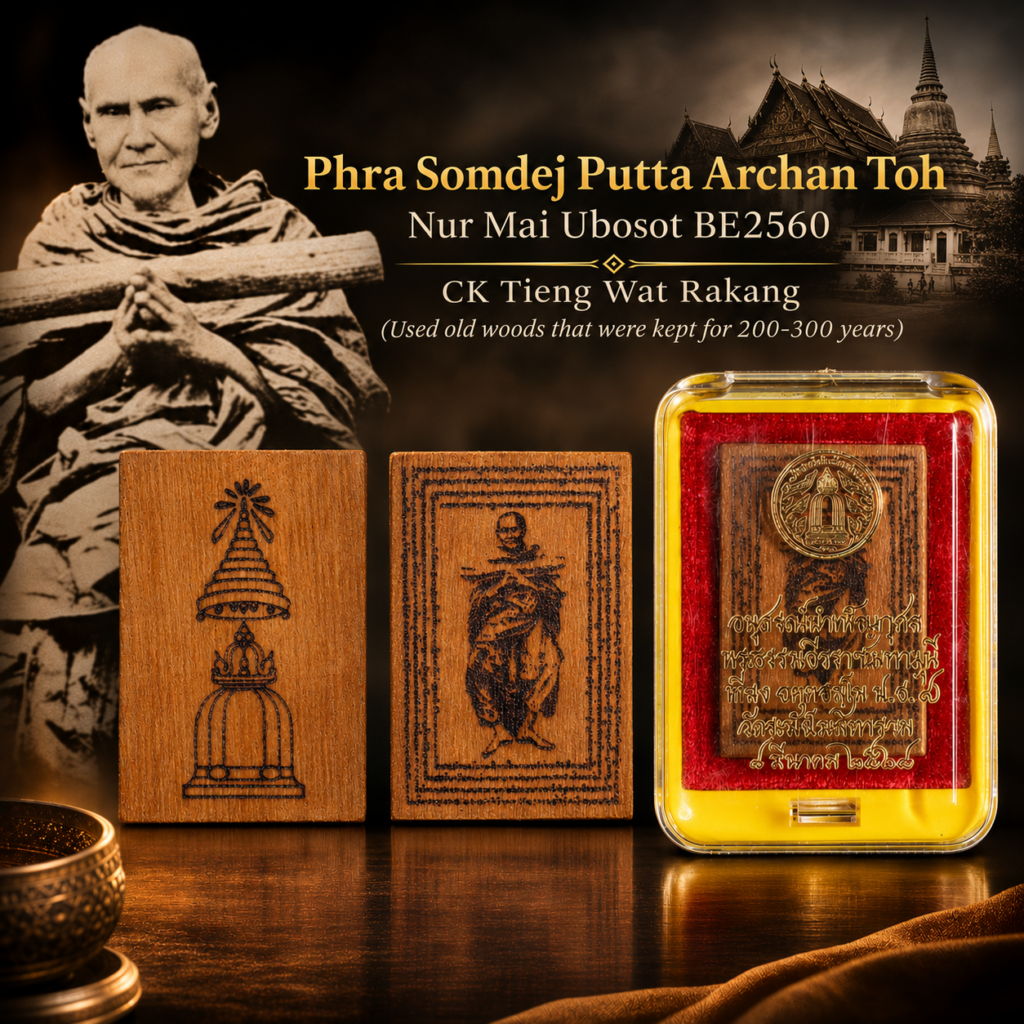
Phra Somdej Putta Archan Toh Nur Mai Ubosot BE2560 Chao Khun Tieng Wat Rakang (used old woods that were kept for 200-300 years)
| Type | Phra Somdej Putta Archan Toh |
| Monk | Chao Khun Tieng (CK Tieng) (Phra Thammathirat Ratchamuni) Wat Rakang Kositaram |
| Temple | Wat Rakang |
| B.E. Year | 2560 |
| Material | Nur Mai Ubosot (used old woods that were kept for 200-300 years) |
| Condition | Excellent |
| SKU | TAC-PhraSomdejPuttaArchanToh-ChaoKhunTieng-001 |
Authentic Phra Somdej Putta Archan Toh by Chao Khun Tieng, Wat Rakang BE 2560. Pressed from Nur Mai Ubosot — aged sacred wood held for 200–300 years. Singapore dealer TAC.
What is the Chao Khun Tieng Phra Somdej Putta Archan Toh from Wat Rakang BE 2560?
The Phra Somdej Putta Archan Toh Chao Khun Tieng is a Somdej-form amulet produced at Wat Rakang in BE 2560. Its nuea (the substance of the amulet) is Nur Mai Ubosot — old sacred wood drawn from ordination-hall timber that had been stored and aged for 200 to 300 years before pressing. No certificate accompanies this piece.
Chao Khun Tieng and what his name means on a Wat Rakang piece
Chao Khun Tieng held senior ecclesiastical rank and maintained a close association with Wat Rakang — the temple that is inseparable from the Phra Somdej tradition. When a senior monk of that rank produces a Somdej at Wat Rakang, collectors pay attention. The lineage of the place carries weight, and the monk’s standing in the Sangha is part of what makes the pluk sek (the consecration ceremony) credible rather than ceremonial.
Wat Rakang has been the reference point for Phra Somdej amulets since the era of the Thai Buddhist amulet tradition took its modern shape. A BE 2560 piece from that temple, by a monk of Chao Khun rank, sits in a clear historical line — not a copy of that tradition, but a continuation of it.
The nuea: why 200–300 year old ordination-hall wood matters
The nuea here is not standard Somdej powder paste. This batch was pressed from Nur Mai Ubosot — timber from an ubosot (ordination hall) that had absorbed decades of phutthaphisek ceremonies, chanting and consecrated use before the wood was ever broken down for amulet making. The trees themselves were old before the building; by the time this material was pressed, it had accumulated 200 to 300 years of that kind of environment.
For collectors who have handled wood-based nuea before, the density and scent are usually the first things noticed. The muan sarn (the blend of sacred materials in the mix) draws directly from the sanctity already embedded in that timber. That is a different proposition from a powder-paste Somdej, and experienced collectors treat it as a distinct category.
What to look at when you have this piece in hand
With a wood-pressed pim (the mould model the amulet is authenticated against), the surface texture reads differently from chalk-based paste. Look for:
- Consistency in the grain pattern of the pressed wood across the face — a genuine press from aged timber shows natural variation, not a uniform smooth cast.
- The sharpness of the seated Buddha image in the pim — the relief definition on a correctly struck piece should hold its lines cleanly.
- Colour depth across the surface — Nur Mai Ubosot tends toward warm, muted tones rather than bright or uniform colouring.
This piece does not come with a certificate. That places the authentication burden squarely on the collector’s eye and on the provenance trail back to TAC as a Singapore-based dealer with records of this batch. Keep your purchase documentation.
This is a BE 2560 Phra Somdej Putta Archan Toh from Wat Rakang by Chao Khun Tieng, pressed in Nur Mai Ubosot — timber from an ordination hall aged 200 to 300 years before it was used in production. The nuea alone sets this apart from standard powder-paste Somdej pieces, and the Wat Rakang address combined with a Chao Khun-rank monk means the consecration credentials are solid. No certificate comes with this piece, so we recommend buyers keep their TAC purchase record as the provenance anchor.
Attributes reflect Thai Buddhist devotional tradition and are not measurable claims.