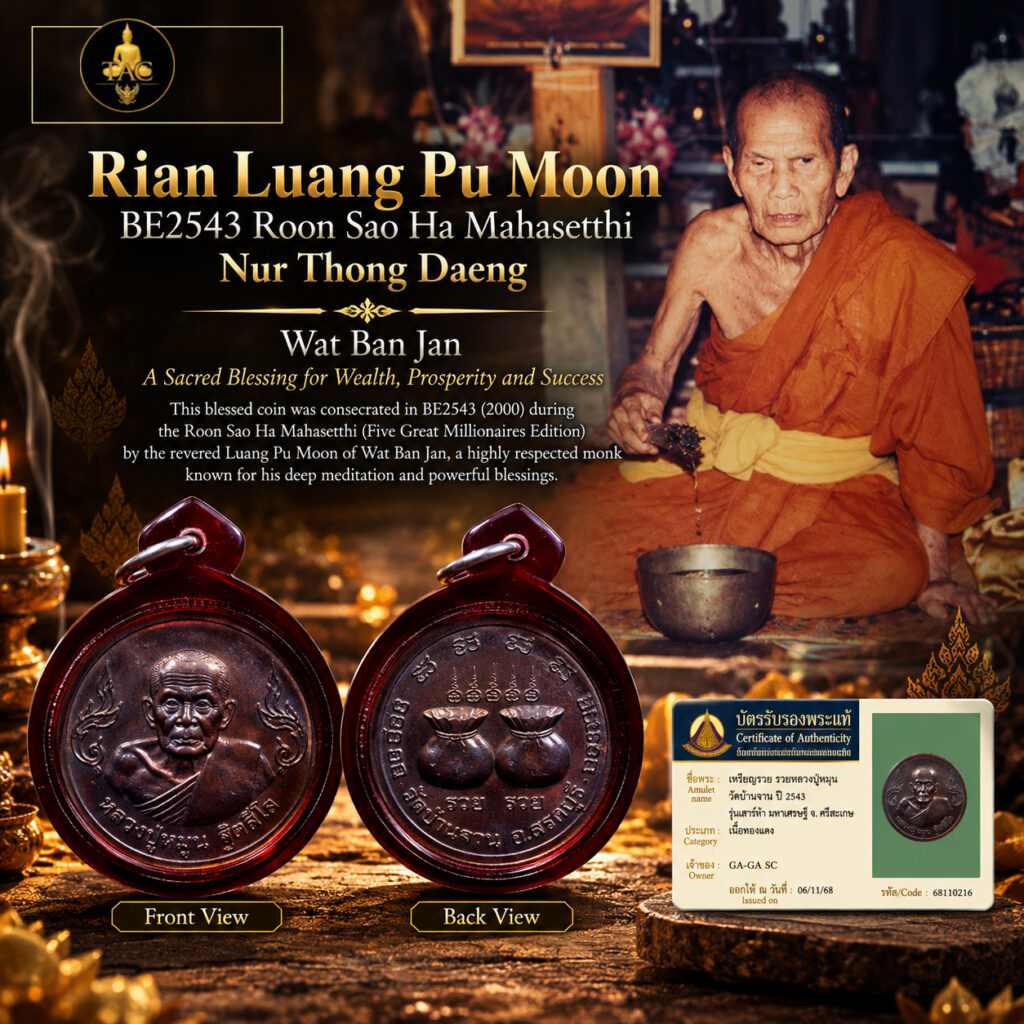
Rian Luang Pu Moon, BE2543 Roon Sao Ha Mahasetthi Nur Thong Daeng, Wat Ban Jan
| Type | Rian |
| Monk | Luang Pu Moon Wat Ban Jan |
| Temple | Wat Ban Jan |
| B.E. Year | 2543 |
| Material | Nur Thong Daeng |
| Condition | Very Good |
| Certificate | Thaprachan |
| SKU | TAC-0708 |
Authentic Rian Luang Pu Moon Wat Ban Jan, BE 2543 Roon Sao Ha Mahasetthi. Nur Thong Daeng, Thaprachan certified. Available from TAC Singapore dealer.
What is the Rian Luang Pu Moon Wat Ban Jan BE 2543?
The Rian Luang Pu Moon Wat Ban Jan BE 2543, issued as the Roon Sao Ha Mahasetthi batch, is a Nur Thong Daeng (red copper alloy) commemorative medal struck at Wat Ban Jan in Sisaket Province. Consecrated in a full phutthaphisek (consecration ceremony) by senior Forest Tradition masters, it carries Thaprachan certification and is collected across Singapore, Malaysia, Taiwan, and Hong Kong.
Luang Pu Moon and where this piece sits in his lineage
Luang Pu Moon Wat Ban Jan — full name Luang Pu Moon Phurithatto — is widely regarded as the foundational figure of the Thai Forest Tradition. His decades of strict samadhi (deep meditative absorption) practice, rigorous vinaya (monastic code) observance, and wandering tudong (ascetic pilgrimage) defined a lineage that continues to attract serious devotees and collectors alike.
The BE 2543 batch was created during a period of renewed scholarly and devotional attention to that lineage. It served two clear purposes: a sacred keepsake for the monk’s disciples, and a means of raising funds for Wat Ban Jan’s Dhamma propagation work. The timing was deliberate — the Sao Ha period, the fifth lunar month, is traditionally considered especially auspicious for the creation of prosperity-related amulets in Thai Buddhist practice.
Consecration followed a multi-day phutthaphisek ceremony presided over by Forest Tradition elders. Chanting was centred on Metta and Vipassana blessings, a direct reflection of the doctrinal purity associated with Luang Pu Moon Phurithatto’s lineage. That rigorous ritual grounding is precisely what collectors point to when they discuss the spiritual authority of pieces from this batch.
The nuea, the pim, and what makes this batch read right
Nur Thong Daeng — red copper alloy — was chosen for good reason. It strikes cleanly, holds fine-grain detail well, and develops a natural oxidation patina over time that experienced collectors treat as both an authentication marker and part of the piece’s character. Pieces from the Roon Sao Ha Mahasetthi pim (mould) that still show intact surface texture and undisturbed patina after more than two decades are the ones serious buyers want.
The obverse carries a deep-relief portrait of Luang Pu Moon, facial detail pronounced and the meditative composure captured clearly. The reverse bears inscribed yant (sacred inscriptions) and meditative symbols characteristic of consecrations within the Luang Pu Moon lineage. The strike quality on this pim is considered fine-grain — not a rough production piece.
For anyone coming to this area of collecting for the first time, the broader context of how medals like this function within Theravada devotional practice is covered well in the Wikipedia overview of the Thai Buddhist amulet tradition. The Rian Luang Pu Moon Wat Ban Jan sits squarely in the commemorative medal category — posthumous tributes to recognised masters that sustain a living connection between monastery and lay community.
What collectors look for, and how this piece is certified
Thaprachan is one of Thailand’s most respected amulet authentication bodies. This piece carries a Thaprachan certificate confirming both authenticity and verified batch lineage. In the secondary market, that certificate makes a meaningful difference — certified examples from this batch consistently command a premium over uncertified equivalents.
When assessing a piece from the Roon Sao Ha Mahasetthi batch, experienced collectors check for:
- Natural, undisturbed oxidation patina consistent with more than two decades of age
- Intact surface texture and fine-grain strike detail on the portrait
- Clear yant inscription on the reverse, unaltered and properly formed
- Original vintage waterproof casing, which preserves surface condition and functions as an additional provenance indicator
- Thaprachan certification document matching the piece
Each piece TAC offers comes in its original vintage waterproof casing. That casing matters — it protects the patina that authenticators look at, and it tells its own story of how the piece has been kept.
Among Forest Tradition riau, the Roon Sao Ha Mahasetthi batch from Wat Ban Jan holds a firm place in serious collections precisely because it unites two factors collectors rarely find together: consecration timing during the auspicious fifth lunar month and a lineage traceable directly to Luang Pu Moon Phurithatto, the foundational figure of Thai Forest Tradition practice. The Nur Thong Daeng casting is a material choice we at TAC regard as significant — copper alloys from this era and this temple carry a density and tone that distinguishes them immediately from later commercial pressings. The accompanying Thaprachan certificate provides the authentication documentation that collectors in Singapore and the broader Southeast Asian market now rightly expect before committing to a piece of this period.
Attributes reflect Thai Buddhist devotional tradition and are not measurable claims.


