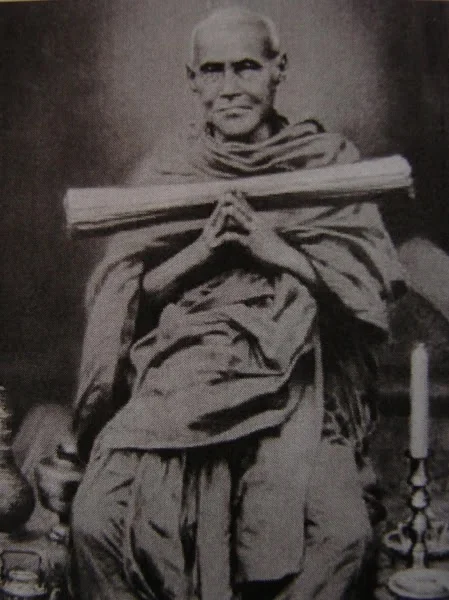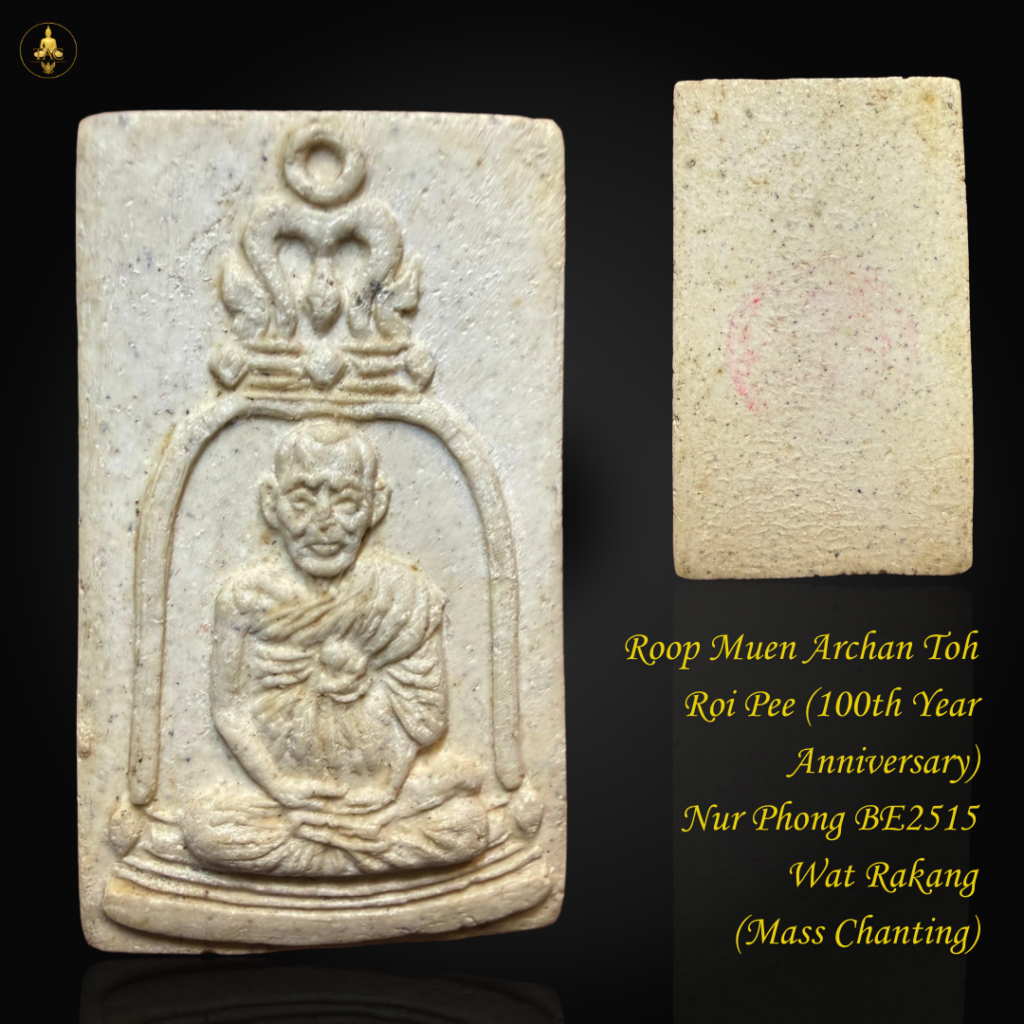
Roop Muen Archan Toh Roi Pee (100th Year Anniversary) Nur Phong BE2515 Wat Rakang (Mass Chanting)
| Type | Roop Muen Archan Toh Roi Pee |
| Monk | Somdej Toh Phrommarangsi, Wat Rakang |
| Temple | Wat Rakang Kositaram |
| B.E. Year | 2515 |
| Material | Nur Phong |
| Condition | Good |
| SKU | TAC-RoopMuenArchanTohRoiPee-MassChanting-001 |
Authentic Roop Muen Archan Toh Roi Pee by Somdej Toh Phrommarangsi, Wat Rakang. BE 2515 Wat Rakang Kositaram. Nur Phong, no certificate.
What is the Roop Muen Archan Toh Roi Pee Somdej Toh Phrommarangsi, Wat Rakang?
The Roop Muen Archan Toh Roi Pee Somdej Toh Phrommarangsi, Wat Rakang is a commemorative amulet produced at Wat Rakang Kositaram in BE 2515 to mark the 100th anniversary of Somdej Toh Phrommarangsi’s passing. Pressed from nuea phong — sacred powder — and consecrated through a large-scale mass chanting ceremony, it sits firmly in the vintage category and carries no accompanying certificate.
The 100th Anniversary Issue and Why It Was Made
“Roi Pee” means one hundred years. This amulet was produced specifically to honour that centenary milestone — the 100th year since the passing of Somdej Toh Phrommarangsi, Wat Rakang, the monk collectors consider the father of the Somdej amulet tradition. That context is baked into every piece from this run, not just as a label but as the reason the issue was authorised at all.
The consecration took the form of a phutthaphisek (grand consecration ceremony) conducted through mass chanting — a gathering of respected monks reciting sacred Pali verses collectively. Within the Thai Buddhist amulet tradition, mass chanting ceremonies of this scale are regarded as among the most thorough methods of consecration, with the combined intention of many monks believed to amplify what a single blessing cannot.
Wat Rakang Kositaram and What the Temple Adds to This Piece
Wat Rakang Kositaram on the Thonburi bank of the Chao Phraya is where Somdej Toh lived, worked, and produced his most important amulets. The temple has been a centre of royal patronage and Buddhist learning since the early Rattanakosin period. For collectors, that address on an amulet carries real weight — Wat Rakang issues are benchmarked against, not compared to.
The BE 2515 commemorative issue draws directly on that standing. It was not produced by a committee at an outside venue — it came out of the temple most associated with Somdej Toh himself. That origin is a significant part of what collectors are paying for when they acquire one of these pieces.
The Nuea Phong and What to Look For
This piece is pressed in nuea phong — a muan sarn (sacred powder blend) that traditionally incorporates finely ground herbs, consecrated earths, dried floral offerings, and powdered relics accumulated through years of ritual use. The powder for the BE 2515 issue at Wat Rakang Kositaram was prepared following the temple’s established methods, mixed and pressed under conditions of ritual purity. The resulting material has a warm, compact, earthy character that is consistent with genuine sacred powder production from this era.
At over fifty years old, a genuine example will show natural aging in the phong itself — slight surface crazing, a density and texture that settles differently from modern pressings. The pim (mould impression) of Somdej Toh’s image should be clearly defined, with fine relief detail that remains legible without looking artificially sharpened. These are the physical markers experienced collectors cross-reference first.
There is no certificate with this piece. Authentication therefore depends on the physical evidence of the amulet itself and the provenance of the dealer. Key points to examine:
- Surface crazing and powder density consistent with 50-plus years of natural aging
- Mould sharpness — fine detail present but not artificially enhanced
- Patina tone appropriate to genuine Nur Phong from this period
- Absence of signs of artificial aging or modern reproduction
- Dealer provenance and documented inventory history
This Roop Muen Archan Toh Roi Pee is one of the more historically grounded pieces we carry — a 100th-anniversary commemorative from Wat Rakang Kositaram, pressed in nuea phong and consecrated through mass chanting in BE 2515. For a collector focused on Somdej Toh lineage pieces, a genuine BE 2515 example from the temple itself is a meaningful addition to any serious holding.
Attributes reflect Thai Buddhist devotional tradition and are not measurable claims.