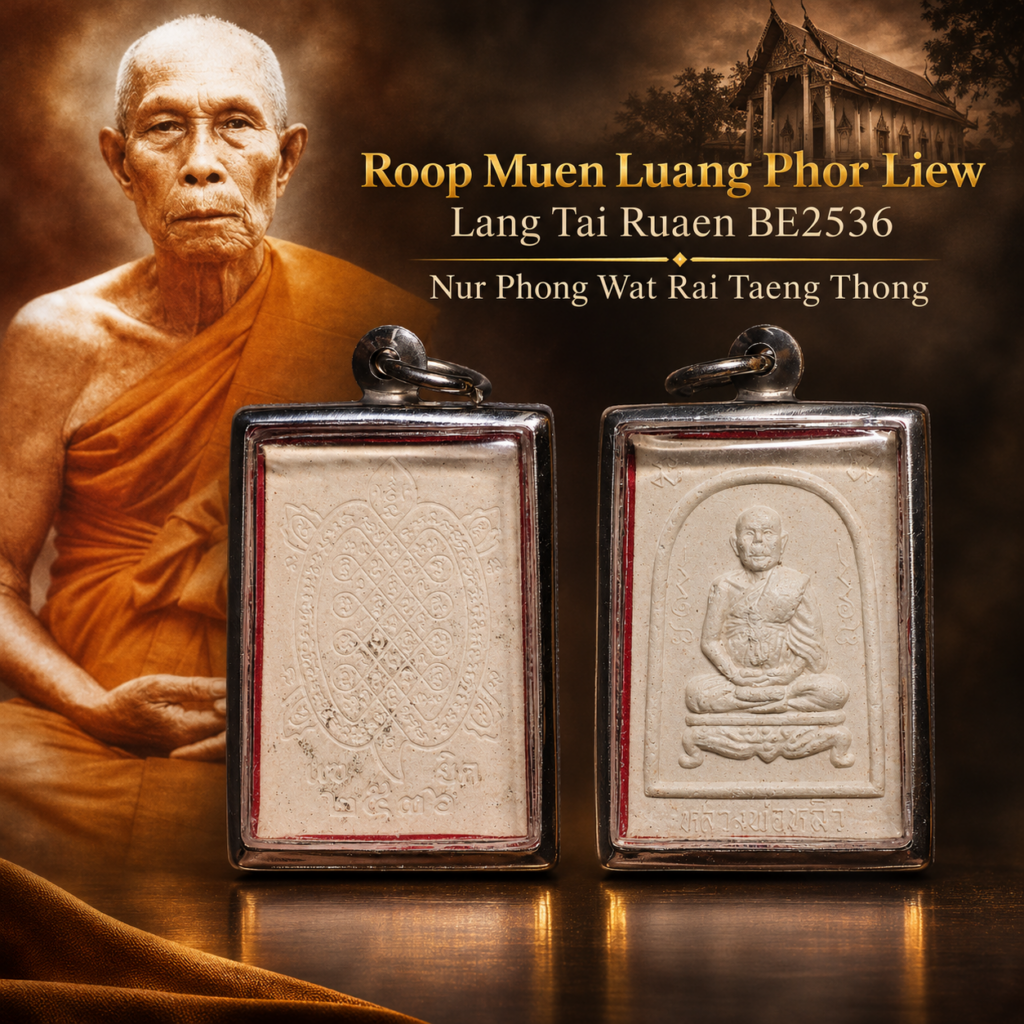
Roop Muen Luang Phor Liew Lang Tai Ruaen BE2536 Nur Phong Wat Rai Taeng Thong
| Type | Roop Muen Luang Phor Liew Lang Tai Ruaen |
| Monk | Luang Phor Liew (Lp Liew) Wat Rai Taeng Thong |
| Temple | Wat Rai Taeng Thong |
| B.E. Year | 2536 |
| Material | Nur Phong |
| Condition | Very Good |
| SKU | TAC-RoopMuenLuangPhorLiewLangTaiRuaen-LpLiew-001 |
Authentic Roop Muen Luang Phor Liew Lang Tai Ruaen by Luang Phor Liew, Wat Rai Taeng Thong, BE 2536. Pressed in nur phong. Singapore dealer TAC.
What is the Roop Muen Luang Phor Liew Lang Tai Ruaen from Wat Rai Taeng Thong?
The Roop Muen Luang Phor Liew Lang Tai Ruaen BE2536 Nur Phong Wat Rai Taeng Thong by Luang Phor Liew is a portrait style amulet. Pressed in nur phong — sacred powder — this piece bears a rear face (lang tai ruaen) design that collectors specifically track as a distinct pim variant from this release.
Luang Phor Liew and why this monk’s pieces hold up over time
Luang Phor Liew of Wat Rai Taeng Thong occupies the kind of place in collector circles that comes from a consistent track record — devotees across Thailand have long associated his amulets with strong metta and protection, and demand from the Thai market itself is usually the clearest indicator of a monk’s standing. BE 2536 sits in the early-to-mid modern era, a period when temple productions were still tightly managed and the muan sarn quality was high before large commercial pressings became the norm.
His roop muen pieces — literally portrait cast or pressed in his likeness — are valued precisely because they carry the monk’s direct image. For collectors who follow the Thai Buddhist amulet tradition, a roop muen is considered especially intimate: you are carrying the teacher himself, not a symbolic representation.
Reading the nuea and the pim on this piece
This example is pressed in nur phong, meaning the body is formed from a compound of sacred powders rather than metal or clay. Phong-based amulets from the early-to-mid BE 2500s typically carry a compressed, dense feel in hand — lighter than a coin but with more structural integrity than a simple clay tablet. The muan sarn blend is specific to Wat Rai Taeng Thong’s production and reflects what was consecrated during the temple’s pluk sek ceremony for this batch.
The defining feature of this particular pim is the lang tai ruaen — the underside-of-the-eaves rear design, which collectors use as a primary authentication reference point. When examining a piece, you are looking at that rear face geometry as much as the obverse portrait. Surface consistency in the phong, sharpness of the mould impression, and any yant inscriptions on the reverse are what a sien will check first against reference examples.
- Rear face: lang tai ruaen design — the pim’s distinguishing feature
- Nuea: nur phong (sacred powder compound)
- Temple of origin: Wat Rai Taeng Thong, BE 2536
- Key checks: mould sharpness, phong density, rear yant or inscription clarity
What collectors and devotees carry this piece for
Devotees traditionally carry Luang Phor Liew’s amulets for metta — the quality of lovingkindness that eases dealings with people and smooths obstacles in daily life. Among collectors in Singapore, Malaysia and Thailand, his portrait pieces are associated with charisma and personal authority rather than purely wealth-based intent. That distinction matters when you are deciding how a piece fits into a collection or a wearable set.
As a Singapore-based dealer, TAC sources and verifies pieces from this monk’s productions precisely because demand from Thai collectors — the most exacting audience — has remained steady. That is the floor under any serious piece from this temple.
This is a nur phong roop muen from Luang Phor Liew of Wat Rai Taeng Thong, pressed in BE 2536 in the lang tai ruaen pim — the rear design variant that collectors specifically track for this release. For collectors building around metta-intent pieces from the mid-2500s era, this monk's portrait amulets from Wat Rai Taeng Thong have held consistent regard in the Thai market, which is usually the most reliable gauge we look at.
Attributes reflect Thai Buddhist devotional tradition and are not measurable claims.


