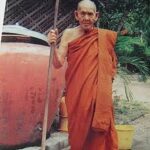
Archan Tim
Archan Tim (อาจารย์ทิม), also reverently known as Luang Phor Tim (หลวงพ่อทิม), was a highly venerated Buddhist monk born in BE 2455 (AD 1912) in the southern Thai province of Pattani (ปัตตานี), ordained and based at Wat Changhai Rat Buranaram (วัดช้างให้ราษฎร์บูรณาราม), one of the most historically significant temples in southern Thailand. He is most celebrated in Thai amulet collector culture for producing the legendary Phra Pidta (พระปิดตา) amulets and a wide range of sacred objects consecrated through deep mastery of southern Thai occult and Theravada Buddhist traditions, making Wat Changhai one of the most important pilgrimage and amulet-collecting destinations in the entire Thai-Malay peninsula. His amulets are widely regarded among collectors across Singapore, Malaysia, Thailand, Hong Kong, Taiwan, and China as among the most powerful and sought-after sacred objects ever produced in the southern Thai tradition. Read more ↓
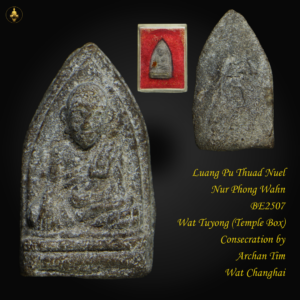
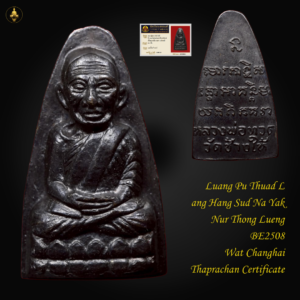
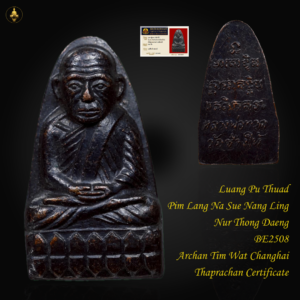
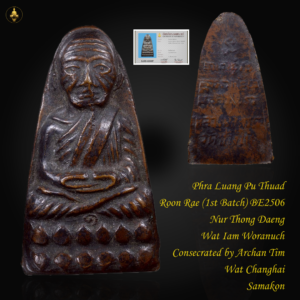
Amulets by Archan Tim 5 total · 3 available
Biography
Who Was Archan Tim?
Archan Tim (อาจารย์ทิม), also reverently known as Luang Phor Tim (หลวงพ่อทิม), was a highly venerated Buddhist monk born in BE 2455 (AD 1912) in the southern Thai province of Pattani (ปัตตานี), ordained and based at Wat Changhai Rat Buranaram (วัดช้างให้ราษฎร์บูรณาราม), one of the most historically significant temples in southern Thailand. He is most celebrated in Thai amulet collector culture for producing the legendary Phra Pidta (พระปิดตา) amulets and a wide range of sacred objects consecrated through deep mastery of southern Thai occult and Theravada Buddhist traditions, making Wat Changhai one of the most important pilgrimage and amulet-collecting destinations in the entire Thai-Malay peninsula. His amulets are widely regarded among collectors across Singapore, Malaysia, Thailand, Hong Kong, Taiwan, and China as among the most powerful and sought-after sacred objects ever produced in the southern Thai tradition.
Early Life and Ordination
Archan Tim (อาจารย์ทิม) was born in BE 2455 (AD 1912) in Pattani Province (จังหวัดปัตตานี), a region in the deep south of Thailand historically characterised by its rich blend of Theravada Buddhist and Malay-influenced cultural traditions. The precise details of his family background and childhood village are not widely documented in English sources, though oral histories preserved at Wat Changhai Rat Buranaram suggest he came from a devout Buddhist family with roots in the local community surrounding the temple.
He entered the monastic order at a young age, as was customary for pious young men in the region, receiving his full higher ordination (Upasampadā, อุปสมบท) at Wat Changhai Rat Buranaram. From early in his monastic career, Archan Tim demonstrated an exceptional aptitude for both scriptural learning and the esoteric Wicha (วิชา) — the sacred knowledge traditions of southern Thailand. His ordination at this historic temple, which traces its founding to the Ayutthaya period, placed him within a lineage of formidable monk-masters whose spiritual authority resonated deeply with both local devotees and collectors across the wider Southeast Asian region.
Spiritual Development and Practice
Archan Tim’s spiritual development was shaped profoundly by the distinctive religious culture of southern Thailand, where Theravada Buddhist orthodoxy interweaves with a deep current of tantric-influenced esoteric practice known broadly as Saiyasat (ไสยศาสตร์) or southern Wicha. He studied under senior monks and Archan masters within and around Pattani Province, absorbing lineage teachings that stretched back through generations of temple abbots at Wat Changhai Rat Buranaram.
His practice is described by devotees as encompassing both Samatha (สมถะ) — the cultivation of meditative calm and concentration — and the applied sacred arts including the composition of sacred Yant (ยันต์), the recitation of Kata (คาถา, sacred verses), and the consecration of amulets and talismanic objects through extended Pluk Sek (ปลุกเสก) ceremonies. The southern Thai forest and temple traditions place great emphasis on the spiritual power accumulated by a monk through decades of disciplined practice, and Archan Tim’s long residency at Wat Changhai, combined with his mastery of these lineage arts, is considered by collectors and devotees alike to be the source of the extraordinary sacred potency (Saksit, ศักดิ์สิทธิ์) attributed to his blessed objects. His reputation grew steadily throughout the mid-twentieth century, drawing devotees from across southern Thailand, northern Malaysia, and beyond.
Major Amulet Consecrations and Ceremonies
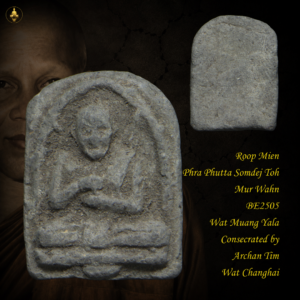
Archan Tim is most widely associated in collector culture with Phra Pidta (พระปิดตา) amulets — the iconic closed-eyed Buddha image symbolising the turning away from worldly suffering and the attraction of wealth and protection — as well as Phra Somdej (พระสมเด็จ) images, Rian (เหรียญ, coin-type amulets), Roop Muean (รูปเหมือน, likeness images of the monk himself), and various Takrut (ตะกรุด, sacred metal scroll talismans) produced under his supervision and direct consecration at Wat Changhai Rat Buranaram. These categories represent the primary amulet types that appear in the southern Thai collector market and in specialist auction records across Singapore, Malaysia, and Thailand.
Specific batch records — including precise BE year of issue, batch names, detailed material compositions, and ceremony particulars — are not widely documented in English sources. Collectors and researchers seeking comprehensive batch-level documentation are strongly advised to consult Thai-language temple records at Wat Changhai Rat Buranaram directly, as well as specialist Thai amulet publications and grading bodies such as G-Pra (จีพระ) and the various Samakom (สมาคม, collector associations) that maintain certified records for authenticated pieces from this temple.
Legacy and Temple Significance
Archan Tim’s legacy endures as one of the most revered figures in the spiritual heritage of Wat Changhai Rat Buranaram and of Pattani Province as a whole. The temple itself, believed to have been established during the late Ayutthaya period and associated with the veneration of the sacred white elephant relic enshrined within its grounds, holds a place of immense importance in the religious geography of southern Thailand. Archan Tim’s decades of practice, teaching, and amulet consecration at this site deepened its sacred reputation considerably.
Today, devotees and collectors from across Southeast Asia — including large communities in Singapore, Penang, Kuala Lumpur, Bangkok, and Hong Kong — make pilgrimage to Wat Changhai to pay respects at Archan Tim’s memorial shrine and to seek blessings at the temple. His Roop Muean statues and sacred images are maintained with great reverence within the temple compound. Annual merit-making ceremonies and kathin (กฐิน) robe-offering events at Wat Changhai continue to attract thousands of devotees, and his amulets remain among the most actively traded and certified pieces in the southern Thai amulet collector market.