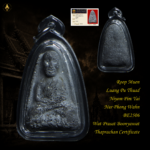
Luang Pu Thuad Pim Yai Nur Phong Roi Rae Sased (sprinkled holy minerals) BE2506 Wat Prasat Boonyawat
| Type | Luang Pu Thuad Pim Yai |
| Monk | Luang Pu Thuad |
| Temple | Wat Prasat |
| B.E. Year | 2506 |
| Material | Nur Phong Roi Rae Sased (sprinkled holy minerals) |
| Condition | Fair |
| Certificate | Others |
| SKU | TAC-LuangPuThuadPimYai--001 |
Authentic Luang Pu Thuad Pim Yai by Luang Pu Thuad, Wat Prasat BE 2506. Nur Phong Roi Rae Sased (sprinkled holy minerals). Certified Others.
What is the Luang Pu Thuad Pim Yai by Luang Pu Thuad from Wat Prasat, BE 2506?
The Luang Pu Thuad Pim Yai Luang Pu Thuad is a large-mould protection amulet produced by Wat Prasat in BE 2506. Pressed from Nur Phong Roi Rae Sased — a sacred powder base sprinkled with holy minerals — and consecrated under traditional Thai Buddhist ceremonial protocols, this edition holds strong standing among collectors across Singapore, Malaysia, and Greater China.
The monk behind the image — and why this edition matters
Luang Pu Thuad is one of the most widely recognised figures in Southern Thai Buddhist history. The miracle most often cited is the purification of seawater into fresh water — an event that has anchored his reputation across generations and made his image the subject of amulet editions from temples throughout the region. Collectors do not need to be convinced of his standing; the demand speaks for itself.
What matters with any Luang Pu Thuad edition is which temple made it, in which year, and how it was consecrated. The BE 2506 run from Wat Prasat sits in a period when material standards and ritual discipline in Thai amulet production were taken seriously. That context lifts this piece above a generic tribute image.
For collectors new to the Thai Buddhist amulet tradition, BE 2506 corresponds to 1963 CE — placing this amulet at over six decades of age, well inside the vintage category that draws sustained attention from specialist buyers in Singapore, Taiwan, and Hong Kong.
The nuea and the pim — what you are actually holding
The material here is Nur Phong Roi Rae Sased. In plain terms: a phong (sacred powder) base into which holy mineral particles — rae sased — have been sprinkled and blended before pressing. The mineral content is not decorative. It is distributed through the body of the piece, and under magnification you can see the particles sitting within the pressed surface rather than sitting on top of it. That distinction matters when you are checking authenticity.
Pim Yai means the large mould. Compared to smaller format editions, the Pim Yai gives the craftsmen more surface area to work with, and on genuine BE 2506 examples the result is sharper facial definition and cleaner robe line detail than you typically see on smaller-format pieces from the same period. The mould impression quality is one of the first things an experienced eye checks.
- Mineral particles distributed within the pressed body — not surface-applied
- Sharp, consistent facial and robe detailing from the Pim Yai mould
- Naturally aged surface patina consistent with six-plus decades of wear
- Even powder density across the amulet face — no pitting or collapse in the relief
The certificate on this piece falls under the Others category. That means authentication should still cross-reference known reference examples for this edition — surface characteristics and material consistency remain your primary physical checkpoints. When in doubt, bring it to a dealer or specialist with documented experience handling BE 2506 Wat Prasat editions before committing.
What collectors associate this piece with
Across Thailand, Singapore, Malaysia, and Greater China, wearers of Luang Pu Thuad Pim Yai amulets traditionally carry them for kong krapan (protection against physical harm and accidents) and maha ud (a spiritual barrier against ill intent and negative forces). A third association — choke lap (auspicious fortune and opportunity) — is also common among devotees who wear this image in business contexts. These are belief traditions, not guarantees, and TAC presents them as such.
The Nur Phong Roi Rae Sased nuea is considered by collectors who follow this lineage to sustain the energetic imprint of the consecration over time. Whether or not that view shapes your interest, the material durability of a well-preserved powder-mineral piece from this era is not in question — the ones that have survived sixty years intact are harder to find than the demand for them.
We at TAC are offering this Luang Pu Thuad Pim Yai from Wat Prasat, pressed in BE 2506 from Nur Phong Roi Rae Sased — a nuea type that holds up well over time when the piece has been stored properly. At over sixty years of age, a well-preserved example in this lineage is not easy to source, and the Pim Yai format gives you a clearer read on the mould quality than the smaller editions.
Attributes reflect Thai Buddhist devotional tradition and are not measurable claims.