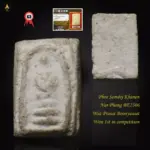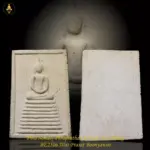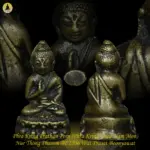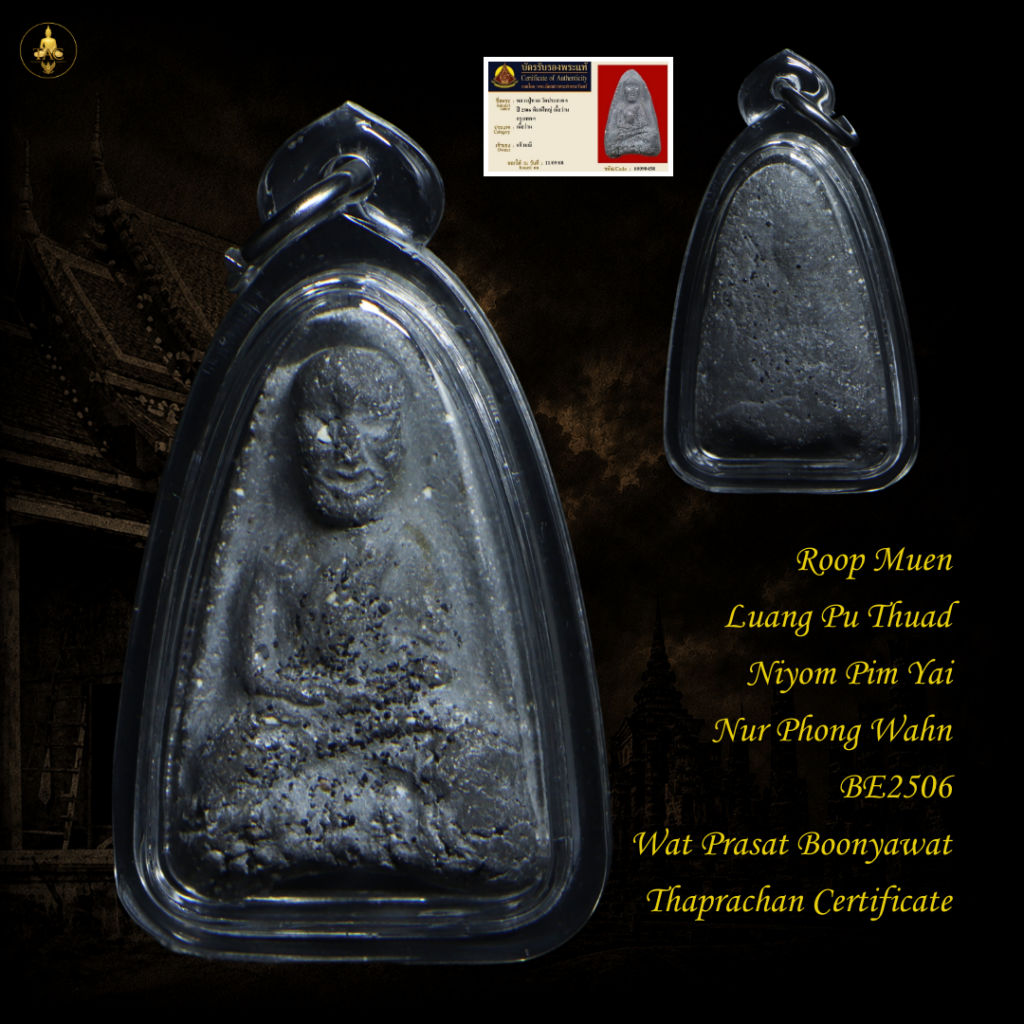
Phra Luang Pu Thuad (Lp Thuad) Pim Yai Nur Wahn BE2506 Wat Prasat Boonyawat
| Type | Luang Pu Thuad |
| Monk | Luang Pu Thuad |
| Temple | Wat Prasat |
| B.E. Year | 2506 |
| Material | Nur Phong Wahn |
| Condition | Good |
| Certificate | Thaprachan |
| SKU | TAC-0129 |
Authentic Luang Pu Thuad by Luang Pu Thuad, Wat Prasat BE 2506. Nur Phong Wahn, dual consecration, Thaprachan certified. Available from TAC Singapore.
What is the Luang Pu Thuad Wat Prasat BE 2506 Nur Phong Wahn amulet?
The Luang Pu Thuad by Luang Pu Thuad, produced at Wat Prasat in BE 2506, is pressed from Nur Phong Wahn — a sacred herbal powder blend incorporating botanicals, holy soils, and fragments of older amulets. The batch was consecrated across two separate multi-day ceremonies that year, both convened to raise funds after a fire destroyed much of the temple.
Why the BE 2506 fire gave this batch its weight
In BE 2506, a catastrophic fire left Wat Prasat nearly entirely destroyed. The temple organised two full consecration sessions that year — not one — to support the rebuilding effort and produce a body of protective amulets for devotees.
The first session ran continuously for three days and three nights, from 6 to 9 March BE 2506. The second followed later that year: four days and four nights, 13 to 15 November. Both rounds drew an exceptional assembly of senior monks from across Thailand, including LP Nak and LP Hin of Wat Rakhang, Pra Ajahn Tim of Wat Chang Hai, LP Toh of Wat Praduchimplee, LP Pae of Wat Pikultong, LP Klai of Wat Suan Kun, and over sixty others from temples throughout Central Thailand and beyond.
That scale of consecrating assembly is uncommon even within mid-century mass ceremonies. It is part of what places this edition within the broader Thai Buddhist amulet tradition as a historically documented release, not simply a production batch.
What went into the phong — and how to read a genuine piece
The nuea (material/substance) here is Nur Phong Wahn — a muan sarn (sacred powder blend) built around botanicals chosen for their ritual properties. This edition used Wahn Jampasak, associated with authority and prestige, combined with Phong Itije for prosperity, Phong Maharaj, and Phong Puttamang. Those powders were mixed with Nur Din (sacred soil), See Pheung (lip wax), and Raw Leklai, a rare metal substance reputed to melt at candle temperature.
Beyond the botanicals, the muan sarn incorporated soil from four holy places associated with the Buddha’s era, broken fragments of Somdej Wat Bangkhunphrom and Somdej Wat Rakhang, mineral ore, and holy metal plates inscribed with yant (sacred inscriptions). Fragments of Luang Phor Thuad BE 2497 were also included — grounding this batch in an unbroken line of prior sacred material.
Each piece was hand-pressed. Genuine examples from this batch show surface tonal variation natural to mid-20th-century Phong Wahn work: pale herbal brown through to deeper, aged shades, with no uniform colouring. Collectors examining this pim (mould) should look for:
- Natural tonal variation across the face — pale to mid-brown, consistent with aged herbal powder
- Surface texture that is slightly granular under magnification, not smooth or resin-like
- Visible inclusions consistent with the documented muan sarn — mineral specks, fibrous matter
- Mould definition matching reference pieces for this Wat Prasat run
- Thaprachan certificate accompanying the piece, with composition and origin documented
This edition carries a Thaprachan certificate — issued by one of Thailand’s most respected authentication bodies. For collectors in Singapore, Malaysia, or Greater China, Thaprachan documentation is one of the clearest markers that the origin, material, and period have been independently verified.
What collectors associate this amulet with, and what drives its value
Luang Pu Thuad is among the most widely recognised monk-figures in the Thai amulet world, venerated across Thailand, Malaysia, Singapore, and the Chinese-speaking diaspora for generations. His legend centres on a miraculous command over the sea and a role as protector of travellers — traditions that have made his amulets consistently sought across maritime Southeast Asia in particular.
Collectors traditionally carry the Luang Pu Thuad Wat Prasat BE 2506 for Klaew Klaad — protection from physical danger, especially relevant for those who travel frequently by road or sea. Metta Mahaniyom, the cultivation of social goodwill and harmonious relationships, and Maha Lap, the drawing of fortune and material prosperity, are also associated with this batch in the belief traditions of its devotees. These are the qualities collectors in this region have associated with Luang Pu Thuad pieces for decades.
Certified examples from this batch have grown scarce in the secondary market. The combination of documented historical circumstance — the temple fire, the dual-session consecration, the breadth of the monk assembly — alongside the depth of the muan sarn places this among the more collectible Luang Pu Thuad releases of the BE 2500s decade. Pieces with clear Thaprachan documentation command sustained collector interest precisely because provenance is verifiable.
This B.E. 2506 Wat Prasat edition holds a genuinely important place in the Luang Pu Thuad lineage — created not as a routine temple issue but as a direct response to the fire that devastated Wat Prasat that year, meaning the consecration carried both ceremonial weight and communal urgency rarely present in standard editions. What further distinguishes this piece is the Nur Phong Wahn composition, which incorporated fragments of acknowledged benchmark amulets including Somdej Wat Rakhang and Luang Phor Thuad B.E. 2497, connecting this batch materially to some of the most respected objects in the Thai Buddhist canon. The Thaprachan certificate accompanying this piece provides the authentication baseline collectors in Singapore and the region rightly expect before considering a mid-century Luang Pu Thuad of this provenance.
Attributes reflect Thai Buddhist devotional tradition and are not measurable claims.