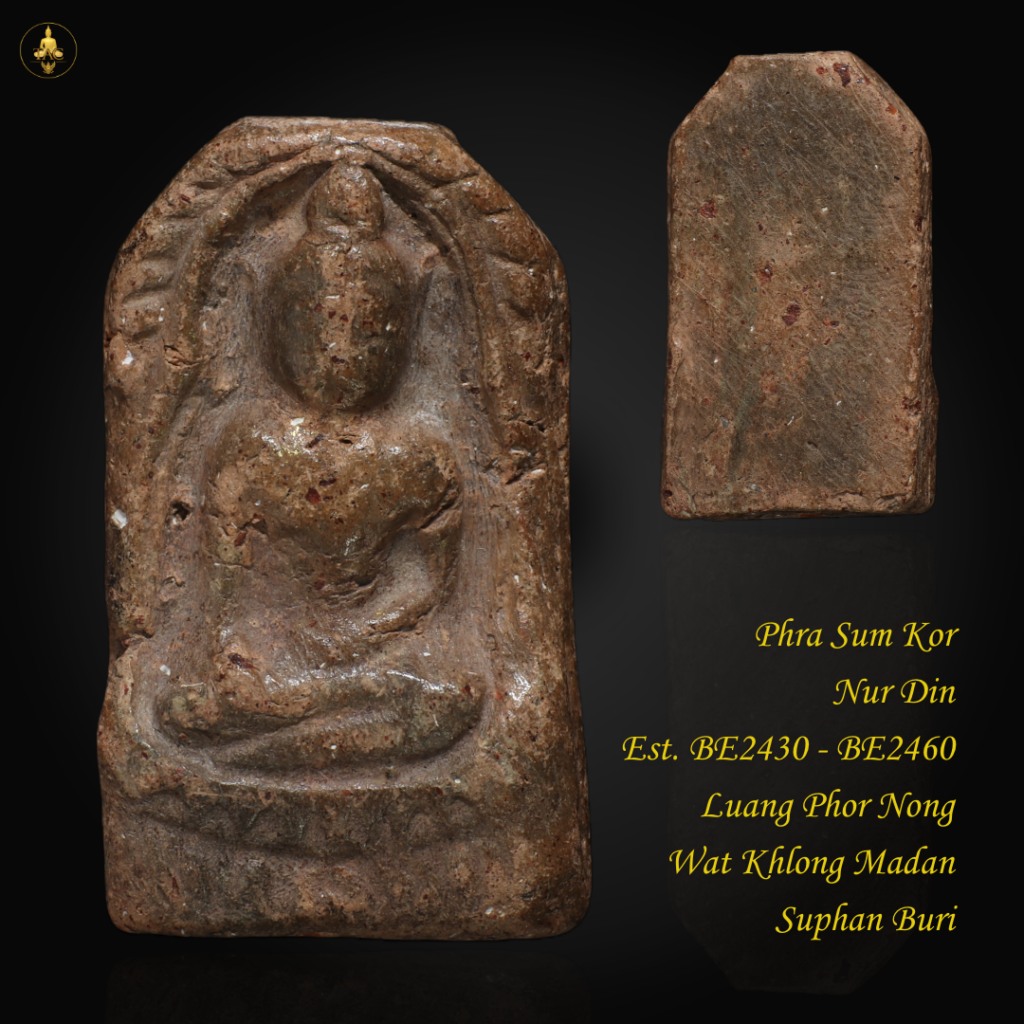
Phra Sum Kor Nur Din Est. BE2430 – BE2460 Luang Phor Nong Wat Khlong Madan Suphan Buri
| Type | Phra Sum Kor |
| Monk | Luang Phor Nong Wat Khlong Madan |
| Temple | Wat Khlong Madan (Wat Amphanwan) |
| B.E. Year | 2430 |
| Material | Nur Din |
| Pim / Mold | Sum Kor |
| Condition | Fair |
| SKU | TAC-PhraSumKor-LpNong-001 |
Authentic Phra Sum Kor by Luang Phor Nong Wat Khlong Madan, Wat Khlong Madan (Wat Amphanwan), BE 2430. Nur Din, no cert. Available from TAC Singapore.
What is the Phra Sum Kor by Luang Phor Nong Wat Khlong Madan, and why does it matter to collectors?
The Phra Sum Kor Luang Phor Nong Wat Khlong Madan is a Nur Din (sacred earth clay) pressed amulet created at Wat Khlong Madan (Wat Amphanwan) in BE 2430, placing it firmly in the early Rattanakosin period. Over 130 years old, it is among the earliest surviving examples of this amulet type and one of the rarest pieces any collector from Singapore to Hong Kong is likely to encounter.
Luang Phor Nong and what made his amulets different
Luang Phor Nong Wat Khlong Madan was respected across the region for both his meditative attainment and his command of Wicha — the sacred knowledge that governs amulet consecration in the Theravada tradition. Monks of that standing did not produce amulets in volume. Every piece was the result of sustained practice, not ceremony alone.
His reputation drew devotees from well beyond Suphan Buri, and the pluk sek (consecration ceremony) he conducted followed the rigorous standards of traditional Theravada rites. That discipline is precisely what collectors still cite when they talk about pieces from this temple and this era. A monk’s accumulated practice leaves its mark on the material — that is the belief behind the collector premium, and it is a belief with more than a century of sustained demand behind it.
Why BE 2430 Nur Din from Wat Khlong Madan is so difficult to replace
Nur Din — sacred earth clay — was the foundational nuea (material/substance) of this piece. The clay would have been sourced from spiritually significant sites: temple grounds, consecrated riverbanks, locations already associated with accumulated merit. That raw material was then combined with consecrated organic additions — powdered herbs, ash from blessed incense, remnants of previously consecrated amulets — before pressing.
What results after 130-plus years is a surface that cannot be faked convincingly. Genuine antique Nur Din develops a fine, compact texture, subtle mineral crystallisation within the body, and a patina that builds slowly over decades. Modern production simply does not replicate that process, and experienced appraisers know the difference immediately.
The broader Thai Buddhist amulet tradition places enormous weight on temple provenance, and Wat Khlong Madan carries that weight here. The combined authority of the monk, the temple, and the documented age of this piece is what puts it in a different category from later editions of the same type.
What to look for, and what the absence of a certificate means
This piece carries no certificate — that is common for amulets of this age. Certification bodies in Thailand largely formalised after pieces like this were already in circulation. The absence does not reduce authenticity; it does shift the authentication burden to physical examination and provenance tracing.
When assessing a Phra Sum Kor Luang Phor Nong Wat Khlong Madan from BE 2430, experienced collectors focus on:
- Natural aging of the Nur Din body — fine surface crystallisation, stable clay structure, no signs of artificial distressing
- Wear pattern on the moulded image — even and age-appropriate, not uniformly sharp or artificially abraded
- Patina depth and consistency — built over decades, not applied
- Provenance documentation linking the piece to Wat Khlong Madan
For any acquisition at this age and price tier, independent appraisal by a recognised Thai amulet expert is the right move. That applies regardless of which dealer you are buying from.
On value: early Rattanakosin-era Nur Din pieces in solid condition are genuinely scarce. Natural attrition over 130 years has reduced the number of surviving examples significantly, and verified pieces in the Singapore, Malaysia, Taiwan, and Hong Kong collector markets attract sustained demand. A piece with strong physical authentication markers and clear provenance commands a substantial premium over an unprovenanced example of the same type — condition and documentation are the two levers that move the price most.
Collectors traditionally associate the Phra Sum Kor type with Metta (loving-kindness) attraction, protection from harm, and auspicious conditions for prosperity. When the consecrating monk carried the standing of Luang Phor Nong, those associations carry added weight in the eyes of devotees. Suitable for daily wear or for occasions where spiritual support matters most — that is how collectors and devotees across Southeast Asia have carried this piece for generations.
Phra Sum Kor attributed to Luang Phor Nong of Wat Khlong Madan is among the earliest documented examples of this amulet type, with an estimated creation date of BE 2430 — placing it firmly within the late nineteenth century and the formative decades of Thai Buddhist sacred-object craftsmanship. Luang Phor Nong's reputation for rigorous Theravada consecration practice gives pieces from this temple a scholarly credibility that serious collectors in our experience continue to prioritise over more modern, certificate-backed examples. The Nur Din earth-clay composition is characteristic of the period and region, and — all of which we at TAC weigh carefully before presenting a piece of this antiquity to our collectors.
Attributes reflect Thai Buddhist devotional tradition and are not measurable claims.