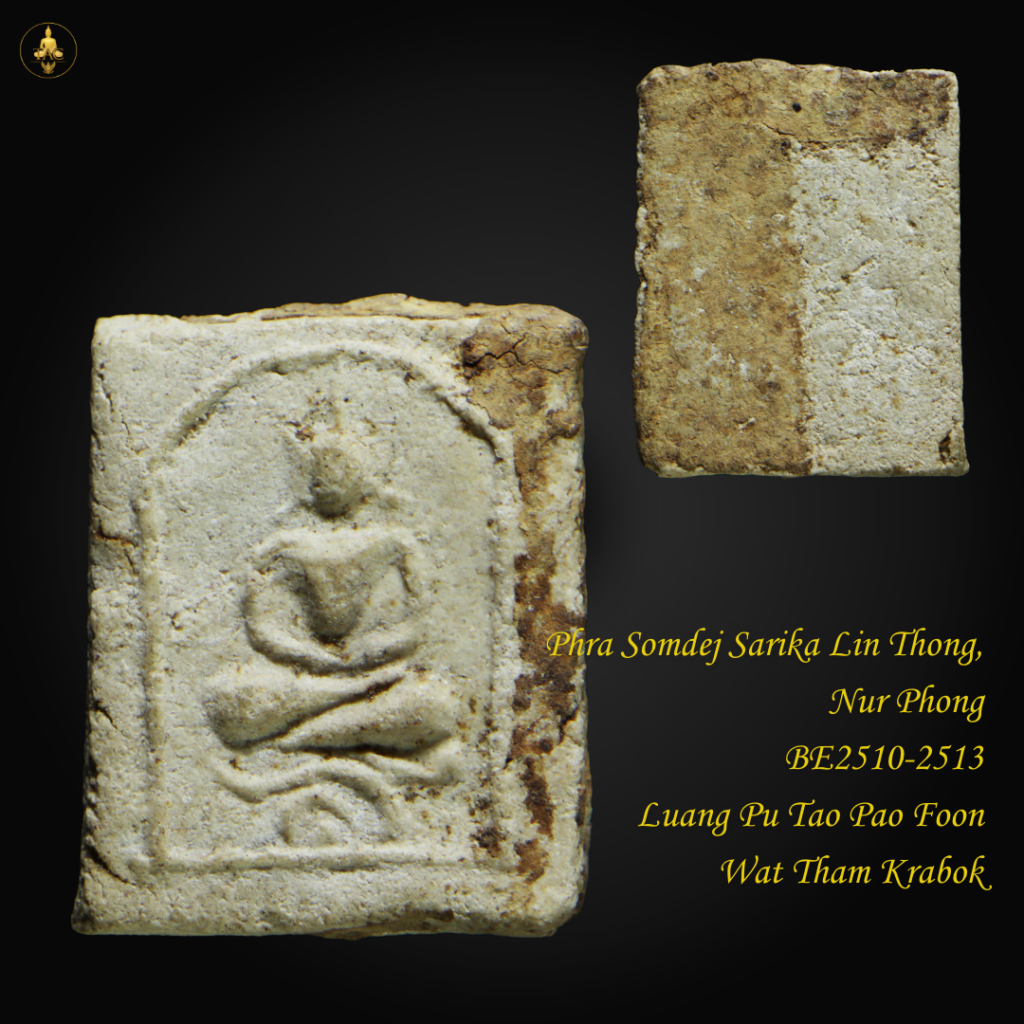
Phra Somdej Sarika Lin Thong Nur Phong BE2510-2513 Luang Pu Tao Pao Foon Wat Tham Krabok
| Type | Phra Somdej Sarika Lin Thong |
| Monk | Luang Pu Tao Pao Foon |
| Temple | Wat Tham Krabok |
| B.E. Year | 2510 |
| Material | Nur Phong |
| Condition | Good |
| SKU | TAC-PhraSomdejSarikaLinThong-LpTaoPaoFoon-001 |
Adds this amulet and the offer at the bundle price — ready at checkout. Or mention it when you enquire on WhatsApp.
Authentic Phra Somdej Sarika Lin Thong by Luang Pu Tao Pao Foon, Wat Tham Krabok BE 2510, pressed from nuea phong. No certificate.
What is the Phra Somdej Sarika Lin Thong by Luang Pu Tao Pao Foon?
The Phra Somdej Sarika Lin Thong Luang Pu Tao Pao Foon is an authentic Thai amulet consecrated at Wat Tham Krabok in Saraburi Province, beginning BE 2510. Pressed from nuea phong (sacred powder blend), it pairs a classic Phra Somdej seated-Buddha frame with the Sarika Lin Thong — a golden-tongued myna bird long associated in Thai belief with eloquence and personal charm.
Luang Pu Tao Pao Foon and what he brought to this piece
Luang Pu Tao Pao Foon was the presiding force behind the amulet work at Wat Tham Krabok during this period. His standing among collectors rests on a consistent approach to pluk sek (consecration ceremony) — methodical, traditional, without the large-scale commercial runs that characterised some temple editions of the same era. That measured output is part of why pieces from his tenure attract sustained interest.
The production window here ran roughly three to four years, from BE 2510 onward. A relatively modest total output over that span means surviving examples in good condition are not plentiful. Collectors working the regional markets — Singapore, Malaysia, Taiwan, Hong Kong — encounter this series occasionally, not routinely.
Wat Tham Krabok, the nuea phong, and how this amulet was made
Wat Tham Krabok translates directly as “Bamboo Cave Temple.” The cave setting is not incidental — Thai devotees have long regarded cave sanctuaries as spiritually charged spaces, and temples built within them carry a particular weight in the broader Thai Buddhist amulet tradition. The temple’s reputation for rigorous meditative discipline reinforced the credibility of whatever came out of its consecration ceremonies.
The nuea phong (sacred powder blend) used for this series is consistent with mid-period Thai amulet production: finely ground consecrated chalk, dried floral offerings, sacred earth, and herbal compounds prepared under ritual conditions before pressing. Phong as a material is valued precisely because it absorbs and holds the energy of extended phutthaphisek sessions in a way denser materials do not.
The pim (mould) follows the standard Phra Somdej arch — tiered frame, seated Buddha — with the Sarika Lin Thong motif layered into the composition. On genuine examples from this run, the pressed-powder surface has a consistent fine texture, and the mould lines are well-defined rather than soft or blurred. Over five decades, the surface develops a natural patina that experienced collectors read immediately.
What collectors look for — and the certificate situation
No certificate has been issued for this series. That is not unusual for provincial temple editions from BE 2510, but it does shift more weight onto physical examination and provenance when buying. The authentication community in Thailand and across the region has enough reference pieces in circulation that comparison is possible — it just requires going to experienced sources rather than relying on paperwork.
Key points to examine on any example:
- Nuea phong surface texture — consistent fine grain across the face and reverse, no pitting inconsistent with age
- Pim proportions — the arch and Buddha figure should match known reference impressions from the BE 2510–2513 production window
- Natural aging — over fifty years of age produces patina and minor surface character that cannot be convincingly replicated on modern fakes
- Sarika Lin Thong detail — the myna bird motif should be legible and consistent with documented examples from this batch
Value is driven by age, material integrity, condition, and the temple’s enduring reputation. Pieces with clean mould definition and undisturbed patina command more attention. There is no certificate premium here — the piece stands on what it physically is.
Collectors who associate the Phra Somdej Sarika Lin Thong Luang Pu Tao Pao Foon with Metta Mahaniyom — the quality of drawing goodwill and social favour — tend to carry rather than enshrine it, which means well-preserved examples with minimal wear are the ones worth pursuing seriously.
We at TAC are offering this Phra Somdej Sarika Lin Thong Luang Pu Tao Pao Foon from the BE 2510 production period at Wat Tham Krabok — a series that does not appear on the market often in any condition, let alone with the surface integrity collectors want. What makes this piece worth serious consideration is the combination of a modest original run, a temple with a credible consecration reputation, and the specific Sarika Lin Thong pim that regional collectors actively seek.
Attributes reflect Thai Buddhist devotional tradition and are not measurable claims.