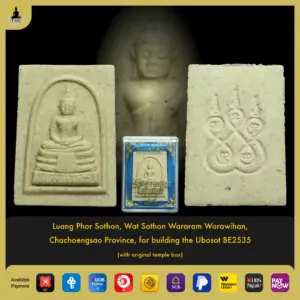
 Luang Phor Sothon, Wat Sothon Wararam Worawihan, Chachoengsao Province, for building the Ubosot BE2535 (with original temple box)
S$10
S$18save S$8 (44%)
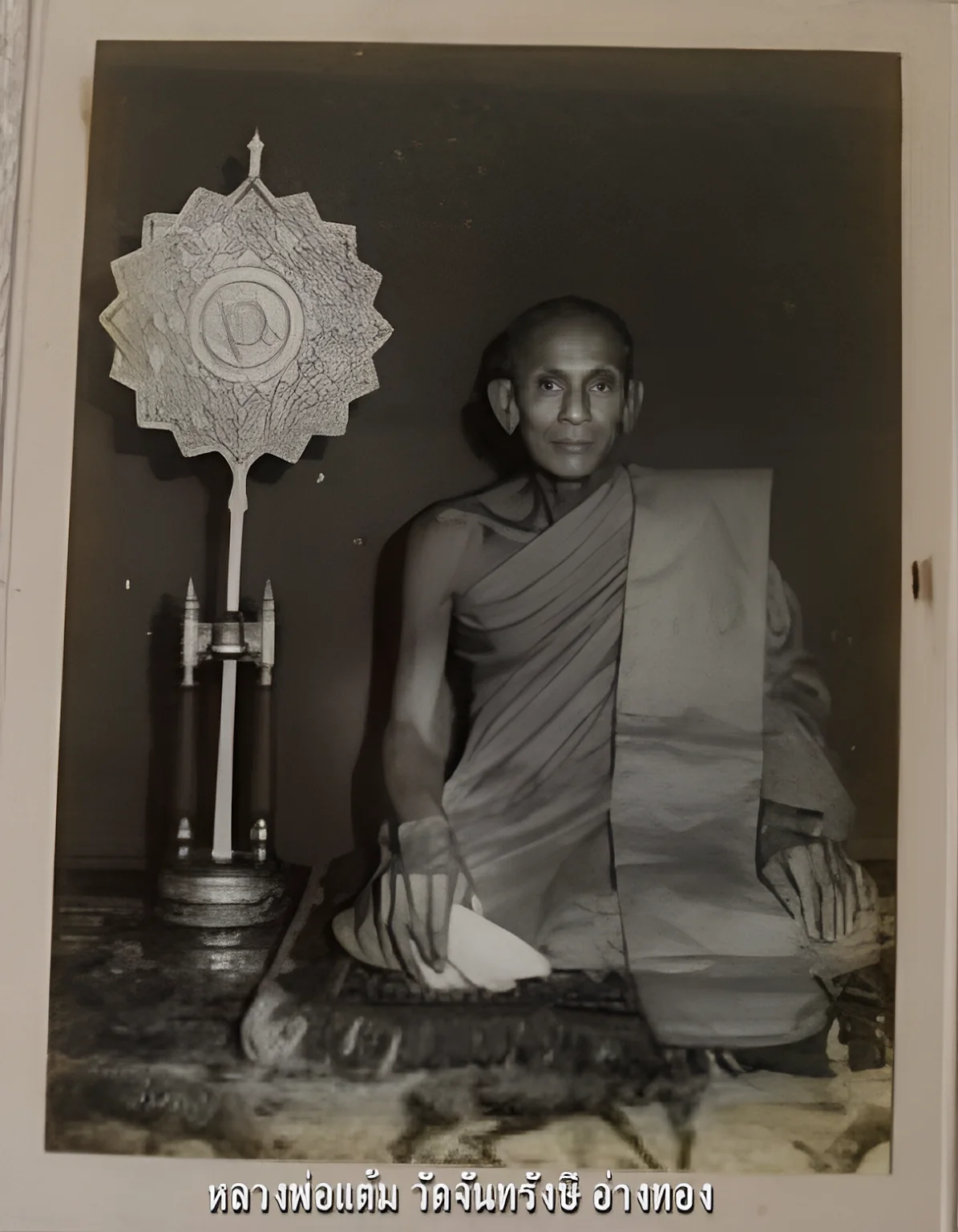
| Monk | Luang Phor Taem Wat Chanrangsi |
| Temple | Wat Sam Ngam |
| B.E. Year | 2512 |
| SKU | TAC-0195 |
Luang Phor Sothon, Wat Sothon Wararam Worawihan, Chachoengsao Province, for building the Ubosot BE2535 (with original temple box)
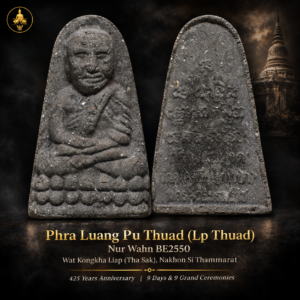 Phra Luang Pu Thuad (Lp Thuad) Nur Wahn BE2550 Wat Kongkha Liap (Tha Sak), Nakhon Si Thammarat (425 Years Anniversary, 9 Days & 9 Grand Ceremonies)
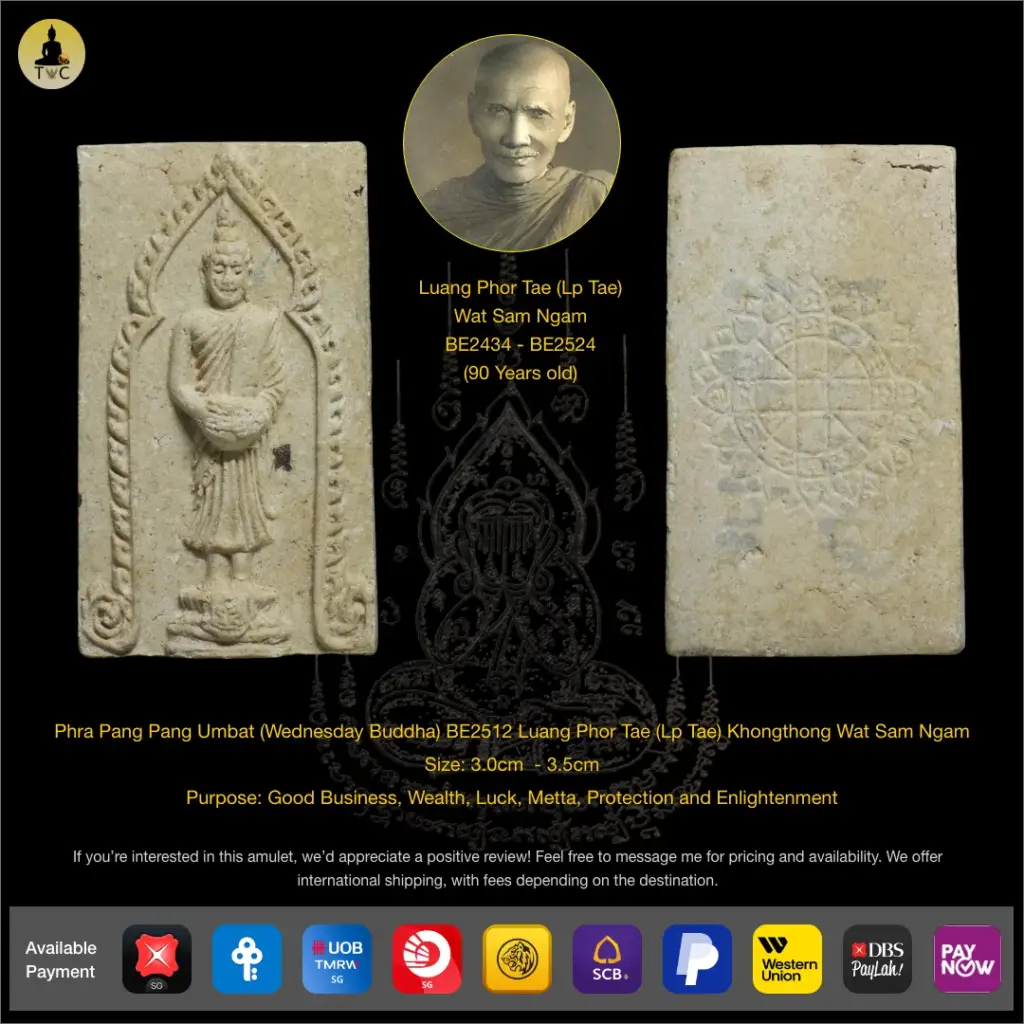
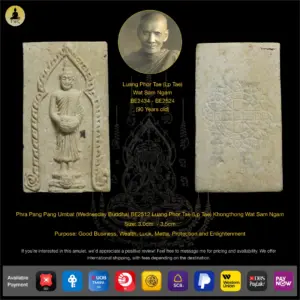 Phra Pang Umbat (Wednesday Buddha) BE2512 Luang Phor Tae (Lp Tae) Khongthong Wat Sam Ngam
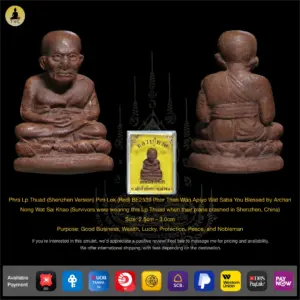 Phra Lp Thuad 龙婆托 (Shenzhen Version) Pim Lek (RED) BE2539 Phor Than Wan Apiyo Wat Saba You Blessed by Archan Nong Wat Sai Khao
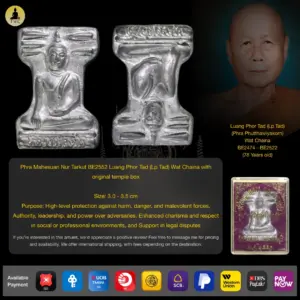 Phra Mahesuan Nur Tarkut BE2552 Luang Phor Tad (Lp Tad) Wat Chaina with original temple box
Each adds this amulet plus the offer at the bundle price — ready at checkout, or mention it when you enquire on WhatsApp.
Authentic Phra Pang Umbat (Wednesday Buddha) BE2512 Luang Phor Tae (Lp Tae) Khongthong Wat Sam Ngam by Luang Phor Taem Wat Chanrangsi.
The Phra Pang Umbat (Wednesday Buddha) BE2512 Luang Phor Tae (Lp Tae) Khongthong Wat Sam Ngam by Luang Phor Taem Wat Chanrangsi is a sacred Buddha image amulet consecrated in BE 2512 (1969) at Wat Sam Ngam, Nakhon Pathom. Pressed from a muan sarn blend of sacred powders including Phong Itthijay, Pong Patthamang, and Phong Trinisinghe, it depicts the Buddha holding an alms bowl — the Wednesday posture associated with compassion and generosity.
Luang Phor Taem Wat Chanrangsi aside, the monk at the centre of this piece is Luang Phor Tae Khongthong — one of the most respected figures in Nakhon Pathom Province during the mid-twentieth century. His standing rested on deep meditation practice, mastery of Buddhist sacred sciences, and a command of traditional Khmer ritual knowledge that set him apart from contemporaries.
Most collectors know him first through his Phra Pidta amulets, which built his reputation for protective work. The BE 2512 Phra Pang Umbat sits in a different register — quieter in intent, focused on metta (loving-kindness) and the merit of giving rather than on warding off harm. That contrast is part of why serious collectors pay attention to it.
The batch was commissioned at Wat Sam Ngam to support the temple’s restoration and development projects. Devotees who contributed to those works received the amulets as a form of merit-making distribution — a common practice in Thai Buddhist tradition, well documented across the broader Thai Buddhist amulet tradition.
The muan sarn (sacred powder blend) pressed into each pim (mould) drew from several documented sources. Phong Itthijay and Pong Patthamang are Buddhist blessing powders charged through extended chanting. Phong Trinisinghe was included for its association with charisma and good fortune. The blend also incorporated crushed gold leaf from Buddha statues, powder collected from ancient scriptures and holy relics, and soil gathered from sites where Buddha relics were enshrined.
The consecration — phutthaphisek — lasted several months. The primary blessing ceremony was held at Wat Sam Ngam under Luang Phor Tae, joined by other monks of the era. Rituals included recitation of the Tripitaka, infusion of Maha Metta and Maha Niyom (loving-kindness and popularity blessings), and a final personal empowerment session during which Luang Phor Tae meditated directly over the amulets. That level of sustained ritual attention over months — rather than a single ceremony — is a detail collectors flag when discussing why this batch holds the weight it does.
Given that over fifty years have passed since BE 2512, the number of genuine pieces still circulating is small. Condition varies considerably, and the rarity of the batch means fakes do appear. Knowing the specific muan sarn composition and the documented pim characteristics is the first line of defence.
Key authentication points for this piece:
No certificate is currently listed with this piece. Buyers working without a certificate should rely on physical authentication against documented niyom (collector-standard reference) examples and, where possible, seek a second opinion from an experienced dealer or recognised Thai amulet association before purchasing.
Authentic examples from this batch are increasingly difficult to source. Well-preserved pieces are regarded by collectors in Thailand, Singapore, and across the Chinese-speaking collector community as among the rarer Luang Phor Tae amulets still available in the open market.
We at TAC sourced this Phra Pang Umbat (Wednesday Buddha) BE2512 Luang Phor Tae (Lp Tae) Khongthong Wat Sam Ngam as a rare example of a batch that seldom surfaces in the secondary market in collectible condition. Luang Phor Tae's BE 2512 Prang Umbat is considerably harder to find than his Phra Pidta editions, and the documented muan sarn composition — phong Itthijay, Patthamang, Trinisinghe, crushed gold leaf, relic powder, and sacred soil — gives experienced collectors a concrete checklist to authenticate against.
Attributes reflect Thai Buddhist devotional tradition and are not measurable claims.