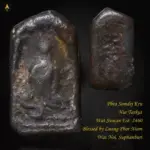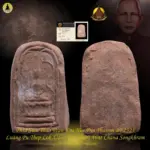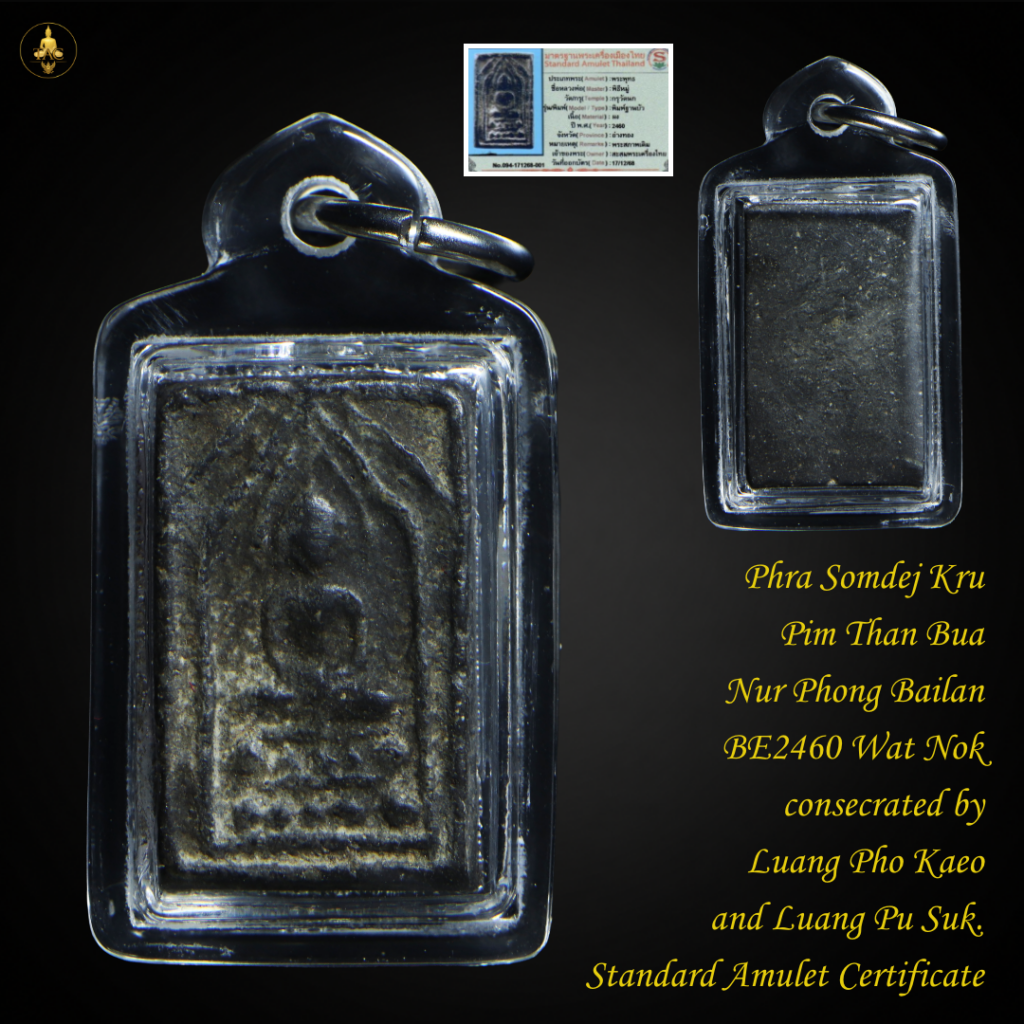
[SOLD] Phra Somdej Kru Pim Than Bua Nur Phong Bailan BE2460 Wat Nok consecrated by Luang Pho Kaeo and Luang Pu Suk
| Type | Phra Somdej Kru Pim Than Bua |
| Monk | Luang Pu Suk Gesaroh Wat Pak Khlong Makham Thao |
| Temple | Wat Nok |
| B.E. Year | 2460 |
| Material | Nur Phong Bailan |
| Condition | Good |
| Certificate | Standard Amulet |
| SKU | TAC-PhraSomdejKruPimThanBua-LuangPhoKaeoAndLuangPuSuk-001 |
Authentic Phra Somdej Kru Pim Than Bua by Luang Pu Suk Gesaroh Wat Pak Khlong Makham Thao, Wat Nok BE 2460. Nur Phong Bailan. Certified Standard Amulet.
What is the Phra Somdej Kru Pim Than Bua by Luang Pu Suk Gesaroh Wat Pak Khlong Makham Thao?
The Phra Somdej Kru Pim Than Bua Luang Pu Suk Gesaroh Wat Pak Khlong Makham Thao is an authentic Thai amulet produced at Wat Nok (Sakunaram) in Ang Thong Province, dated BE 2460, and pressed from Nur Phong Bailan — an oil-infused sacred powder derived from ancient palm-leaf manuscripts. It carries a Standard Amulet certificate and depicts the Buddha seated in meditation on a tiered lotus base.
Luang Pu Suk Gesaroh Wat Pak Khlong Makham Thao and the making of this piece
Luang Pu Suk Gesaroh Wat Pak Khlong Makham Thao was personally invited to participate in the consecration ceremonies at Wat Nok, lending his sacred authority to the amulets produced there during this period. His involvement was not routine — monks of his standing were called upon specifically because their presence at a phutthaphisek (consecration ceremony) was understood to carry real weight with the community.
Luang Pho Kaeo, abbot of Wat Nok, produced amulets continuously from approximately 1910 through 1932. The Phra Somdej Kru pieces from this window — including those dated BE 2460 — reflect the combined sacred authority of both monks. First-period examples in green and gray Nur Phong Bailan, bearing marks of this joint consecration, sit at the top of collector interest within the Wat Nok series.
What Wat Nok produced and why the kru pieces matter
Ang Thong Province has three temples sharing the Wat Nok name. The one relevant here is Wat Nok (Sakunaram) in Chaiyo District — origin of the celebrated Phra Somdej Kru Pim Than Bua line. These pieces were pressed, then placed in a crypt — a kru — to preserve the Buddhist faith for future generations. Surviving examples still carry traces of kru deposits on the surface, and that physical evidence is one of the first things a collector checks.
The amulet’s reputation spread beyond Ang Thong through circulating accounts: a villager bitten by a venomous snake whose flesh was not penetrated, a child mauled by a dog whose skin remained unbroken despite torn clothing. Within the Thai Buddhist amulet tradition, such accounts form part of an amulet’s sacred biography. For Wat Nok, they moved the Phra Somdej Kru Pim Than Bua from a local temple relic to a piece collectors across Thailand and Southeast Asia actively seek.
After Luang Pho Kaeo’s passing, the next abbot, Luang Pho Fueang, continued production using the same original pim (mould) but with white and black powder compositions. Both periods share the same mould lineage, but first-period pieces in green and gray nuea (material/substance) are the ones that draw the strongest collector attention.
The nuea, the pim, and what to look for
Nur Phong Bailan is pressed from powdered palm-leaf manuscript material soaked in oil — a sacred scriptural source that gives the amulet its characteristic density. The surface texture is fine-grained and slightly abrasive; local collectors describe it as resembling a razor sharpening stone. Green and gray tones indicate first-period production. White and black indicate the later run under Luang Pho Fueang.
The front face shows the Buddha in meditative posture, seated on a tiered lotus base inside a two-tiered halo with radiating lines. The face is sharply defined, the topknot two-tiered and high, the folds of the monastic robe clearly pressed. The reverse is smooth and may carry pressed inscriptions — the letters “U,” “Thaw,” or the Unnalom symbol.
Authentication points collectors cross-reference:
- Nur Phong Bailan powder composition — green or gray for first-period pieces
- Visible kru reliquary deposits on the surface
- Lotus-base meditative Buddha image, approximately 1.5 cm wide by 2.3 cm high
- Reverse inscriptions: “U,” “Thaw,” or the Unnalom symbol pressed into the clay
- Standard Amulet certificate confirming provenance classification
Some Phra Somdej amulets from Wat Nok (Sakunaram) were historically misattributed to other monks, so provenance verification matters here more than with many other series. The Standard Amulet certificate provides the documented baseline; physical markers confirm the rest.
These Phra Somdej Kru pieces from Wat Nok represent one of the more historically grounded collaborations in early twentieth-century amulet production — the direct participation of Luang Pu Suk Gesaroh in consecration ceremonies alongside abbot Luang Pho Kaeo gives this BE 2460 example a dual spiritual lineage that serious collectors of the Central Thai tradition actively seek. The Nur Phong Bailan composition, an oil-infused sacred powder, is particularly associated with the Wat Nok production of this period and distinguishes these pieces from the dry-pressed powders more commonly encountered in Somdej amulets of comparable age. We at TAC regard this as a meaningful piece for collectors focused on authenticated Ang Thong Province monks of the early Rattanakosin period, and the accompanying standard certificate provides a documented starting point for further scholarly reference.
Attributes reflect Thai Buddhist devotional tradition and are not measurable claims.