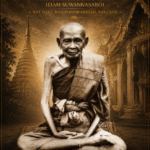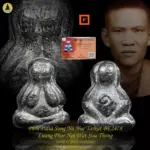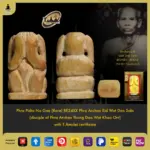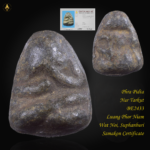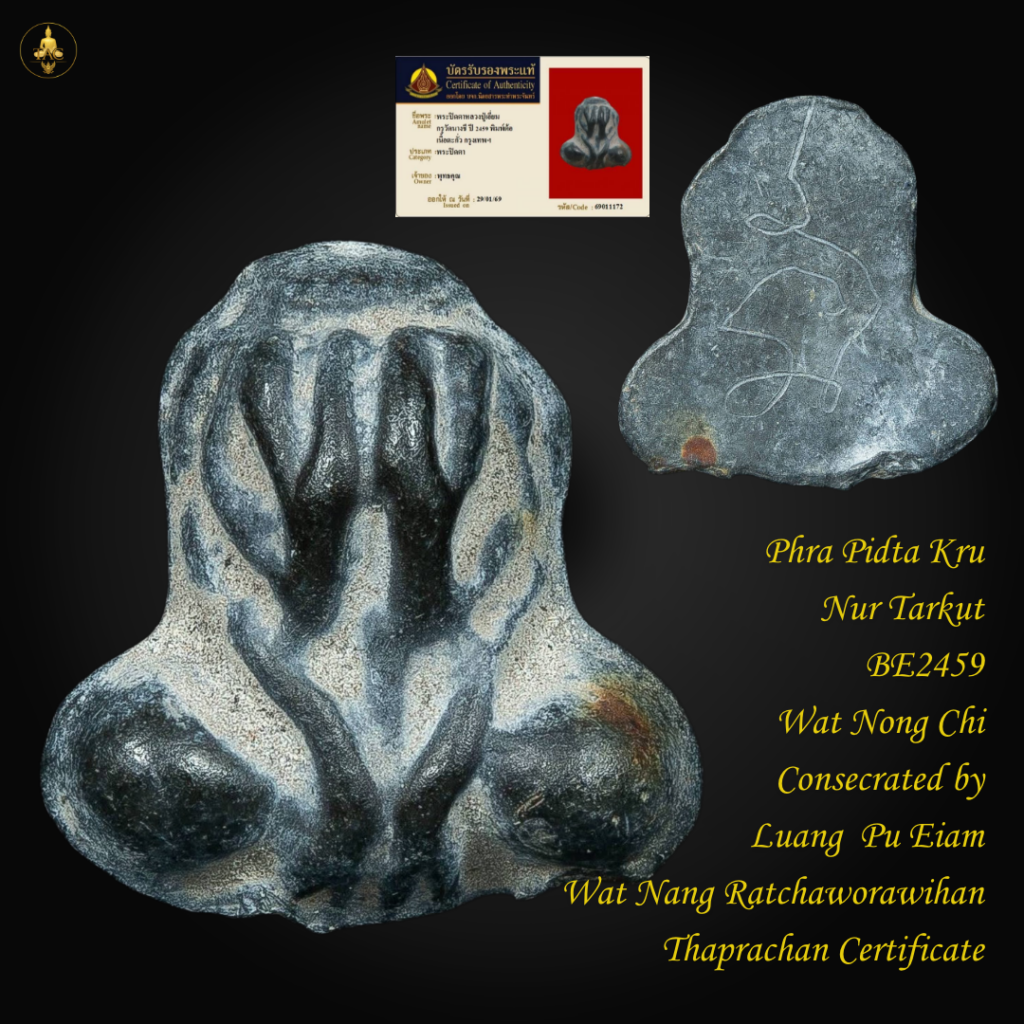
Phra Pidta Kru Nur Tarkut BE2459 Wat Nang Chi Consecrated by Luang Pu Eiam Wat Nang Ratchaworawihan
| Type | Phra Pidta Kru |
| Monk | Luang Pu Eiam (Phra Bhavanakosol Thera – Eiam Suwannasaro) |
| Temple | Wat Nang Chi |
| B.E. Year | 2459 |
| Material | Nur Tarkut |
| Condition | Very Good |
| Certificate | Thaprachan |
| SKU | TAC-PhraPidtaKru-LpEiamWatNangRatchaworawihan-001 |
Authentic Phra Pidta Kru Luang Pu Eiam Wat Nang Ratchaworawihan, Wat Nang Chi BE 2459. Nur Tarkut. Certified Thaprachan. Trusted Thai amulet Singapore dealer.
What is the Phra Pidta Kru amulet by Luang Pu Eiam Wat Nang Ratchaworawihan?
The Phra Pidta Kru Luang Pu Eiam Wat Nang Ratchaworawihan is a sacred lead alloy amulet produced at Wat Nang Chi in BE 2459, cast in Nur Tarkut (lead alloy) and attributed to the consecration of the highly venerated monk Luang Pu Eiam (Phra Khun Phawana Kosol Thera). It is regarded by collectors as one of the most significant Phra Pidta amulets from the early Rattanakosin period.
The Phra Pidta Kru Luang Pu Eiam Wat Nang Ratchaworawihan belongs to a remarkable cache of sacred amulets discovered within the ancient stupas of Wat Nang Chi. It has long been observed that these amulets bear a striking resemblance to the lead alloy Phra Pidta amulets from Wat Nang, leading collectors and researchers to conclude that Luang Pu Eiam Wat Nang Ratchaworawihan either personally presided over the consecration ceremony or that the amulets were brought to him for blessing.
This attribution is strongly supported by the testimony of elderly devotees who have confirmed they personally received these amulets from Luang Pu Eiam himself. Furthermore, the inscriptions on the reverse of the Wat Nang Chi Phra Pidta amulets are believed to be written in the same handwriting as other inscriptions attributed to Luang Pu Eiam, suggesting he personally inscribed them.
During his lifetime, Luang Pu Eiam (Phra Khun Phawana Kosol Thera) was one of the most respected and renowned monks in the region. It was common practice during that period for many temples to invite him to assist in creating and consecrating their amulets, owing to his exceptional reputation as a highly accomplished monk. This historical practice further strengthens the belief that the Phra Pidta Kru Luang Pu Eiam Wat Nang Ratchaworawihan was produced under his direct guidance. Collectors across Singapore, Malaysia, and Greater China prize this amulet for both its spiritual resonance and its historical significance.
Phra Pidta Kru Wat Nang Chi — Temple Heritage and Historical Significance
Wat Nang Chi is an ancient temple believed to have existed since the Ayutthaya period, though its exact founding date and original builder remain unknown. It is widely thought the temple was established by Buddhist devotees, merchants, wealthy patrons, or a community of nuns — giving rise to the name “Wat Nang Chi,” meaning Temple of the Nun.
One of the most significant restorations of Wat Nang Chi took place during the reign of King Rama III of the Rattanakosin Kingdom. Chao Phraya Chotik Ratchasethi was appointed to oversee this restoration, which introduced distinctive Chinese architectural influences. Unlike traditional Thai temple architecture, the main ordination hall does not feature the usual roof finials or decorative eaves, instead displaying carved wooden doors adorned with Chinese artistic motifs.
Standing before the ordination hall are four large twelve-sided stupas, within which numerous sacred amulets were interred — including the Phra Pidta Kru collection now attributed to Luang Pu Eiam Wat Nang Ratchaworawihan. Understanding the broader context of the Thai Buddhist amulet tradition helps collectors appreciate why amulets consecrated within architecturally and historically significant temples like Wat Nang Chi are so highly regarded. The Phra Pidta Kru Wat Nang Chi series stands as a testament to the temple’s centuries-old sacred lineage.
Nur Tarkut Phra Pidta Kru — Composition and Craftsmanship
Nur Tarkut refers to a sacred lead alloy composition traditionally used in the casting of high-merit amulets during the Rattanakosin period. The Nur Tarkut Phra Pidta Kru from Wat Nang Chi was cast in several distinct forms, including double-sided, short form, pointed-top, single-layered, double-layered, and a “rice grain” shape — closely resembling those from Wat Nang.
The craftsmanship of the Phra Pidta Kru BE 2459 is notable for its consistency with the Wat Nang amulet style, which specialists regard as a hallmark of Luang Pu Eiam’s influence. Also discovered alongside the Phra Pidta forms were amulets in styles similar to the “Na Hua Khao” design, as well as Phra Nak Prok and Phra Prok Pho amulets, all cast in the same lead alloy material.
The inscriptions on the reverse side of these Nur Tarkut Phra Pidta Kru amulets are a key authentication marker. Researchers believe these inscriptions were personally rendered by Luang Pu Eiam, as the handwriting matches other confirmed inscriptions attributed to him — a detail documented in The Most Expensive Phra Pidta Amulets in Thailand.
Spiritual Benefits of Phra Pidta Kru by Luang Pu Eiam Wat Nang Ratchaworawihan
The Phra Pidta, depicting the Buddha with eyes closed, is traditionally venerated as a symbol of inner protection and the closing off of misfortune. Collectors associate the Phra Pidta Kru Luang Pu Eiam Wat Nang Ratchaworawihan with powerful protective qualities believed to arise from the monk’s legendary consecration powers and the sacred Nur Tarkut composition.
Devotees across Singapore, Malaysia, Thailand, and Greater China regard this amulet as a spiritually potent piece for everyday wear and altar veneration. The following spiritual associations are commonly attributed to this amulet by collectors and devotees:
- Protection from harm and misfortune — the Phra Pidta posture is regarded by devotees as a shield against negative energies and danger
- Wealth and prosperity attraction — collectors associate the closed-eye posture with sealing in good fortune and preventing the loss of wealth
- Spiritual merit and inner peace — veneration of this authentic Thai amulet is traditionally believed to accumulate merit and foster mental clarity and resilience
Phra Pidta Kru BE 2459 — Authentication, Certification, and Collector Value
The Phra Pidta Kru BE 2459 from Wat Nang Chi is certified by Thaprachan, one of Thailand’s most respected amulet authentication and certification bodies. A Thaprachan certificate provides collectors with documented verification of the amulet’s origin, material, and age, making it a critical reference for buyers seeking a genuine Luang Pu Eiam Wat Nang Ratchaworawihan amulet.
The amulet cache at Wat Nang Chi was first discovered during the Indochina War, between BE 2484 and BE 2487 (1941–1944 CE), when thieves broke into one of the stupas believing it contained hidden treasure. The temple subsequently conducted its own excavation, uncovering a substantial collection of lead alloy amulets. This well-documented discovery history contributes to the provenance and collector value of all pieces from this cache.
While the Wat Nang Chi Phra Pidta amulets generally command lower prices than directly comparable pieces from Wat Nang, they are nonetheless highly prized by serious collectors for their historical significance, their close stylistic connection to Luang Pu Eiam, and the relative rarity of Thaprachan-certified examples in the open market. For collectors based in Singapore and across Southeast Asia seeking an authentic Thai amulet with verifiable Rattanakosin-era provenance, the Phra Pidta Kru Luang Pu Eiam Wat Nang Ratchaworawihan represents an exceptional acquisition.
Attributes reflect Thai Buddhist devotional tradition and are not measurable claims.