Luang Pu On Chakkadhammo
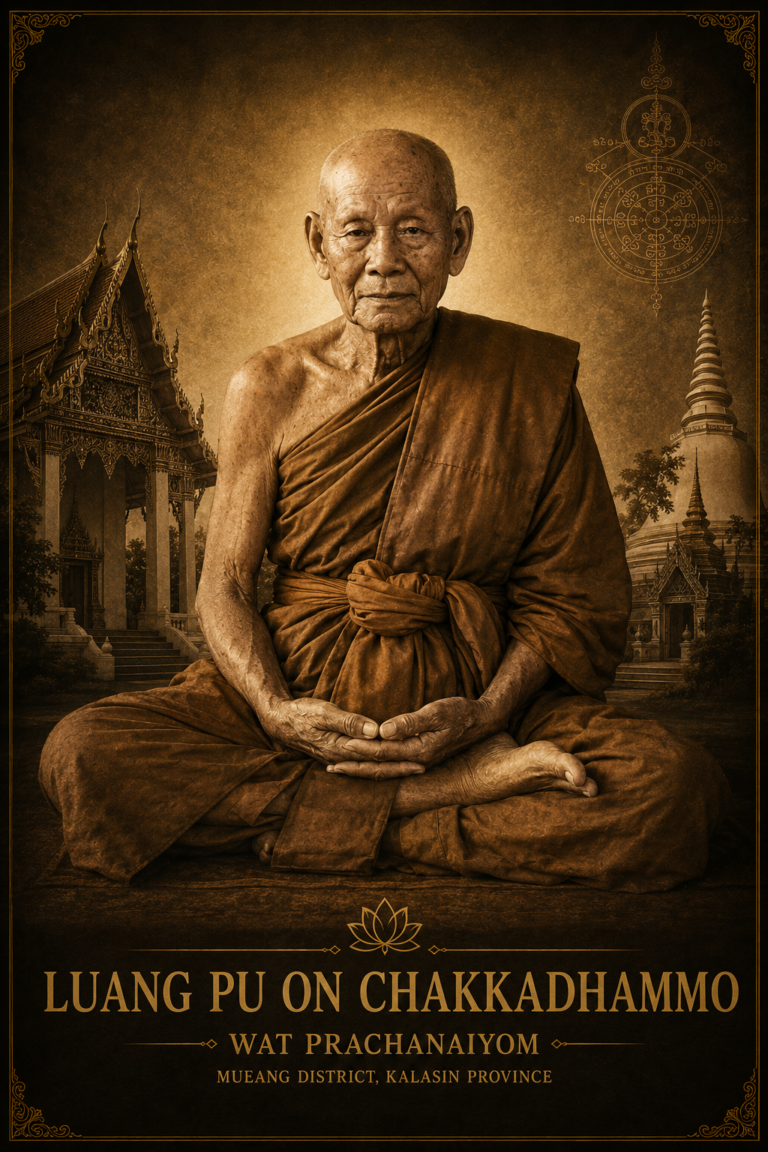
Luang Pu On Chakkadhammo (หลวงปู่อ่อน จักกธัมโม), also known by his ecclesiastical title Phra Ratchathammanuwatt (พระราชธรรมนุวัตร), was a revered Thai Vipassana meditation master born in Yang Talat District, Kalasin Province. He served as Provincial Chief Monk of the Dhammayutika sect at Wat Pa Prachanaiyom (วัดป่าประชานิยม), Mueang District, Kalasin Province, and is celebrated as one of the closest and most distinguished disciples of the legendary Luang Pu Mun Phuritatto (หลวงปู่มั่น ภูริทัตโต). Read more ↓
Biography
Who Was Luang Pu On Chakkadhammo?
Luang Pu On Chakkadhammo (หลวงปู่อ่อน จักกธัมโม), also known by his ecclesiastical title Phra Ratchathammanuwatt (พระราชธรรมนุวัตร), was a revered Thai Vipassana meditation master born in Yang Talat District, Kalasin Province. He served as Provincial Chief Monk of the Dhammayutika sect at Wat Pa Prachanaiyom (วัดป่าประชานิยม), Mueang District, Kalasin Province, and is celebrated as one of the closest and most distinguished disciples of the legendary Luang Pu Mun Phuritatto (หลวงปู่มั่น ภูริทัตโต).
Early Life and Ordination
Luang Pu On Chakkadhammo (หลวงปู่อ่อน จักกธัมโม) was born in Yang Talat District (อำเภอยางตลาด), Kalasin Province (จังหวัดกาฬสินธุ์). His birth year is not widely documented in English sources. From an early age, he displayed a sincere inclination toward the Dhamma, entering the path of Buddhism at the age of 13 when he was ordained as a novice monk at a temple near his home in Yang Talat District.
Following his novice ordination, the young Luang Pu On travelled to Bangkok to pursue rigorous academic study of Buddhist scriptures and monastic discipline at Wat Pathum Wanaram (วัดปทุมวนาราม) under the guidance of the Venerable Phra Panyapisan Thera (พระปัญญาพิสาลเถระ). His dedication was remarkable — while still a novice monk, he succeeded in passing examinations for the first, second, and third levels of Dhamma studies, as well as the third level of Pali scholarship. This achievement demonstrated a depth of learning and discipline that would define his entire monastic career. He later returned to the northeastern region of Thailand, following his teachers during a period of unrest, before eventually seeking out the forest meditation tradition that would shape the rest of his life.
Spiritual Development and Practice
Upon returning to the Northeast, Luang Pu On Chakkadhammo (หลวงปู่อ่อน จักกธัมโม) encountered the profound ascetic meditation tradition championed by Luang Pu Mun Bhuridatto (หลวงปู่มั่น ภูริทัตโต) and Phra Ajahn Sing Khantayamo (พระอาจารย์สิงห์ ขันตยาโม). Deeply inspired, he sought to become a formal disciple of Luang Pu Mun Bhuridatto, one of the most influential forest masters in Thai Buddhist history.
Under Luang Pu Mun’s guidance, he received Dhamma teachings and applied them through intensive meditation practice, accompanying both Luang Pu Mun and Phra Ajarn Sing on ascetic wandering journeys through forests and mountains. When his concentration had matured sufficiently, Luang Pu Mun instructed him to undertake a solitary wandering practice — a defining rite of passage in the Thai forest tradition. Known at this stage as Maha Nen On, he practised amidst wild animals, cultivating courage, mindfulness, and profound stillness of mind.
Luang Pu On belonged to the same generation of disciples as celebrated masters including Luang Pu Khao Analayo (หลวงปู่เขาอนาลโย), Luang Pu On Yanasiri (หลวงปู่อ่อน ญาณสิริ), and Luang Pu Fan Ajaro (หลวงปู่ฝั้น อาจาโร). His Dhamma peers also included Phra Ajarn Chan Khemapatto (พระอาจารย์ชาญ เขมปัตโต), Luang Pu Tesk Tesarangsri (หลวงปู่เทสก์ เทสรังสี), Than Pho Lee Thammatero (ท่านพ่อลี ธัมมธโร), and Than Phra Ajarn Viriyang Sirintharo (ท่านพระอาจารย์วิริยังค์ สิรินธโร), forming a generation of masters who shaped modern Thai forest Buddhism.
Major Amulet Consecrations and Ceremonies
Detailed batch records for amulets consecrated by Luang Pu On Chakkadhammo (หลวงปู่อ่อน จักกธัมโม) — including specific BE year designations, batch names, and materials — are not widely documented in English sources. Collectors and devotees generally associate him with amulet types typical of the Thai forest tradition, including roop muean (รูปเหมือน), or monk-likeness effigies, as well as rian (เหรียญ), or coin-form medallions. Given his stature as a senior disciple of Luang Pu Mun Bhuridatto and his role as Provincial Chief Monk, any amulets bearing his image or consecration are regarded with considerable reverence in collector circles. For verified batch names, materials, and consecration years, collectors are strongly advised to consult Thai-language temple sources at Wat Pa Prachanaiyom (วัดป่าประชานิยม) directly or engage specialist Thai amulet authentication bodies.
Legacy and Temple Significance
Luang Pu On Chakkadhammo (หลวงปู่อ่อน จักกธัมโม) spent the greater part of his monastic life wandering the mountains and forests of Thailand, adhering to the strictest ascetic disciplines of the Thai forest tradition — eating once daily from an alms bowl, wearing only three robes, and accumulating no material possessions. His famous reflection captures his philosophy: “Learning is accumulation; learning is never-ending. But practice is a form of learning that can lead to liberation from desire and suffering.”
In his later years, he returned to his birthplace and was appointed Provincial Chief Monk of the Dhammayutika sect (ธรรมยุติกนิกาย) at Wat Pa Prachanaiyom (วัดป่าประชานิยม), Mueang District, Kalasin Province. Under his guidance, many permanent structures were constructed within the temple, bringing significant prosperity to the community. The forest monastery, surrounded by rice fields yet easily accessible by car, has preserved its natural character — shaded by mature trees and maintained as a sanctuary for the practice of morality, meditation, and wisdom.
His teaching to all who came to pay respects was characteristically simple and direct: “Everyone should strictly observe the Five Precepts. Strive for tranquility; that is enough. Recite them regularly, and you will find happiness and prosperity. Danger will not come near you, and you will not create any enmity.” Today, devotees across Kalasin Province and throughout Thailand continue to flock to Wat Pa Prachanaiyom to pay homage and seek his spiritual guidance, describing him as a golden Bodhi tree spreading its branches to benefit all who approach.