Pho Kham Ma Hongthong
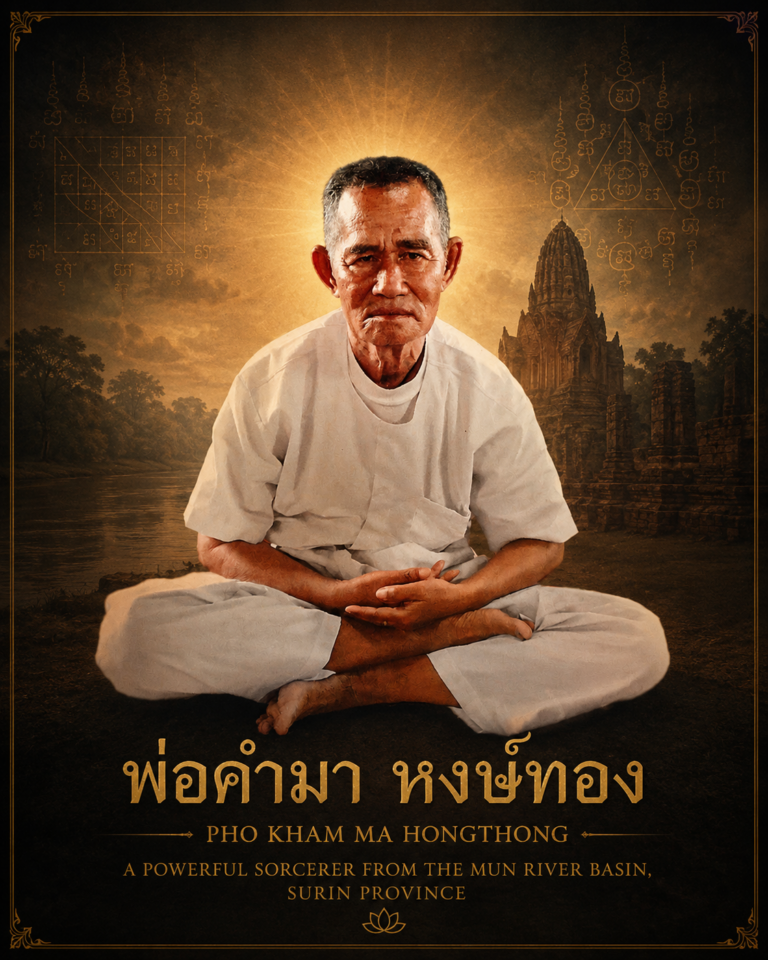
Pho Kham Ma Hongthong (พ่อคำมา หงษ์ทอง), also known as Father Khamma Hongthong (อาจารย์คำมา หงษ์ทอง), was a revered lay master of magic and sorcery from the Mun River basin, Surin Province, southern Isaan, Thailand. Born into humble origins and trained under a lineage of exceptional forest masters, he is best known for his powerful metta (loving-kindness) and mahasaneh (charm) amulets, including the celebrated Ngang Ta Daeng and Ngang Khiew Phet series. He passed away on 19 July BE 2558 (AD 2015). Read more ↓
Biography
Who Was Pho Kham Ma Hongthong?
Pho Kham Ma Hongthong (พ่อคำมา หงษ์ทอง), also known as Pho Khamma Hongthong (อาจารย์คำมา หงษ์ทอง), was a revered lay master of magic and sorcery from the Mun River basin, Surin Province, southern Isaan, Thailand. Born into humble origins and trained under a lineage of exceptional forest masters, he is best known for his powerful metta (loving-kindness) and mahasaneh (charm) amulets, including the celebrated Ngang Ta Daeng and Ngang Khiew Phet series. He passed away on 19 July BE 2558 (AD 2015).
Early Life and Ordination
Pho Khamma Hongthong (พ่อคำมา หงษ์ทอง) was born in the Mun River basin region of Surin Province (จังหวัดสุรินทร์), in the heart of southern Isaan — a land long associated with Khmer heritage, ancient animist traditions, and a rich lineage of powerful sorcerer-monks. His precise date of birth is not widely documented in English sources, and even his Thai national ID card did not accurately reflect his true birth year. When asked in February BE 2558 (AD 2015), Father Khamma himself stated that he was over 80 years old, suggesting a birth year of approximately BE 2477–2478 (AD 1934–1935).
During his childhood, Phra Kham Ma was ordained as a novice monk (สามเณร) at around 14 to 15 years of age. While serving as a novice, he undertook his earliest spiritual studies under the guidance of Luang Pu Am (หลวงปู่อาม) of Wat Ban Yang Bo Ee (วัดบ้านยางบ่อหี). He then embarked on a pilgrimage, continuing his studies under Luang Pu Khan (หลวงปู่ขาน) of Wat Tha Sabaeng (วัดท่าสะแบง). As a young man, he eventually left monastic life temporarily, married his first wife — a woman from Buriram Province (จังหวัดบุรีรัมย์) — and fathered two children. A personal conflict with his father-in-law later led him to become disillusioned with worldly affairs and to return to monastic life with renewed dedication.
Spiritual Development and Practice
Upon his return to monastic life, Father Khamma Hongthong (อาจารย์คำมา หงษ์ทอง) undertook an intensive period of study and practice under a remarkable succession of masters. He studied under Luang Pho Thuk (หลวงพ่อทุก) and Luang Pu Phan (หลวงปู่พาน) — though Father Khamma did not specify the names of their respective temples. His path then led him to two highly respected and widely celebrated masters: Luang Pu Khao Analayo (หลวงปู่เขาอนาลโย) of Wat Tham Klang Phae (วัดถ้ำกลางเพล) and Luang Pu Phang Chittakutto (หลวงปู่พังจิตตะกุตโต) of Wat Udom Khongkha Khiri Khet (วัดอุดมโขงคาคีรีเขต). During his time with Luang Pu Phang, Father Khamma was extended a great honour: he was invited to assist in consecrating a batch of Luang Pu Phang’s own amulets — a mark of deep trust and spiritual recognition. Additionally, accounts among disciples reference a teacher known as Ta Chi Pa Khao (ตาจีป่าขาว) and mention of Luang Pu Thep Lok Udon (หลวงปู่เทพโลกอุดร). Father Khamma’s tradition was rooted in the Isaan forest-sorcery lineage (สายวิชาไสยศาสตร์อีสาน), encompassing powerful yantra (ยันต์), incantation (คาถา), sacred tattooing (สักยันต์), and the consecration of metta and mahasaneh sacred objects.
After mastering these diverse disciplines, Father Khamma settled in Ban Nong Masaew, Thawatchaburi District, Roi Et Province (บ้านหนองมะแซว อำเภอท่าวังหิน จังหวัดร้อยเอ็ด), where he helped build the local temple, served as its abbot, and devoted himself to the continued support of Buddhism and the welfare of his disciples. His reputation spread widely across Roi Et Province, drawing students who came to receive sacred tattoos and learn from his deep well of magical knowledge.
Major Amulet Consecrations and Ceremonies
Father Khamma Hongthong (อาจารย์คำมา หงษ์ทอง) created a wide variety of sacred objects (วัตถุมงคล) throughout his life, including coins (เหรียญ), phim clay amulets (พระพิมพ์), Khun Phaen amulets (ขุนแผน), talismans (ตะกรุด), and herbal balms (ยาสมุนไพร). According to devotees, all of these objects are highly regarded for their efficacy — particularly in matters of metta (เมตตา — loving-kindness), mahasaneh (มหาเสน่ห์ — charm), and attraction. Detailed batch records in English sources are limited; the records below are drawn from accounts provided directly by disciples and verified editors.
- Commemorative Birthday Edition — BE 2554 (AD 2011)
- Occasion: Created to commemorate the 80th birthday of Father Khamma Hongthong. This was the first edition of coins created by his disciples from Nang Rong District, Buriram Province (อำเภอนางรอง จังหวัดบุรีรัมย์), as an offering of gratitude to their teacher.
- Coin quantities and materials: 30 silver coins (เหรียญเงิน), 33 bronze coins (เหรียญทองแดง), 83 alpaca coins (เหรียญอัลปาก้า), 85 brass coins (เหรียญทองเหลือง), and 88 lead coins (เหรียญตะกั่ว).
- Additional sacred objects: One elephant tusk knife (มีดงาช้าง), 16 eight-inch ritual knives (มีดพิธี 8 นิ้ว), 13 portable penknives (มีดพับ), and 12 lead-backed lockets with inscriptions (ล็อกเก็ตพิมพ์ตะกั่วหลัง).
- Special materials: Materials were generously provided by Luang Pho Mien Kalyano (หลวงพ่อเมียน กัลยาโณ) of Wat Ban Chaneniang, Krasang District, Buriram Province (วัดบ้านเจ้าเนียง อำเภอกระสัง จังหวัดบุรีรัมย์), along with materials from Ajarn Khamma Hongthong himself and the Thep Nakho lineage (สายเทพนาโค). The ritual knives incorporated special sacred materials including old temple nails (ตะปูวัดเก่า), iron ore (แร่เหล็ก), and nails from coffins (ตะปูโลง).
- Collector significance: As the first formally documented edition consecrated by Father Khamma’s own disciples and incorporating rare sorcery-lineage materials, this set is highly prized by collectors for its historical importance and its concentration of powerful metta energy.
- Ngang Ta Daeng (งั่งตาแดง) — 7-Athan Edition (7 อาถรรพ์)
- Type: Ngang Ta Daeng (งั่งตาแดง — Red-Eyed Ngang spirit amulet), a form particularly venerated in Isaan and Khmer-influenced magical traditions for its potent mahasaneh (charm) powers.
- Edition name: 7-Athan Edition (7 อาถรรพ์), indicating seven rounds of powerful sacred empowerment.
- Province of origin: Surin Province (จังหวัดสุรินทร์).
- Collector significance: Among collectors in Thailand and Southeast Asia, the Ngang Ta Daeng by Father Khamma is regarded as one of his signature works, prized for its strong metta and mahasaneh properties. Its association with the 7-Athan consecration formula is seen as adding exceptional potency.
- Ngang Khiew Phet — Khun Phadet Edition (งั่งเขี้ยวเพชร — ขุนเพชร)
- Type: Phra Ngang Khiew Phet (พระงั่งเขี้ยวเพชร), also referred to as Khun Phadet (ขุนเพชร), a diamond-fanged Ngang amulet of exceptional complexity.
- Materials: This amulet was made from an extraordinary assembly of sacred and mystical materials sourced from revered masters and ancient artefacts, including: Phra Ngang by Father Kham Ma himself; ancient Khmer Ngang (งั่งเขมรโบราณ); Mae Peh (แม่แพะ) by Luang Pu Rit and Ajarn Pleng Boonyeun; Khmer Mae Peh (แม่แพะเขมร); Phra Pidta Nang Phrai (พระปิดตานางพราย) by Luang Pu Thammarangsi (หลวงปู่ธรรมรังษี); Chang Phasam Khlong (ช้างผสามคลอง) by Luang Pho Noi (หลวงพ่อน้อย); Palad Khik (ปลัดขิก) from various Lanna masters; In Lanna amulet (อินล้านนา); Kratai Sep Nang (กระต่ายเสพนาง) by Kruba Wang (ครูบาวัง); Pae Maha Heng (แพะมหาเฮง) by Luang Pho Luea (หลวงพ่อเหลือ); an ancient bracelet (กำไลโบราณ); Mon charm Takrut (ตะกรุดมอญ) by Ajarn Prakong (อาจารย์ประคอง); Khun Phaen Chat Phayak Fah Khamron (ขุนแผนจัดพยัคฆ์ฟ้าคำรณ); Luk Sakot (ลูกสะกด) by Luang Pu Hong (หลวงปู่โฮง); Palad Khik (ปลัดขิก) by Luang Pho Yid (หลวงพ่อยิด); gecko from Wat Bang Phra (ตุ๊กแกวัดบางพระ); elephant hook (ขอช้าง); cremation grate (ตะแกรงเผาศพ); ancient bronze (สำริดโบราณ); ring (แหวน); knife sheath by Luang Pho Khid (หลวงพ่อขิด); inscribed yantra plate from Khmer masters (แผ่นยันต์จารจากอาจารย์เขมร); Sangkhawanorn nail (ตะปูสังขวานร); and ghost money (เงินผี).
- Collector significance: The extraordinary breadth of sacred materials — spanning Isaan, Lanna, Khmer, and Mon magical traditions — makes this one of the most complex and sought-after amulets associated with Father Khamma’s name. Devotees believe it concentrates the metta energies of multiple lineages into a single object.
For additional batch records not listed here, Thai-language temple sources and direct enquiry with disciples in Roi Et and Surin provinces are recommended, as comprehensive English-language documentation remains limited.
Legacy and Temple Significance
Father Khamma Hongthong (พ่อคำมา หงษ์ทอง) passed away peacefully from old age on the morning of 19 July BE 2558 (AD 2015), at the age of 71 according to his national ID card — though devotees and his own accounts suggest his true age was closer to 80 years or beyond. His passing marked the end of a remarkable life dedicated to the preservation of Isaan sorcery traditions rooted in the Mun River basin (ลุ่มแม่น้ำมูล) of Surin Province.
Although Father Khamma deliberately avoided public fame throughout his life — rarely revealing the full scope of his teachers or abilities — his legacy endures through a substantial community of disciples spread across Thailand. His most prominent early disciple, Ajarn Kaew (อาจารย์แก้ว), is credited with spreading his teacher’s reputation throughout Roi Et Province. Other early disciples included Ajarn Chalermchai of Wat Khrim Nai Nong Na La (อาจารย์เฉลิมชัย วัดคริมในหนองนาลา) and a layperson named Somboon of Ban Lao Had (สมบูรณ์ บ้านเลาหาด). Father Khamma’s Great Loving-Kindness Mantra (คาถามหาเมตตา) — beginning with Namo Buddhaya, Na Chuen Mo Chom — is still recited by his disciples today as a daily practice for protection, prosperity, and charm. His sacred objects continue to circulate among collectors and devotees in Thailand, Singapore, Malaysia, and beyond as treasured examples of authentic southern Isaan sorcery craft.