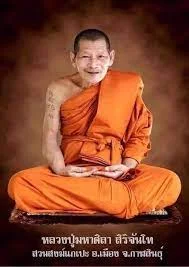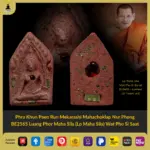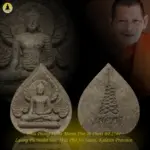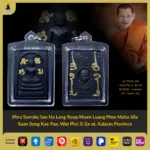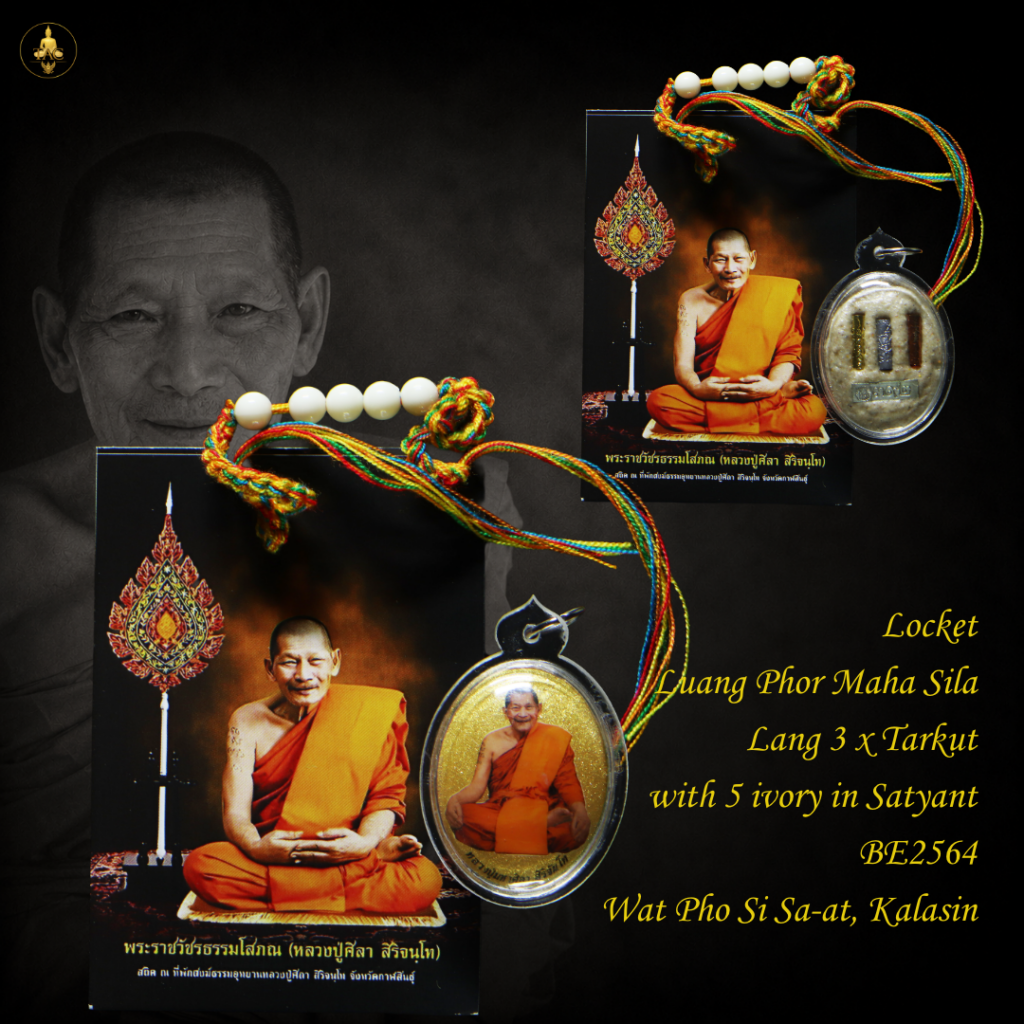
Locket Luang Phor Maha Sila Lang 3 x Tarkut with 5 ivory in Satyant BE2564 Wat Pho Si Sa-at, Kalasin
| Type | Locket Luang Phor Maha Sila Lang 3 x Tarkut with 5 ivory in Satyant |
| Monk | Lp Maha Sila (Phra Ratcha Watcharathammasophon) Wat Pa Si Saat |
| Temple | Wat Pa Si Saat |
| B.E. Year | 2564 |
| Material | Nur Phong |
| Condition | Excellent |
| SKU | TAC-LocketLuangPhorMahaSilaLang3XTarkutWith5IvoryInSatyant-LpMahaSila-001 |
Authentic Locket Luang Phor Maha Sila Lang 3 x Tarkut with 5 ivory in Satyant by Lp Maha Sila (Phra Ratcha Watcharathammasophon) Wat Pa Si Saat, BE 2564, Nur…
What is the Locket Luang Phor Maha Sila Lang 3 x Tarkut with 5 ivory in Satyant by Lp Maha Sila (Phra Ratcha Watcharathammasophon) Wat Pa Si Saat?
The Locket Luang Phor Maha Sila Lang 3 x Tarkut with 5 ivory in Satyant Lp Maha Sila (Phra Ratcha Watcharathammasophon) Wat Pa Si Saat is an authentic Thai amulet consecrated in BE 2564 at Wat Pa Si Saat. Pressed from nuea phong (sacred powder), the reverse carries three embedded takrut (rolled metal yantra scrolls) and five pieces of sacred ivory arranged within a Satyant geometric yantra design, traditionally associated with protection and fortune.
Lp Maha Sila and the tradition behind this piece
Lp Maha Sila (Phra Ratcha Watcharathammasophon) is a senior monk at Wat Pa Si Saat in Kalasin province, northeastern Thailand. His formal ecclesiastical title — Phra Ratcha Watcharathammasophon — reflects recognition at a national level, not merely regional standing. Among collectors in the Isan circuit, he is known specifically for his command of Wicha (the traditional sacred arts of Buddhist consecration) and for the disciplined way he constructs each amulet batch.
Three takrut on the reverse face is a signature of his work. Each scroll is hand-inscribed with sacred Khmer-Pali script before being set into the phong body, so the finished piece layers powder, metal, and written yant (sacred inscription) into a single consecrated form. That combination is deliberate, not decorative.
This locket was produced during a focused period of ceremonial activity at the temple in BE 2564. Collectors who follow his output regard pieces from this period as a clear expression of his accumulated practice — the kind of batch where the monk’s involvement from powder preparation through pluk sek (consecration ceremony) is direct and traceable.
Wat Pa Si Saat, Kalasin — and why the origin matters
Kalasin sits in the Isan region, which has its own deep current within the broader Thai Buddhist amulet tradition. The province has produced monks accomplished in Wicha for generations, and Wat Pa Si Saat carries that regional lineage. For collectors sourcing Isan pieces, the temple of origin is a primary reference point — not background colour.
This locket was conceived and made within that environment. The phong blend, the takrut inscriptions, and the Satyant pattern all reflect practices maintained at the temple rather than outsourced production. That matters when you are assessing whether a piece has genuine ritual integrity behind it.
Construction: phong, takrut, ivory, and the Satyant pattern
The nuea (material/substance) here is Nur Phong — a sacred powder blend, or muan sarn, typically drawn from consecrated herbal compounds, temple ash, sacred earth, and blessed binding agents. Phong has a porous, earthy texture that collectors learn to read by touch and by eye. It is also the medium that absorbs and holds the monk’s meditative focus during consecration.
Into that phong body, three takrut are embedded on the reverse. These are hand-rolled metal scrolls carrying Khmer-Pali sacred script — not printed, not stamped. The five pieces of sacred ivory are set within a Satyant geometric yantra pattern on the same face. The Satyant design functions as a traditional sacred diagram intended to harmonise the combined materials rather than simply fill space.
The result is a multi-material composition: powder, metal scroll, ivory, and inscribed geometry working together. That is meaningfully different from a standard single-material phong locket, and it is the main reason this piece draws attention from collectors who look beyond surface appearance.
When examining a piece, these are the construction points worth checking:
- Depth and texture of the phong — look for consistent, aged surface character rather than a uniform machined finish
- Precision of the three takrut — they should sit flush and firm, with visible script detail on the exposed ends
- Integrity of the five ivory pieces within the Satyant pattern — no gaps, no replacements, placement consistent with the yantra geometry
- Overall pim (mould) definition — edges and face detail should be clean and consistent with known examples from this batch
No certificate accompanies this piece. Verification relies on physical inspection against documented batch references and, where possible, temple source confirmation.
What distinguishes this BE 2564 locket from more common powder amulets is the density of ritual construction on the reverse face: three hand-inscribed Tarkut yantra scrolls combined with five pieces of sacred ivory, all set within a Satyant geometric frame — this is a notably labour-intensive configuration that reflects Luang Phor Maha Sila's reputation for producing works of genuine ritual integrity rather than high-volume releases. Luang Phor Maha Sila's standing as a senior Wicha practitioner in Kalasin's northeastern tradition makes his pieces increasingly sought after by collectors who prioritise the monk's lineage and inscriptional depth over temple prestige alone. We at TAC regard this as a worthwhile acquisition for the collector building a considered body of northeastern Thai amulets, particularly those interested in the intersection of sacred powder, metalwork, and hand-written yantra within a single consecrated object.
Attributes reflect Thai Buddhist devotional tradition and are not measurable claims.