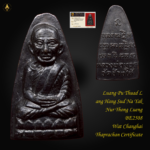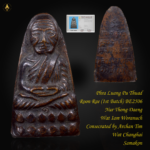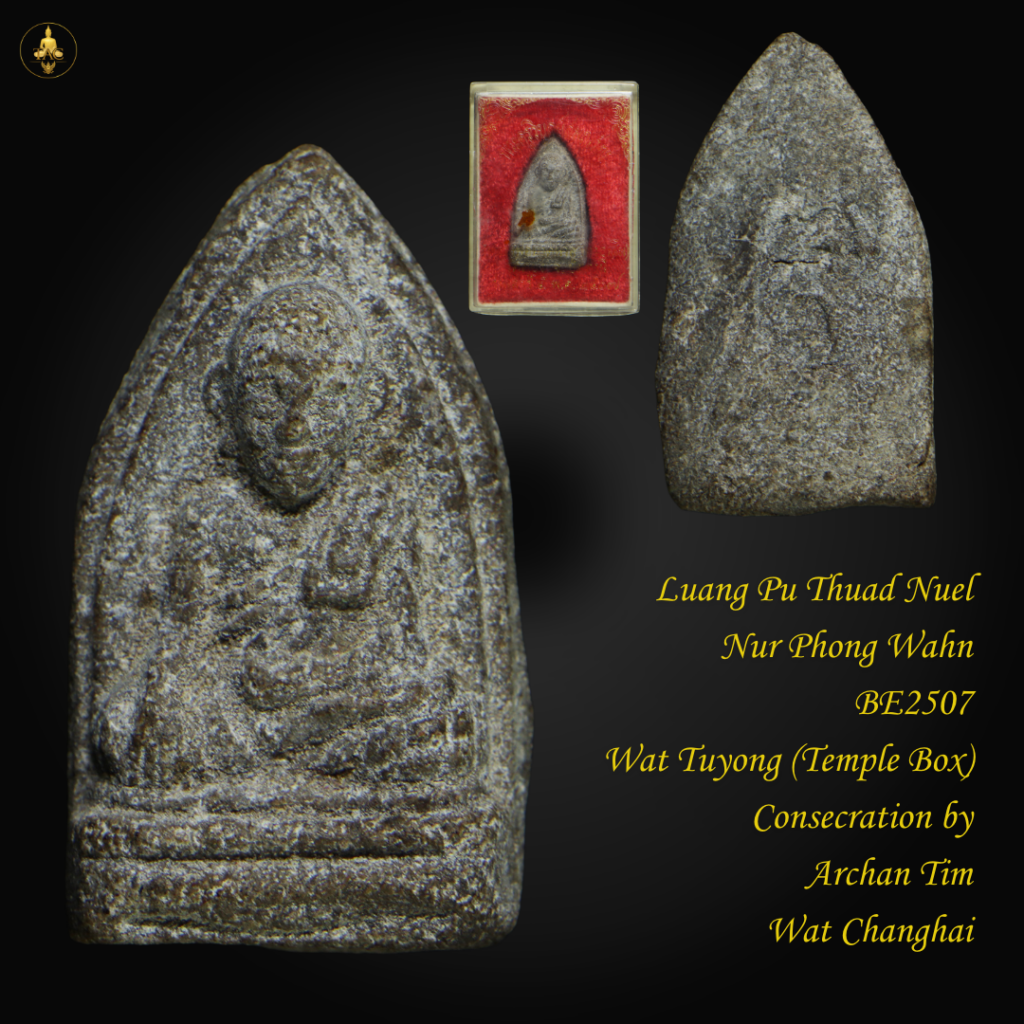
Luang Pu Thuad Nuel Nur Phong Wahn BE2507 Wat Tuyong (Temple Box) Consecration by Archan Tim Wat Changhai
| Type | Luang Pu Thuad Nuel |
| Monk | Archan Tim |
| Temple | Wat Tuyong |
| B.E. Year | 2507 |
| Material | Nur Phong Wahn |
| Condition | Very Good |
| SKU | TAC-LuangPuThuadNuel-AcTimWatChanghai-001 |
Luang Pu Thuad Nuel Archan Tim, Wat Tuyong BE 2507. Pressed in Nur Phong Wahn with 200 monks, stamped yant reverse. No certificate.
What is the Luang Pu Thuad Nuel by Archan Tim, Wat Tuyong BE 2507?
The Luang Pu Thuad Nuel Archan Tim from Wat Tuyong, Pattani Province, is an authentic Thai amulet consecrated in BE 2507. Pressed in Nur Phong Wahn — a sacred herbal powder blend — it was produced between BE 2505 and BE 2507 under Luang Pho Dam, with Archan Tim of Wat Chang Hai as a principal consecrating master.
Three years in the making — what went into the BE 2507 consecration
Luang Pho Dam spent three full years planning this series before a single amulet was pressed. He personally assembled 200 monks for the consecration ceremony at Wat Tuyong — a gathering that scale alone marks as exceptional. The ceremony was conducted strictly to ancient protocol and declared ritually complete by all officiating masters.
The direct participation of Archan Tim was not incidental. His involvement tied this Wat Tuyong batch to the living lineage of the earliest Luang Pu Thuad amulets ever produced at Wat Chang Hai. Collectors who follow the Thai Buddhist amulet tradition understand what that lineage connection means for a piece’s standing. The blessings drawn upon came from Luang Pu Thuad Nual Thewathammo of Wat Muchalintawapi Vihara (Tuyong), Luang Pho Dam, and the broader Pattani Buddhist community — with the spirit of Luang Pu Thuad himself ceremonially invited to preside, mirroring the tradition established at the original Wat Chang Hai consecrations.
Nur Phong Wahn — how this amulet was pressed and what to look for
Phong Wahn — “sweet herbal powder” — is a muan sarn (sacred powder blend) made from botanicals with auspicious properties, compressed into moulds under senior monk supervision. The material has been used in Thai amulet production for centuries precisely because it absorbs and retains consecration energy well. This BE 2507 series was produced in five distinct pim (mould types): the Suam Ruean Kaeo committee mould, the large mould, the Kha To mould, the medium mould, and the small fingernail mould. Each carries the same consecration; the choice comes down to collector preference and wearing tradition.
The single most important physical identifier on genuine pieces is the stamped yant (sacred inscription) on the reverse face. That mark serves as both authentication marker and spiritual seal. Pieces without it, or with an inconsistent stamp, need careful comparison against documented examples before any conclusion is drawn. The Nur Phong Wahn body, the correct pim proportion, and the stamped yant on the reverse are the three points every serious collector checks first.
- Material: Nur Phong Wahn herbal powder body — look for consistent texture and compression typical of the era
- Pim: five recognised mould types; verify the size matches documented Wat Tuyong BE 2507 proportions
- Reverse yant: stamped, not hand-drawn — presence and clarity are the primary authentication markers
- Certificate: none issued for this series — authentication relies entirely on physical characteristics and collector reference
What collectors associate this piece with, and why the provenance matters
The Luang Pu Thuad Nuel is traditionally carried for protection, safe passage, and the warding off of misfortune. Collectors across Singapore, Malaysia, Taiwan, Hong Kong, and mainland China associate the BE 2507 Wat Tuyong batch with these qualities in particular, given who consecrated it and under what conditions. The legend of Luang Pu Thuad — especially his reputation for protecting travellers — runs through the devotional tradition behind every piece in this series.
Beyond belief, the provenance itself is the argument for this batch. A three-year preparation period, 200 consecrating monks, Archan Tim’s direct involvement, and a deliberate ceremonial invocation modelled on the Wat Chang Hai originals — that combination does not appear in most amulet series from this era or any other. Pieces from this run are increasingly scarce in circulation, and collector awareness across the region has grown steadily as documentation of the series has become better known.
We at TAC consider the Wat Tuyong BE 2507 series one of the more historically grounded Luang Pu Thuad batches to come through our hands — the combination of Luang Pho Dam's three-year preparation, the 200-monk assembly, and Archan Tim's direct consecration role gives it a provenance that is well-documented and specific. For a collector focused on southern Thai pieces from the mid-BE 2500s, this is a batch worth studying carefully.
Attributes reflect Thai Buddhist devotional tradition and are not measurable claims.