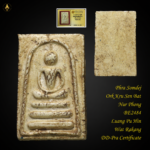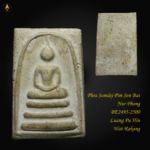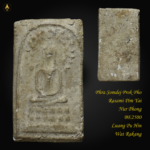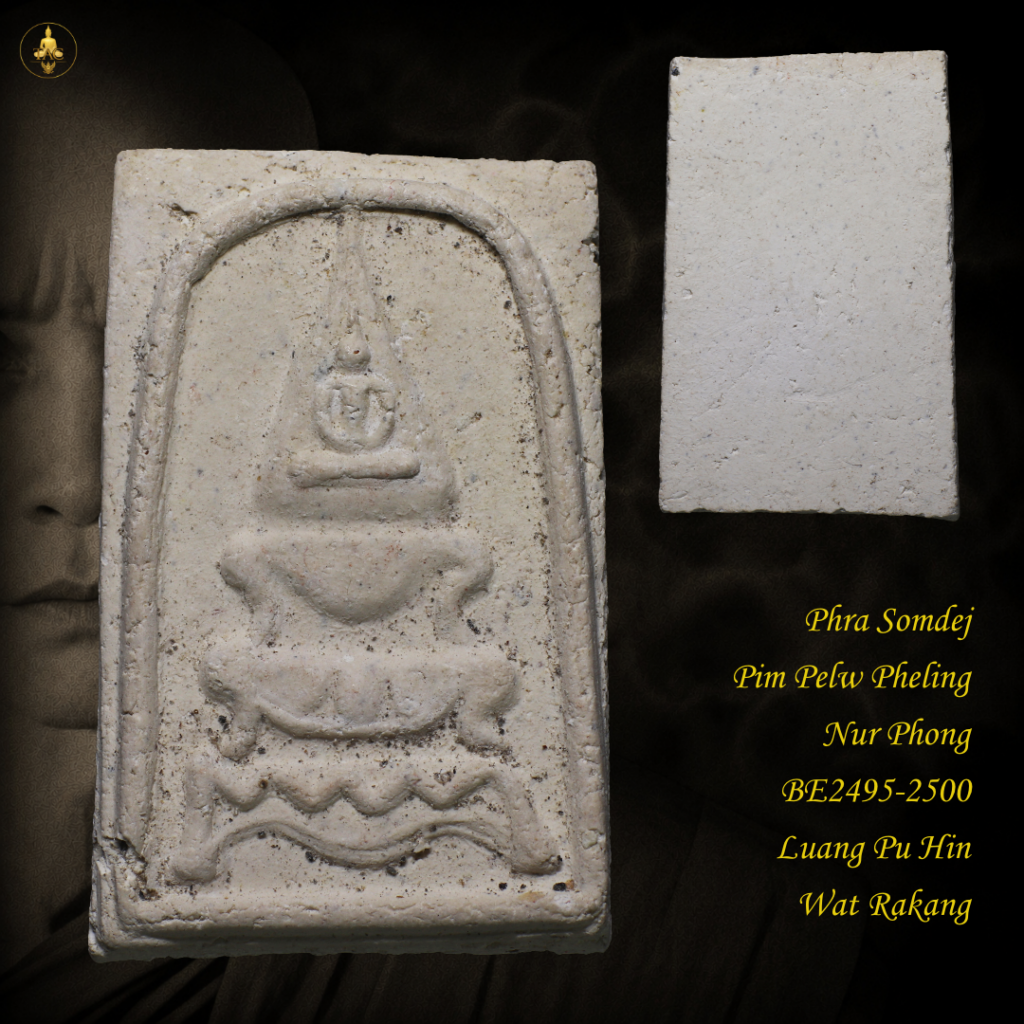
Phra Somdej Pim Pelw Pheling Nur Phong BE2495-2500 Luang Pu Hin Wat Rakang
| Type | Phra Somdej Pim Pelw Pheling |
| Monk | Luang Pu Hin Wat Rakang Kositaram |
| Temple | Wat Rakang |
| B.E. Year | 2495 |
| Material | Nur Phong |
| Condition | Good |
| SKU | TAC-PhraSomdejPimPelwPheling-LpHin-001 |
Authentic Phra Somdej Pim Pelw Pheling by Luang Pu Hin Wat Rakang Kositaram, BE 2495, Nur Phong. No certificate. Classical-era Wat Rakang piece.
What is the Phra Somdej Pim Pelw Pheling by Luang Pu Hin Wat Rakang Kositaram?
The Phra Somdej Pim Pelw Pheling Luang Pu Hin Wat Rakang Kositaram is a classical-era Nur Phong pressed-powder amulet produced at Wat Rakang in BE 2495. Consecrated by Luang Pu Hin Wat Rakang Kositaram, it belongs to a generation of Phra Somdej pieces that serious collectors across Southeast Asia and Greater China regard as genuinely significant from that period.
Luang Pu Hin and Why His Name on This Piece Matters
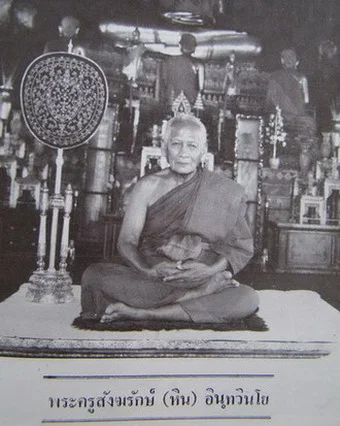
Luang Pu Hin Wat Rakang Kositaram was a senior monk whose discipline and standing earned him deep respect among devotees across Thailand and the region. His involvement was not ceremonial — monks of his generation at Wat Rakang were directly engaged in the preparation, chanting, and consecration of each batch of muan sarn (sacred powder blend), giving the material its religious weight.
That direct participation is what makes provenance relevant here. A Phra Somdej from Wat Rakang carries one meaning; the same piece with a monk of Luang Pu Hin’s calibre behind the consecration carries another. Collectors who understand the classical era recognise the difference.
Wat Rakang, the Pim, and How This Piece Was Made
Wat Rakang — formally Wat Rakang Kositaram — sits on the west bank of the Chao Phraya River in Thonburi. It is the temple most closely associated with the Phra Somdej tradition, and its consecration chambers have hosted some of the most documented Buddhist ceremonies in Thai amulet history. Collectors who follow the broader Thai Buddhist amulet tradition will know that Wat Rakang’s institutional standing shapes how the market values anything produced within its walls.
The pim (mould type) here is Pelw Pheling — a specific design classification within the Phra Somdej family. It is distinguished by a refined arched throne canopy and the proportional rendering of the seated Buddha image. These mould characteristics are precisely what authenticators compare against documented reference pieces from Wat Rakang productions of this period.
The nuea (material/substance) is Nur Phong — a pressed sacred powder blend. The muan sarn at Wat Rakang during this era typically incorporated dried sacred pollens, ground limestone, consecrated chalk, and various herbal and ceremonial powders accumulated through extended ritual use. The mixture was subject to continuous chanting throughout preparation. Pressed and dried, genuine Nur Phong from BE 2495 shows characteristic aging: subtle surface texture, natural patina, and micro-fracture lines consistent with seven decades of drying.
What Collectors Look For — and the Certificate Situation
No certificate is issued for this piece. That is not unusual for classical-era Wat Rakang material, but it does shift the responsibility of authentication entirely onto physical examination and dealer expertise. The key points to assess:
- Pim accuracy: The Pelw Pheling mould has specific proportions — throne canopy arch, Buddha image ratio, base width — that reference materials document for this production period.
- Surface aging: Nur Phong from BE 2495 should show natural patina and micro-fractures consistent with age, not artificial distressing.
- Powder composition: Under close inspection, genuine muan sarn from this era has a texture and density distinct from later reproductions.
- Overall proportion: The seated image’s symmetry and throne rendering should match authenticated Wat Rakang examples from this period.
Without a certificate, buy from a dealer who can explain what they are looking at, not just what they are selling. Provenance transparency matters more here than it does with certified pieces.
We at TAC are offering this Phra Somdej Pim Pelw Pheling Luang Pu Hin Wat Rakang Kositaram from BE 2495 — a classical-era Nur Phong piece from one of the most respected temples in the Thai amulet tradition. For collectors focused on the classical Wat Rakang lineage, Luang Pu Hin's direct consecration role is what gives this piece its standing — and with no certificate attached, the physical condition and pim accuracy of any individual example are what determine its place in a serious collection.
Attributes reflect Thai Buddhist devotional tradition and are not measurable claims.