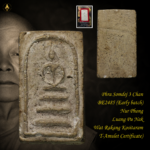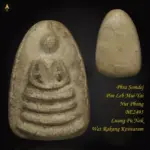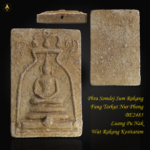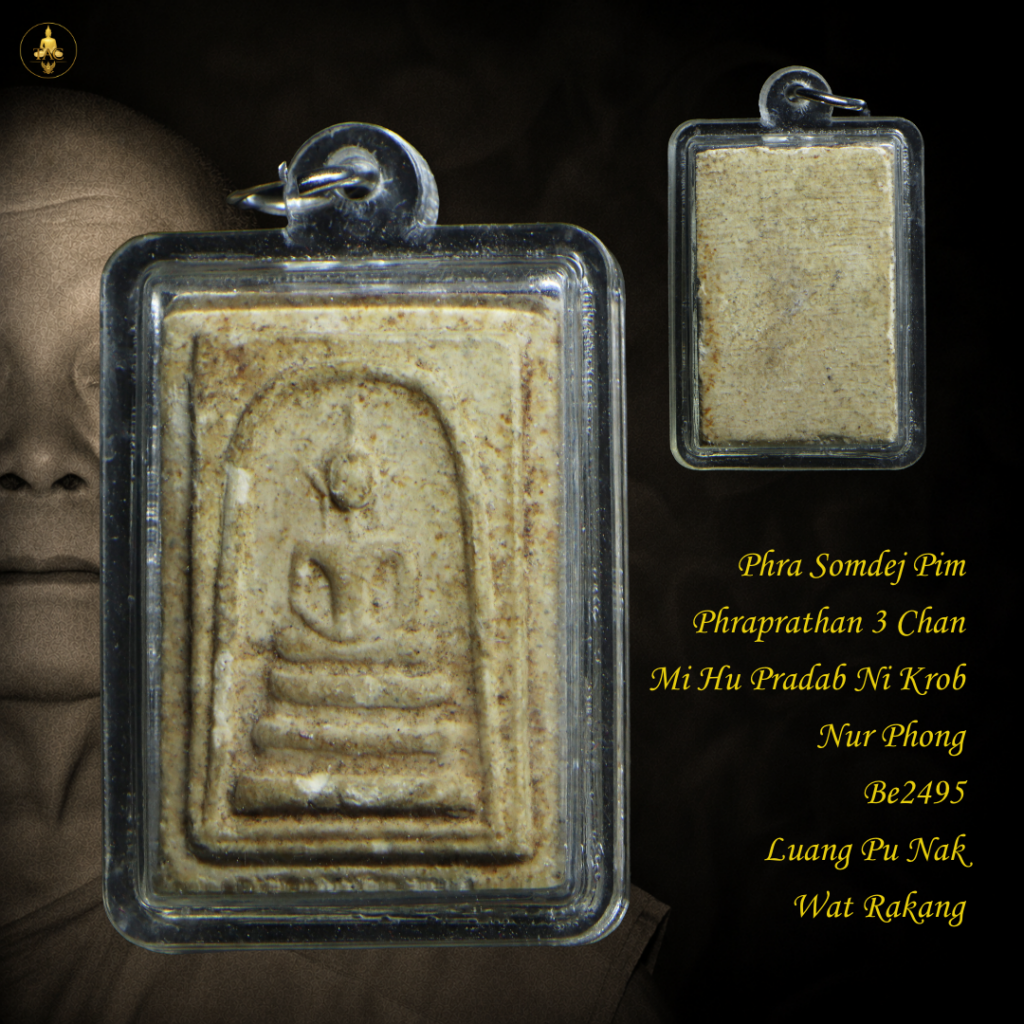
Phra Somdej Pim Phraprathan 3 Chan Mi Hu Pradab Ni Krob Nur Phong Be2495 Luang Pu Nak Wat Rakang (Rare)
| Type | Phra Somdej Pim Phraprathan 3 Chan Mi Hu Pradab Ni Krob |
| Monk | Luang Pu Nak Wat Rakang Kositaram |
| Temple | Wat Rakang |
| B.E. Year | 2495 |
| Material | Nur Phong |
| Pim / Mold | Phraprathan 3 Chan Mi Hu Pradab Ni Krob |
| Condition | Good |
| SKU | TAC-PhraSomdejPimPhraprathan3ChanMiHuPradabNiKrob-LpNak-001 |
Authentic Phra Somdej Pim Phraprathan 3 Chan Mi Hu Pradab Ni Krob by Luang Pu Nak Wat Rakang Kositaram, BE 2495, Nur Phong. No cert.
What is the Phra Somdej Pim Phraprathan 3 Chan Mi Hu Pradab Ni Krob by Luang Pu Nak Wat Rakang Kositaram?
The Phra Somdej Pim Phraprathan 3 Chan Mi Hu Pradab Ni Krob Luang Pu Nak Wat Rakang Kositaram is a classical-era Thai amulet pressed in BE 2495 at Wat Rakang from Nur Phong — sacred powder material. Its three-tiered throne and distinctively ornamented ears set it apart from standard Phra Somdej pim (mould types) of the same period. No certificate is issued for this piece.
Luang Pu Nak and what his name means on a BE 2495 piece
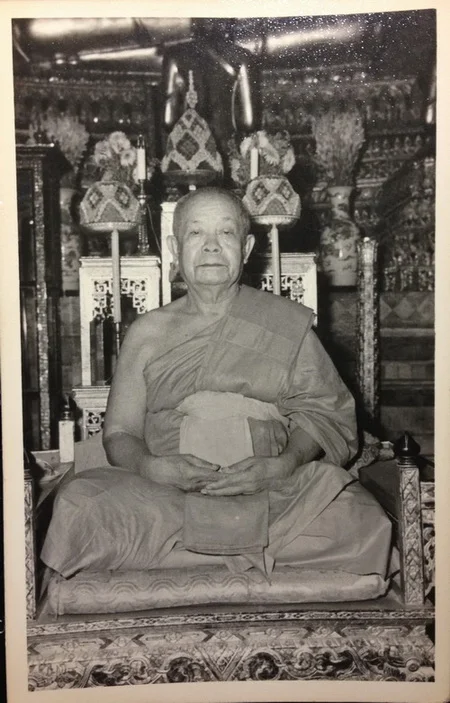
Luang Pu Nak Wat Rakang Kositaram was known for strict monastic discipline and deep command of Buddhist sacred sciences. His standing within the temple gave amulets produced under his supervision a level of authority that collectors in this region still reference today.
BE 2495 sits squarely in the classical era of Thai amulet production — the period collectors consistently treat as the benchmark. A piece tied to that year, that temple, and that monk carries three reinforcing factors that are difficult to find aligned in a single lot. That combination is why demand from collectors across Singapore, Malaysia, Taiwan, Hong Kong, and Mainland China has stayed consistent.
Wat Rakang, the Nur Phong nuea, and what the pim tells you
Wat Rakang, formally Wat Rakang Kositaram, sits in Bangkok’s Thonburi district and has been producing consecrated powder amulets since the Rattanakosin era. For collectors, the temple name functions almost like a provenance certificate on its own — very few origins carry equivalent weight in the broader Thai Buddhist amulet tradition.
The nuea (material/substance) here is Nur Phong — a muan sarn (sacred powder blend) that typically incorporates consecrated white chalk, aromatic flower pollens, dried herbal compounds, and powdered relics accumulated through generations of practice. The blend produces a pale, fine-textured surface. On genuine BE 2495 examples, that surface shows a specific density and ageing patina that experienced eyes pick up quickly.
The pim itself tells a clear story. The three-tiered throne — 3 Chan — and the ornamented ear detail — Mi Hu Pradab Ni Krob — are the defining mould characteristics that separate this variant from other Phra Somdej produced in the same period. Both features require close comparison against reference pieces before any authentication call is made.
Key points collectors examine on this pim:
- Throne tiers: Clean, even separation across all three levels with period-consistent pressing depth
- Ear ornamentation: The Mi Hu Pradab Ni Krob detail should be sharp and consistent with known BE 2495 Wat Rakang examples
- Surface texture: Nur Phong surface shows fine porosity and natural ageing — not smoothed or retouched
- Powder density: Authentic pieces have a characteristic weight and compaction feel that late reproductions rarely match
No third-party certificate comes with this piece. That means authentication rests entirely on physical examination and comparison against niyom (collector-standard reference pieces) from the same pim and run.
What collectors traditionally carry this piece for
Within collector and devotee tradition, the Phra Somdej Pim Phraprathan 3 Chan Mi Hu Pradab Ni Krob is associated with protection from misfortune and negative influences. Wearers have long regarded it as a source of spiritual fortification rooted in sincere Buddhist devotion.
Collectors also associate this pim with enhanced personal authority — the kind of quiet presence that commands respect in professional and social settings. Long-term devotees treat it as a support for consistent Buddhist practice and meritorious conduct over time.
This is a BE 2495 Wat Rakang piece in Nur Phong — one of the more specific pim variants from that era, distinguished by the three-tiered throne and the Mi Hu Pradab Ni Krob ear ornamentation. We carry it for collectors who prioritise physical authentication over paperwork, and who understand what the Luang Pu Nak name at Wat Rakang represents in the classical period.
Attributes reflect Thai Buddhist devotional tradition and are not measurable claims.