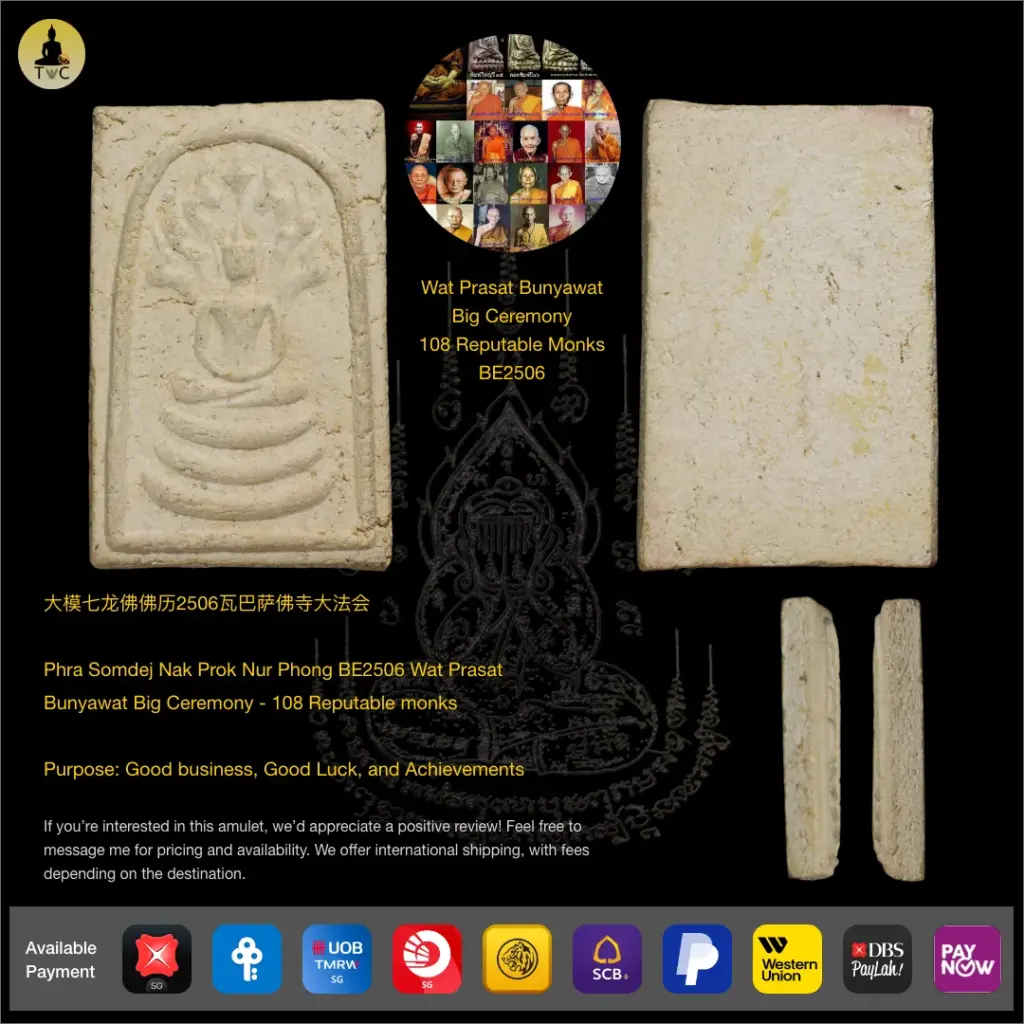
大模七龙佛佛历2506瓦巴萨佛寺大法会 Phra Somdej Nak Prok Nur Phong BE2506 Wat Prasat Bunyawat Big Ceremony – 108 Reputable monks
| Temple | Wat Prasat |
| B.E. Year | 2506 |
| Material | Phong |
| SKU | TAC-0144 |
Authentic 大模七龙佛佛历2506瓦巴萨佛寺大法会 Phra Somdej Nak Prok Nur Phong BE2506 Wat Prasat Bunyawat Big Ceremony - 108 Reputable monks.
What is the 大模七龙佛佛历2506瓦巴萨佛寺大法会 Phra Somdej Nak Prok Nur Phong BE2506 Wat Prasat Bunyawat Big Ceremony – 108 Reputable monks?
The 大模七龙佛佛历2506瓦巴萨佛寺大法会 Phra Somdej Nak Prok Nur Phong BE2506 Wat Prasat Bunyawat Big Ceremony – 108 Reputable monks is a large-mould phong amulet consecrated at Wat Prasat Bunyawat in BE 2506 (1963 CE). The pluk sek (consecration ceremony) drew 108 reputable monks in a single unified event, pressing the Nak Prok image — Buddha in meditation beneath the Naga serpent king’s hood — in sacred powder.
What happened at Wat Prasat in BE 2506 and why it still matters to collectors
BE 2506 was an active year for large-scale ceremonial amulet production in Thailand. Temple committees were organising major pluk sek events specifically to concentrate merit from as many senior monastics as possible into a single batch. The decision to convene 108 monks carries real doctrinal weight — 108 corresponds to the number of defilements listed in Theravada teaching, so the assembly symbolises their complete dispelling.
Wat Prasat Bunyawat hosted this grand ceremony and has maintained a consistent reputation for orthodox practice. Amulets tied to a named, documented temple event rather than a loose regional run give collectors something concrete to trace. That specificity is part of what makes pieces from this ceremony worth following across the Thai Buddhist amulet tradition.
The Nak Prok iconography itself is classical — the meditating Buddha sheltered by the Naga king’s spread hood. It reads immediately to collectors in Singapore, Malaysia, Hong Kong, and Taiwan, and its association with patient endurance and protective shelter is well understood across the Chinese-speaking diaspora market.
The phong material and what the large mould tells you
Nuea phong — sacred powder — is the substance here. Phong blends used in mid-century Thai temple amulets typically draw on consecrated herbal powders, mineral compounds, and sacred ash accumulated from years of ritual incense and devotional objects. The quality of the pressed piece depends on both the formulation and the compression: a well-made phong amulet holds fine mould detail even after six decades.
The term 大模 indicates the large-mould format. A bigger pim (mould) means a greater volume of phong per piece and more surface area for the Nak Prok relief — the face detail on genuine large-mould examples from this ceremony is noticeably sharper and more layered than smaller format pieces from comparable runs. That sharpness, combined with the natural surface ageing of sixty-plus-year-old powder, is one of the first things experienced examiners check.
Consecration followed classical Thai ceremony structure. Monks recited Pali suttas continuously while directing concentrated meditative intention toward the assembled amulets. That sustained ritual environment — 108 monks holding focus over an extended ceremony — is precisely what collectors reference when they discuss the institutional weight behind this piece.
Authentication points and what to know before you acquire
Pieces from this ceremony are now over sixty years old. Age-related surface characteristics on genuine phong examples include consistent, fine-grained patination across the face and edges — not surface abrasion or artificial darkening applied after the fact. Collectors compare the mould depth and powder grain against documented reference examples before committing.
- Mould sharpness — the large-mould pim should show clear, deep relief in the Nak Prok image; soft or blurred lines on the Naga hood suggest a later copy or worn die.
- Phong surface ageing — look for even, natural patination consistent with sixty-plus years; artificial darkening tends to pool unevenly at the edges.
- Powder composition — cross-reference the grain texture and colour against known genuine examples from the BE2506 Wat Prasat Bunyawat batch.
- Provenance documentation — no specific certification body is listed for this piece; TAC sources through established channels with traceable collection histories, and independent appraisal from a recognised Thai amulet expert panel is always advisable before acquisition.
Collector interest in large-mould Nur Phong examples from this ceremony remains steady across Singapore, Malaysia, Hong Kong, and Taiwan. The combination of a named 108-monk event, a specific temple provenance, and the Nak Prok iconography gives this piece a clear position in any serious mid-century Thai amulet collection.
We at TAC regard this piece as one of the more documentable mid-century phong amulets in our current stock — the combination of a named 108-monk ceremony at Wat Prasat Bunyawat in BE 2506 and the large-mould Nak Prok format gives collectors something concrete to research and compare against reference examples. For a collector building a serious mid-twentieth-century Thai amulet holding, the ceremonial specificity here — a single documented event, a named temple, a symbolic monk count — is exactly what separates a historically grounded piece from a generic batch amulet.
Attributes reflect Thai Buddhist devotional tradition and are not measurable claims.