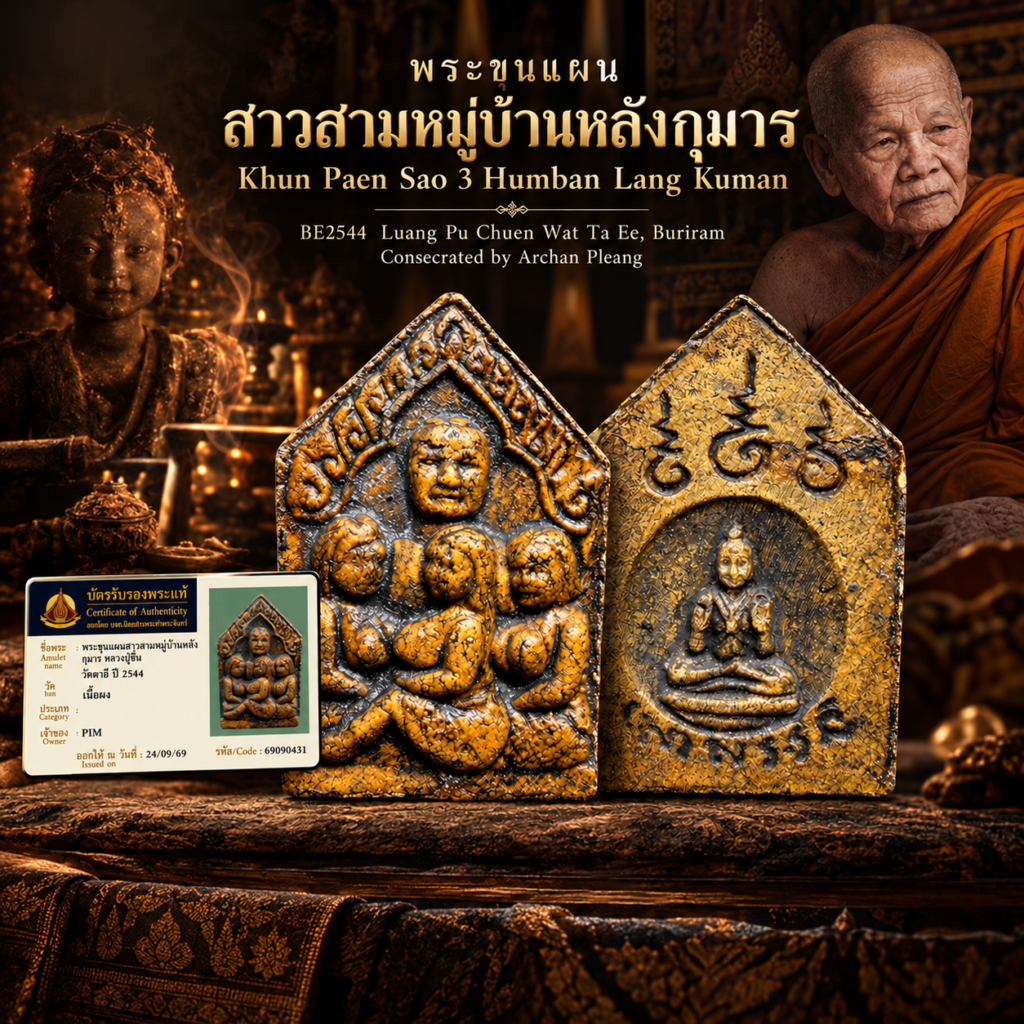
Khun Paen Sao 3 Humban Lang Kuman Nur Phong BE2544 Luang Pu Chuen Wat Ta Ee, Buriram Consecrated together Archan Pleang
| Type | Khun Paen Sao 3 Humban Lang Kuman |
| Monk | Luang Pu Chuen (Lp Chuen) Tiknyano Wat Ta Ee, Buriram |
| Temple | Buriram |
| B.E. Year | 2544 |
| Material | Nur Phong |
| Condition | Very Good |
| Certificate | Thaprachan |
| SKU | TAC-KhunPaenSao3HumbanLangKuman-LpChuen-001 |
Authentic Khun Paen Sao 3 Humban Lang Kuman by Luang Pu Chuen, Wat Ta Ee, Buriram, BE 2544. Nur Phong material. Certified Thaprachan. Available from TAC, Singapore.
What is the Khun Paen Sao 3 Humban Lang Kuman by Luang Pu Chuen, and is it genuine?
The Khun Paen Sao 3 Humban Lang Kuman Luang Pu Chuen is a pressed powder amulet produced at Wat Ta Ee, Buriram in BE 2544. It is made from nur phong — a sacred powder blend — and carries a Thaprachan certificate, the recognised authentication document issued by the Thaprachan amulet-market certifying committee in Bangkok.
Luang Pu Chuen and what he brought to this piece
Luang Pu Chuen of Wat Ta Ee is a Buriram master whose following spans collectors in Thailand and across the region. Monks from this province often trained in lineages where the Khun Paen form — tied to the legendary soldier and lover of Thai folklore — was considered among the most demanding to consecrate properly, requiring specific pluk sek (empowerment ceremony) procedures over multiple sessions.
What matters to a collector looking at this piece is not just the monk’s name but the standing of Wat Ta Ee within Buriram’s broader amulet tradition. A regional temple producing a proper Khun Paen with muan sarn sourced and blessed by the abbot himself is a different category from factory-pressed commemoratives. BE 2544 falls within a period when serious collectors were paying close attention to output from the northeast.
Reading the nuea — what nur phong means for this pim
Nur phong is a dry pressed-powder nuea (the material composition of the amulet). Unlike clay or metal-alloy pieces, phong-based amulets absorb the sacred muan sarn — the blend of powders, which may include pollen, incense ash, ground medicinal herbs and other blessed materials — directly into the body of the piece. The surface texture, colour and how the pim (mould impression) holds its lines across decades are all things an experienced eye reads when checking authenticity.
For this specific pim, the Kuman figure cast on the reverse is the detail that anchors identification. A collector authenticating against a reference example should check that the relief is crisp and consistent, that the powder compression shows no delamination, and that the overall profile matches documented examples of this run. The Thai Buddhist amulet tradition places significant weight on the integrity of the pressed surface as an authentication marker — patina and wear patterns on a BE 2544 piece should read accordingly.
The Thaprachan certificate and what it tells you
This piece comes with a Thaprachan certificate. For collectors unfamiliar with the process: Thaprachan certification involves submission to a committee of recognised specialists who examine the piece against verified reference examples before issuing a grading document. It is not infallible, but it is the most widely accepted paper in the Singapore, Malaysian and Thai collector markets for establishing baseline authenticity.
- Check that the certificate number matches the piece submitted — certificates are issued per piece, not per type.
- Examine the pim impression on both faces against the cert’s reference image.
- Condition on a phong piece is read differently from a metal piece — minor surface wear is expected and does not affect certification grade.
Collectors who carry Khun Paen amulets traditionally do so for charisma and personal influence — the Khun Paen archetype in Thai devotional belief is associated with charm, persuasion and favour from others. The Kuman reverse adds a second layer that devotees associate with luck and protective companionship. These are the associations collectors in this category are buying into, alongside the provenance of the monk and the integrity of the phong.
We at TAC are offering this Khun Paen Sao 3 Humban Lang Kuman by Luang Pu Chuen, Wat Ta Ee, Buriram — pressed in nur phong in BE 2544 and certified by Thaprachan. Clean Thaprachan-certified pieces from this monk are not common in the Singapore and Malaysian market, which is exactly the kind of gap we look to fill.
Attributes reflect Thai Buddhist devotional tradition and are not measurable claims.


