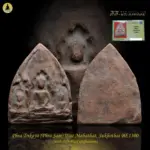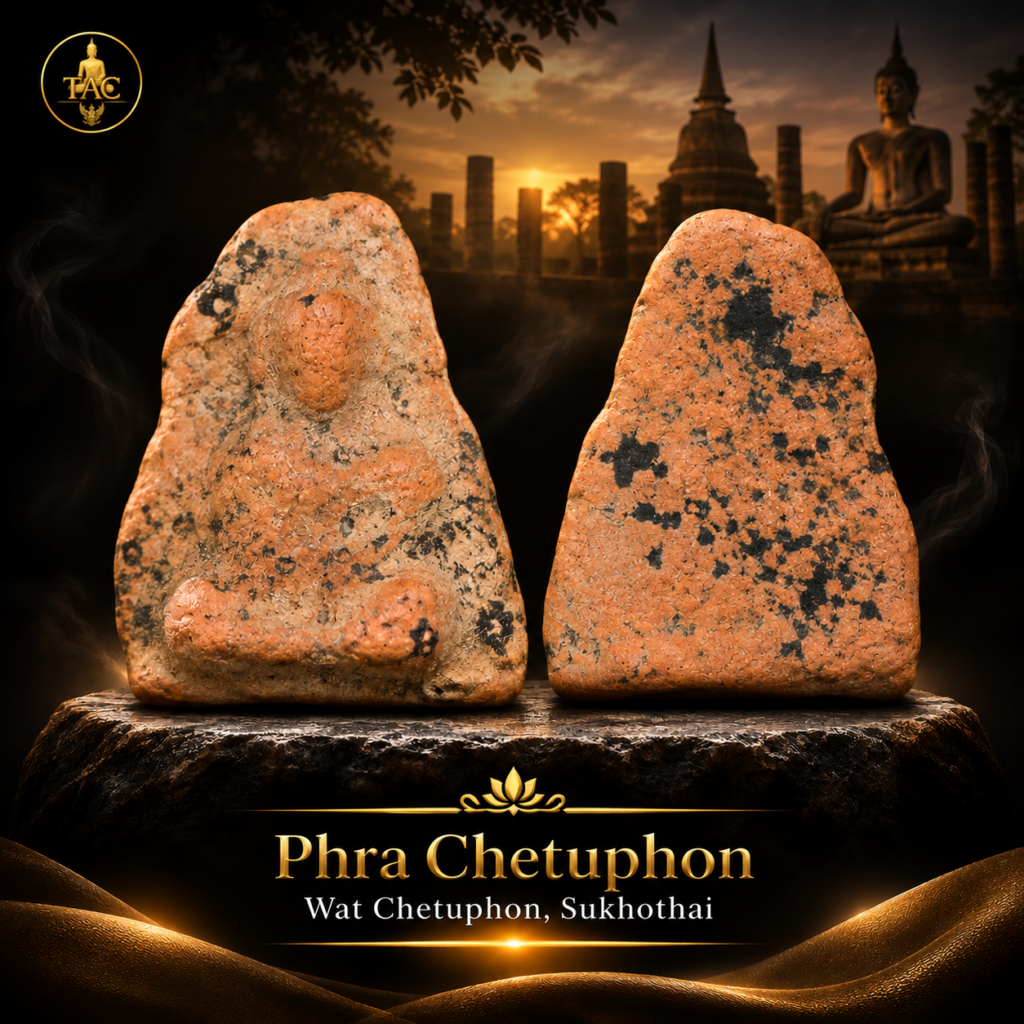
Phra Chetuphon, Wat Chetuphon, Sukhothai
| Type | Phra Chetuphon, Sukhothai |
| Temple | Wat Phra Chetuphon |
| B.E. Year | 1900-2000 |
| Material | Nur Din |
| Condition | Fair |
| SKU | TAC-PhraChetuphon,Sukhothai--001 |
Phra Chetuphon, Sukhothai — nur din amulet from Wat Chetuphon, BE1900–2000. Seated Phra Ruang pim, approx. 1.5 cm. Singapore dealer TAC.
What is the Phra Chetuphon amulet from Sukhothai, and where does it come from?
The Phra Chetuphon, Sukhothai is a small seated Phra Ruang Buddha pressed from nur din (clay), recovered from the Wat Chetuphon hoard in Sukhothai province. Dating to the BE1900–2000 period, it measures approximately 1.5 cm high by 1.3 cm wide — one of the most compact classical Sukhothai pim (mould forms) a collector will encounter.
The Wat Chetuphon hoard and why this temple sets the standard
Wat Chetuphon in Sukhothai is the origin point for the naming convention used across the entire Phra Chetuphon category. When other provinces and hoards unearthed similar seated Phra Ruang images, they all deferred to this temple’s name. That alone tells you how the Sukhothai find was regarded by the people who first catalogued these pieces.
Two distinct pim types came out of the hoard. The first seats the Buddha on a single-tiered base; the second places him on a double-tiered lotus base. Material-wise, the hoard produced both clay (nur din) and tin examples. The two types are not interchangeable to a serious collector — each has its own reference points and surface characteristics to match against. For anyone interested in the broader Thai Buddhist amulet tradition, Sukhothai-era clay pieces like these sit at the older, harder-to-fake end of the spectrum.
Reading the pim — what to look at on a Nur Din example
The nuea (substance) on a genuine Wat Chetuphon nur din piece will show the texture and colour of aged clay — not uniform, not machine-smooth. The Phra Ruang figure is identifiable by the prominent forehead, a feature the editor’s notes specifically call out and one that experienced collectors use as a first check against the reference pim.
At 1.5 cm high, every detail is compressed. The base tier — single or double — needs to read cleanly. Surface crazing consistent with century-old clay is expected; fresh-looking clay on a piece this age should raise questions. There is no takrut (rolled metal scroll) insert on this form, so the focus is entirely on the pressed image and the nuea itself.
- Prominent forehead on the seated Phra Ruang figure — a key pim marker
- Base type: single-tiered or double-tiered lotus — authenticate against reference examples
- Nuea: aged clay surface with natural crazing, not uniform
- Size: approximately 1.5 cm high × 1.3 cm wide — deviations worth noting
What devotees traditionally carry this piece for
Collectors and devotees associate Phra Chetuphon amulets with protection from danger and with building personal metta — the quality of warmth and popularity that draws goodwill from others. Those two currents, protective and social, run through most of the collector conversations around this category. Neither is a promise; they are what generations of wearers have attributed to the piece.
The scale makes it easy to case and wear daily without bulk. At TAC, Singapore, we see buyers from Malaysia and Thailand come to this piece precisely because it sits at the intersection of genuine age, classical Sukhothai provenance, and a size that works in a modern casing.
This is a compact Sukhothai-era nur din piece from the Wat Chetuphon hoard — the hoard that gave the entire Phra Chetuphon category its name. At roughly 1.5 cm high, it is small enough to case easily, and the seated Phra Ruang pim with prominent forehead is the form collectors reference against everything else in this category. No certificate accompanies the piece; buyers serious about provenance should factor that in, and we are happy to discuss what reference comparison looks like for this specific pim.
Attributes reflect Thai Buddhist devotional tradition and are not measurable claims.