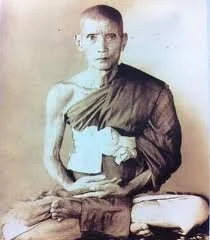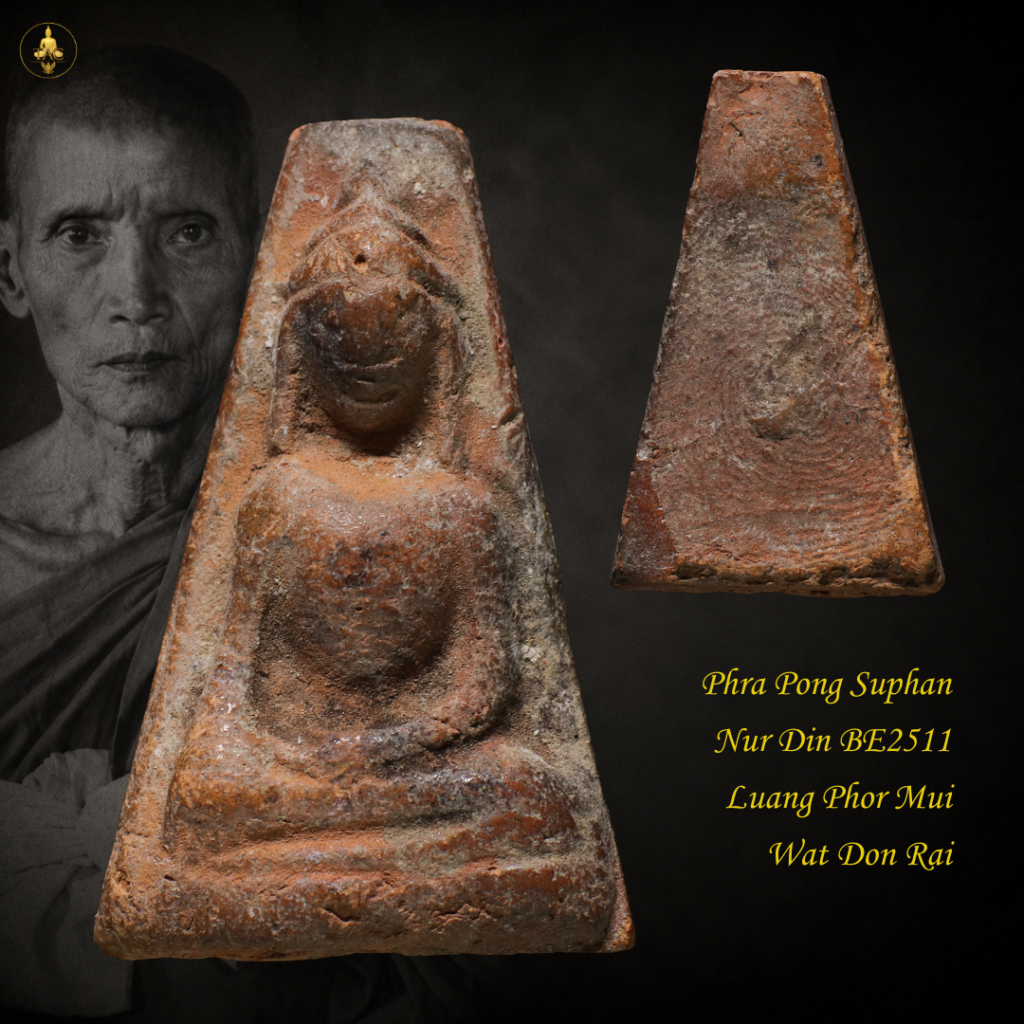
Phra Pong Suphan Nur Din BE2511 Luang Phor Mui Wat Don Rai
| Type | Phra Pong Suphan |
| Monk | Luang Phor Mui Wat Don Rai |
| Temple | Wat Don Rai |
| B.E. Year | 2511 |
| Material | Nur Din |
| Size | 25 mm |
| Condition | Good |
| SKU | TAC-PhraPongSuphan-LpMui-004 |
Authentic Phra Pong Suphan Luang Phor Mui, Wat Don Rai BE 2511, pressed in Nur Din. A classical-era piece from Suphan Buri. Available at TAC, Singapore.
What is the Phra Pong Suphan Luang Phor Mui from Wat Don Rai, and why do collectors want it?
The Phra Pong Suphan Luang Phor Mui from Wat Don Rai, pressed in BE 2511, is a dry-earth powder amulet — nur din — produced under the supervision of Luang Phor Mui, one of Suphan Buri province’s most respected monks of the mid-twentieth century. It sits firmly in the classical era of Thai amulet making and remains a benchmark piece for collectors focused on that period.
Luang Phor Mui and why Wat Don Rai still matters to serious collectors
Luang Phor Mui spent decades at Wat Don Rai in Suphan Buri, building a following among local communities and regional collectors alike. His amulets were not mass-produced commercial runs — they were made when the temple had a genuine purpose for them, and that restraint is part of what gives pieces like this their weight in collector circles.
Suphan Buri has a long lineage of respected monk-craftsmen, and Wat Don Rai sits within that tradition. The Thai Buddhist amulet tradition is rooted in the idea that the monk’s accumulated merit and meditative discipline pass into the muan sarn — the blend of sacred powders and temple materials pressed into the form. With Luang Phor Mui, that wasn’t a marketing claim; it was the reason devotees came to him.
The nuea and what the pim tells you
This piece is nur din — pressed from sacred earth powder, the material that many older Suphan Buri amulets are known for. Nur din ages distinctively: the surface takes on a dry, settled tone over decades, and on a genuine BE 2511 piece you expect the texture and colour to reflect over fifty years of natural aging. That patina is one of the first things a sien — an experienced collector — looks at before anything else.
The pim — the mould profile — is what you authenticate against. On the Phra Pong Suphan form, check the Buddha image’s proportions, the relief depth, and the base arch. Familiar reference examples from verified holders in the Suphan Buri collector community are the standard to compare against. This is where experience counts more than any checklist.
- Surface: nur din — dry earth powder, no lacquer finish on this model
- Age indicator: natural patina consistent with over five decades
- Pim check: Buddha relief proportions and base arch profile against known references
- Condition: examine edges and reverse face for consistency of pressing and aging
What collectors and devotees traditionally associate with this piece
Phra Pong Suphan amulets from Luang Phor Mui are traditionally carried for protective blessing and are associated, among devotees, with stability and personal authority. The Phra Pong Suphan form itself — a seated Buddha in pang Suphan posture — has long been connected in Thai Buddhist practice with metta, the cultivation of loving-kindness, and with safe passage. Collectors treat these associations as part of the piece’s context, not its sales pitch.
At TAC — based in Singapore — we handle pieces like this because the market for classical-era Suphan Buri amulets among collectors in the region remains genuine. A similar example, the Phra Pong Suphan Nur Din BE 2511 Luang Phor Mui Wat Don Rai, has previously sold through our listings — that one is gone, which is part of why this piece is worth attention.
This is a classical-era Phra Pong Suphan in nur din from Luang Phor Mui of Wat Don Rai, pressed in BE 2511 — the kind of piece that doesn't come up often now that comparable examples have already moved. No certificate is included, so we'd recommend buyers compare the pim carefully against reference examples before committing. For collectors building a Suphan Buri shelf or looking for a solid mid-century nur din piece, this is worth a close look.
Attributes reflect Thai Buddhist devotional tradition and are not measurable claims.