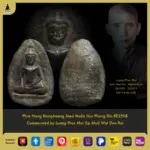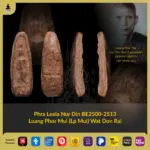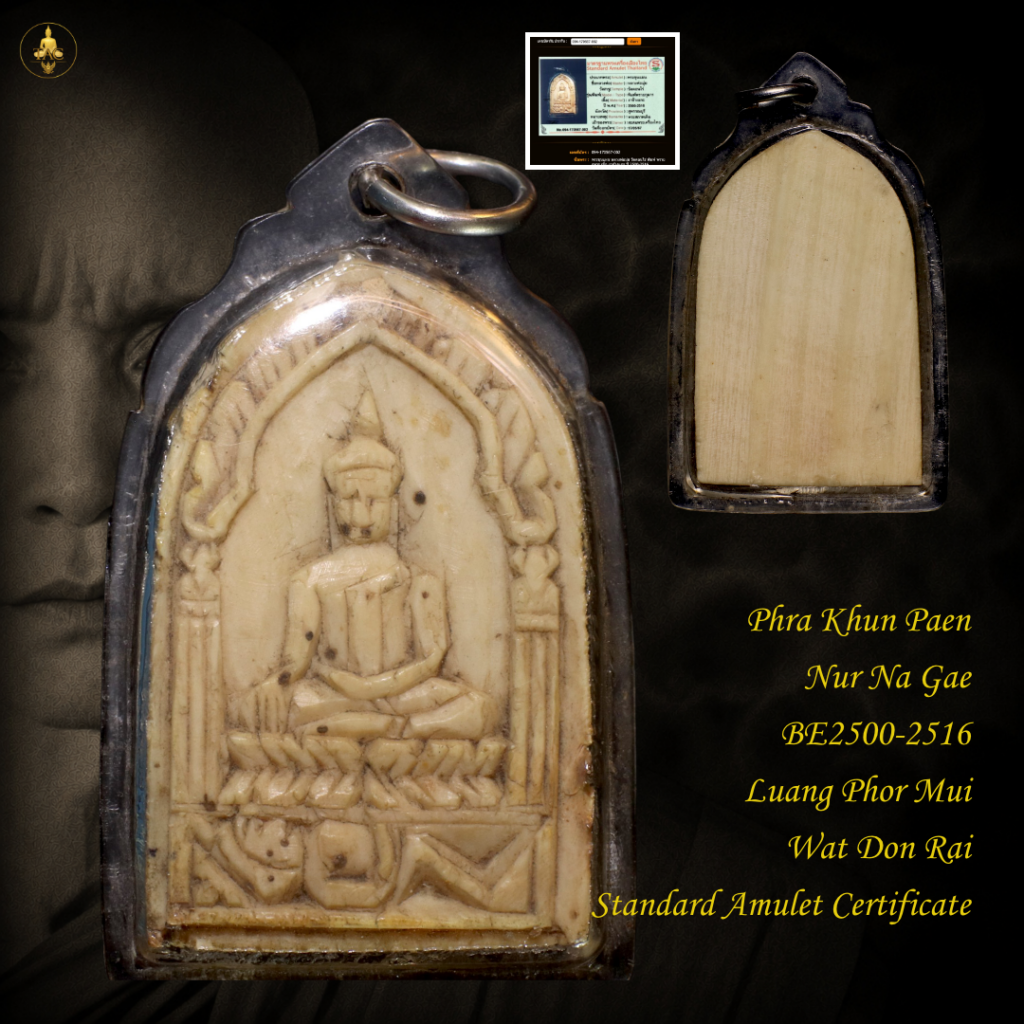
Phra Khun Paen Prai Kuman Nur Nai Gae BE2500-2516 Luang Phor Mui (LP Mui) Wat Don Rai (Rare)
| Type | Phra Khun Paen |
| Monk | Luang Phor Mui Wat Don Rai |
| Temple | Wat Don Rai |
| B.E. Year | 2500-2516 |
| Material | Nai Gae |
| Condition | Good |
| Certificate | Standard Amulet |
| SKU | TAC-0148 |
Phra Khun Paen Prai Kuman • Nur Nai Gae BE2510-2517 • Wat Don Rai • Listing notes place this piece in the Luang Phor Mui period • A Khun Paen-form sacred amulet with standard certificate
The Phra Khun Paen Luang Phor Mui Wat Don Rai is among the most distinguished sacred metal amulets available to collectors in Singapore, valued for its deep-rooted association with metta mahaniyom — the traditional Buddhist attribute of goodwill, personal magnetism, and harmonious human relations. Produced across the BE 2500–2516 period, this Nai Gae example represents a sustained era of consecration under one of Suphanburi province’s most respected monastic figures. Its combination of recognised image type, sacred alloy body, and documented temple lineage gives it a clear and traceable collector identity.
Luang Phor Mui Wat Don Rai was a highly regarded monk whose period of active consecration at Wat Don Rai spanned several decades of the mid-to-late twentieth century. His association with Phra Khun Paen amulets is well established within Thai amulet collecting circles, particularly for pieces produced in sacred metal rather than powder form. Collectors approach his works through the consistency of the image type, the quality of the alloy composition, and the supporting documentation that accompanies each piece.
The BE 2500–2516 date range reflects a prolonged consecration period rather than a single production batch, which is characteristic of how Luang Phor Mui’s amulets entered circulation over successive years. This breadth of production period is itself a noted feature among collectors who study the Wat Don Rai lineage. Each example from this period carries the accumulated devotional context of those years of monastic practice.
Phra Khun Paen and Wat Don Rai Heritage
Wat Don Rai is a Buddhist temple in Suphanburi province, central Thailand, with a lineage of sacred object production that collectors across Southeast Asia and East Asia recognise as historically significant. The temple’s identity in the amulet world is closely tied to the Khun Paen image type, which has been consistently associated with its monastic tradition. Collectors in Singapore, Malaysia, Taiwan, and Hong Kong regularly seek Wat Don Rai pieces as part of documented, lineage-grounded collections.
The Phra Khun Paen image itself belongs to one of the most recognisable families in Thai Buddhist amulet culture, distinguished by its seated-warrior composition and strong frame structure. Within the broader Thai Buddhist amulet tradition, Khun Paen-form amulets are understood as embodying protective and interpersonal spiritual qualities that devotees have revered for generations. Wat Don Rai’s contribution to this tradition, through the consecrations of Luang Phor Mui, represents a specific and valued chapter within that wider cultural history.
The temple’s sacred object heritage is best understood not through individual batches alone, but through the continuity of practice that defined the Luang Phor Mui period. For collectors, the Wat Don Rai association functions as both a lineage marker and a quality reference point when evaluating Phra Khun Paen examples from this era.
Nai Gae Phra Khun Paen — Composition and Craftsmanship
Nai Gae is a category of sacred metal alloy used in Thai amulet production, distinguished by its darker tonal character and the way its surface develops with age and protective wearing. Unlike brighter sacred metals, Nai Gae is typically appreciated through the maturity of its patina, the balance of tone across raised and recessed areas of the image, and the clarity of relief in the central figure and border frame. Collectors read these material qualities as evidence of both authentic composition and the amulet’s period of use.
The craftsmanship of a Nai Gae Phra Khun Paen is assessed through strike or cast definition, edge character, and the harmony of the field surface as it settles over time. In the recessed areas around the central image, a well-preserved Nai Gae example will typically show a consistent, deepened tone that reflects the alloy’s natural aging rather than surface alteration. These characteristics distinguish it clearly from powder-based Khun Paen pieces, which collectors evaluate through entirely different material criteria.
The consecration process that accompanied Nai Gae Phra Khun Paen production under Luang Phor Mui involved the ritual preparation and blessing of the sacred metal, aligning the physical object with the devotional intent of the presiding monk. This process is central to the amulet’s spiritual standing and is inseparable from its collector value. The material and the ritual are understood together, not independently.
Spiritual Benefits of Phra Khun Paen by Luang Phor Mui Wat Don Rai
In Thai Buddhist amulet culture, the Phra Khun Paen Luang Phor Mui Wat Don Rai is traditionally associated with metta — the quality of loving-kindness and goodwill — as well as with personal confidence and smoother interpersonal relations. These are devotional attributions understood within a belief-based framework, rooted in merit, disciplined wearing practice, and sincere intention rather than fixed promised outcomes. Devotees who wear this amulet typically do so as part of a broader spiritual discipline that includes respect for the monastic lineage it represents.
- Metta mahaniyom: traditionally associated with cultivating goodwill, personal charm, and more harmonious relations with others in daily life and professional contexts.
- Khum khrong (protective presence): devotees may keep this amulet for belief-based reassurance, personal confidence, and a sense of spiritual protection during demanding circumstances.
- Esoteric sacred-object qualities: the Prai Kuman aspect of this amulet’s identity connects it to a more esoteric dimension of Thai devotional practice, which some devotees and collectors approach with particular reverence.
Phra Khun Paen BE 2500–2516 — Authentication and Collector Value
This Phra Khun Paen Luang Phor Mui Wat Don Rai is accompanied by a Standard Amulet certificate, which establishes it as a documented collector piece rather than an unverified example. The Standard Amulet certification provides a formal identification record that supports the lineage, material, and period claims associated with the piece. For collectors in Singapore and across the region, this level of documentation is a meaningful marker of authenticity and provenance.
The BE 2500–2516 production period spans sixteen years, reflecting the extended consecration activity of Luang Phor Mui at Wat Don Rai rather than a single limited batch. Pieces from this era that retain clear relief, consistent Nai Gae patina, and supporting certification are regarded as particularly complete collector examples. The combination of the Khun Paen image family, the Prai Kuman naming, and the sacred metal body gives this amulet a stronger collector profile than undocumented pieces without identification support.
Without formal production figures on record, exact edition rarity cannot be stated with precision. However, the convergence of factors — documented temple lineage, recognised monk association, sacred alloy composition, and Standard Amulet certification — positions this piece firmly within the serious collector market for mid-to-late twentieth-century Thai Buddhist amulets.
Attributes reflect Thai Buddhist devotional tradition and are not measurable claims.
![[SOLD] Singha Nur Na Gae BE2512 Luang Phor Mui Wat Don Rai, Suphan Buri](https://tac-media.sgp1.digitaloceanspaces.com/2026/03/singha-nur-na-gae-be2512-luang-phor-mui-wat-don-rai-suphan-buri-150x150.webp)