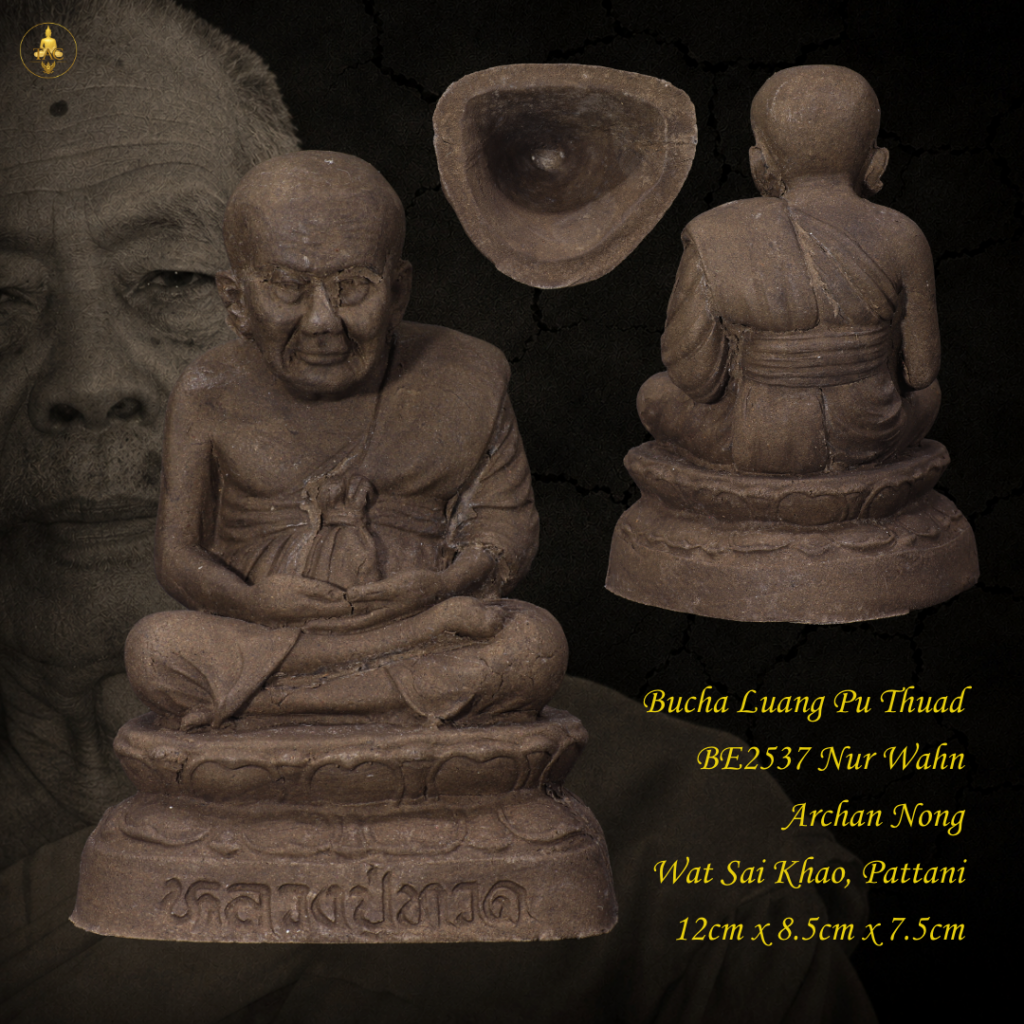
Bucha Luang Pu Thuad BE2537 Nur Wahn Archan Nong Wat Sai Khao, Pattani
| Type | Bucha Luang Pu Thuad |
| Monk | Archan Nong Dhammabhūto Wat Sai Khao |
| Temple | Wat Sai Khao |
| B.E. Year | 2537 |
| Material | Nur Wahn |
| Size | 120 x 85 x 75 mm |
| Condition | Good |
| SKU | TAC-BuchaLuangPuThuad-AcNong-003 |
Bucha Luang Pu Thuad Archan Nong, Wat Sai Khao BE 2537. Pressed in nur wahn. A solid piece from one of Pattani's most respected monk-craftsmen.
What is the Bucha Luang Pu Thuad Archan Nong from Wat Sai Khao, BE 2537?
This is a bucha (statuary image for home or altar veneration) of Luang Pu Thuad, produced in BE 2537 at Wat Sai Khao in Pattani province under the hand of Archan Nong. The nuea (material) is nur wahn — a blend of sacred herbal powders pressed into form. It is one of the most accessible routes into Archan Nong’s output for collectors building a focused Luang Pu Thuad collection.
Why Archan Nong, and why Wat Sai Khao
Archan Nong is the monk most closely associated with the modern revival of Luang Pu Thuad amulets from Pattani. Wat Sai Khao sits in the deep south, the province tied most directly to Luang Pu Thuad’s own legend, and that geographical connection matters to serious collectors. When a monk of Archan Nong’s standing produces a bucha at that temple, the lineage is clean — you are not chasing a distant attribution.
His work from the mid-to-late BE 2530s decade is well documented within Thai collector circles. The BE 2537 pieces sit in a range that many sien (experienced collectors) regard as formative years for his output — before the demand surge drove production scale upward. For further context on the broader Thai Buddhist amulet tradition, the Wikipedia entry is a reasonable starting point for newer readers.
The nur wahn nuea — what it means for this piece
Nur wahn refers to a muan sarn (the blended substance of the amulet) composed primarily of dried herbal powders — wahn being the Thai term for sacred medicinal plants gathered under ritual conditions. Pressed into bucha form, the resulting piece has a texture and density that is distinct from powder-mixed-with-resin shortcuts common in lesser-quality work. On a genuine example, the surface holds the pim (mould impression) cleanly, with detail that does not blur at the edges.
For this category of nur wahn bucha by Archan Nong, what a collector checks first is the consistency of the press — no air pockets visible at the base, no cracking at thinner relief points, and a colour that is even throughout rather than patchy. These are the signs that the muan sarn was properly prepared and the pressing done with care.
Comparing across Archan Nong’s BE 2530s output
TAC also carries the Bucha Luang Pu Thuad Nur Wahn BE 2539 by Archan Nong, Wat Sai Khao — two years later in the same nuea. Side by side, these pieces let a collector study how the pim and muan sarn held across adjacent runs. That kind of direct comparison is how experienced collectors calibrate their eye before committing.
This BE 2537 piece carries no accompanying certificate in this listing. For collectors who require paper, that is worth factoring into your approach — authenticate through the pim, the nuea characteristics, and provenance sourcing. We at TAC have handled both editions and can speak to what the genuine examples look like.
This BE 2537 nur wahn bucha by Archan Nong is from the period that most collectors point to as his more focused, smaller-batch output — before demand pushed production into higher volume. No certificate accompanies this piece, so we're selling it on the strength of the pim and nuea. If you're building a comparative study of Archan Nong's Wat Sai Khao work, pairing this with our BE 2539 example is worth considering.
Attributes reflect Thai Buddhist devotional tradition and are not measurable claims.