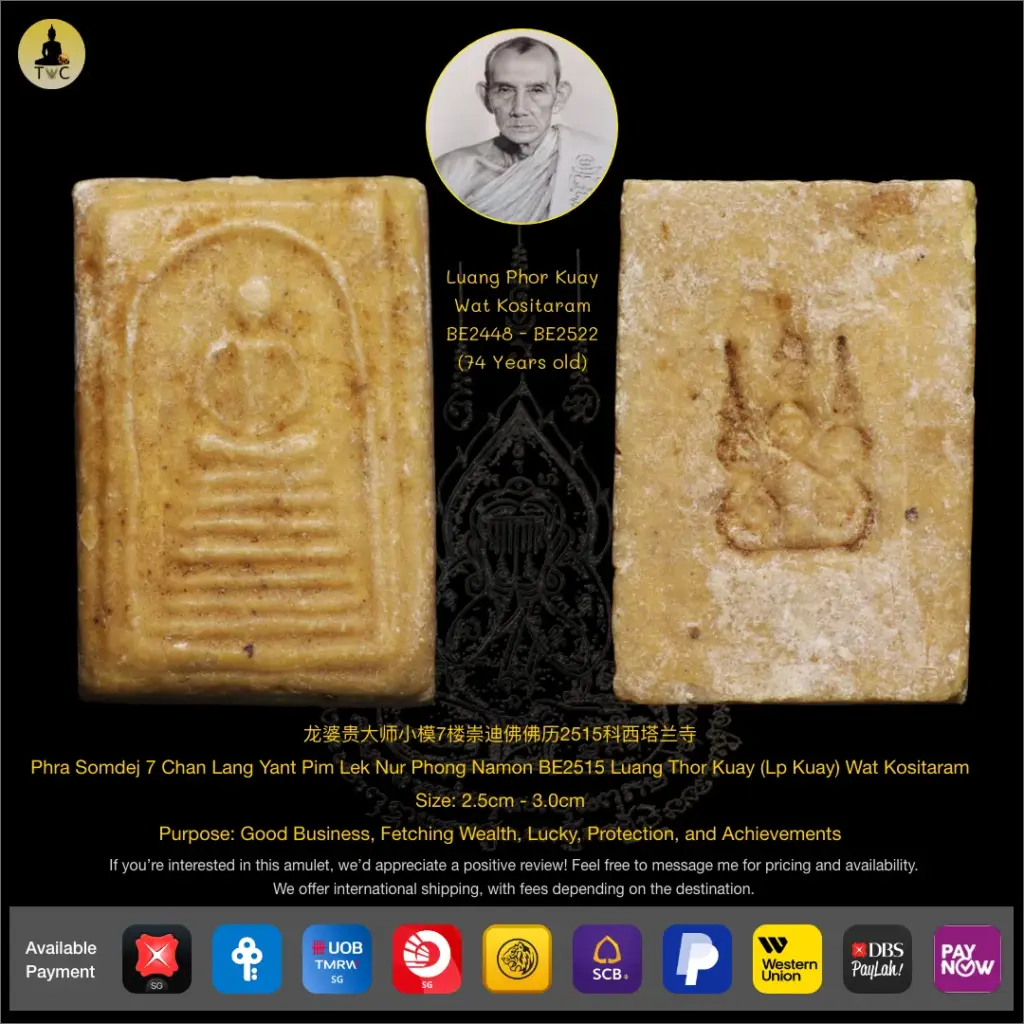
Phra Somdej 7 Chan Lang Yant Pim Lek Nur Phong Namon BE2515 Luang Thor Kuay (Lp Kuay) Wat Kositaram
| Type | Phra Somdej |
| Monk | Luang Phor Kuay Wat Kositaram |
| Temple | Wat Kositaram |
| B.E. Year | 2515 |
| Material | Phong Namon |
| SKU | TAC-0188 |
Authentic Phra Somdej by Luang Phor Kuay Wat Kositaram, BE 2515, pim lek with yant reverse. Nuea phong namon. Singapore dealer TAC, est. 2015.
What is the Phra Somdej Luang Phor Kuay Wat Kositaram BE 2515?
The Phra Somdej Luang Phor Kuay Wat Kositaram BE 2515 is a small-mould (pim lek) Phra Somdej pressed from phong namon — a sacred powder blend incorporating blessed water — with a yant inscription on the reverse. It was created at Wat Kositaram under the hand of one of central Thailand’s most respected twentieth-century masters.
Luang Phor Kuay and the standing this piece carries
Luang Phor Kuay Wat Kositaram is among the most respected masters from Chainat province. His amulets from the early 2510s BE era are consistently referenced in collector circles across Thailand, Singapore, and Taiwan precisely because his production numbers were modest and his consecration practice was thorough. Pieces bearing his hand from this period are treated as benchmark material by experienced collectors.
This particular piece dates to BE 2515 — the early 1970s in common calendar terms. By that point Luang Phor Kuay’s reputation was firmly established, and amulets from this run carry the weight of that standing. The pim lek (small mould) format is a specific variant collectors authenticate against known reference pieces, distinct from the larger-mould versions produced across different batches.
The nuea and what makes this pim specific
The nuea (material/substance) here is phong namon — a muan sarn (sacred powder blend) that incorporates namon, blessed water absorbed into the powder mass before pressing. This gives the surface a particular density and texture that differs from dryer powder blends. Collectors familiar with Luang Phor Kuay’s work learn to read this nuea type against the surface detail of the pressed face and body.
The reverse carries a yant (sacred inscription) — a defining feature of this pim that collectors use as one authentication reference point alongside the front face detail. Within the broader Thai Buddhist amulet tradition, back-plate yant on a Phra Somdej is not unusual, but the specific yant layout is pim-dependent and matters for authentication. The 7-chan (seven-tiered throne) configuration of the front face is the other primary structural marker for this variant.
- Nuea: phong namon — pressed sacred powder with blessed water content
- Pim: pim lek (small mould), 7-chan front face
- Reverse: yant inscription
- Temple: Wat Kositaram, Chainat
- Year: BE 2515
What collectors look for and how this piece is certified
Authentication of Luang Phor Kuay pieces from BE 2515 rests on reading the nuea, the sharpness and proportion of the pim, and the yant layout on the reverse. Experienced collectors cross-reference against established niyom (collector-standard reference) examples from the same batch. Surface ageing consistent with a piece over fifty years old is another factor, though nuea type affects how that ageing presents.
No certificate information is currently listed for this piece. Collectors purchasing without a certificate should rely on comparison with documented reference pieces or seek assessment from a recognised grading house before making significant decisions. This is standard practice for any Luang Phor Kuay piece at this age.
This pim lek Phra Somdej from Luang Phor Kuay Wat Kositaram dates to BE 2515 — now over fifty years old — and is pressed from phong namon with a yant inscription on the reverse. We at TAC carry this because Luang Phor Kuay's name holds genuine weight with collectors across Singapore, Malaysia, and the Chinese-speaking markets, and well-preserved pim lek examples from this period are not easy to source.
Attributes reflect Thai Buddhist devotional tradition and are not measurable claims.