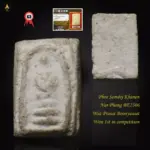
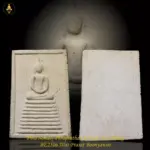
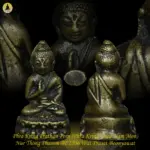
Phra Somdej Pim Yai Nur Phong BE2506 Wat Prasat Boonyawat (Big Ceremony – Consecration by 108 legendary monks)
| Type | Phra Somdej |
| Temple | Wat Prasat |
| B.E. Year | 2506 |
| Material | Phong |
| SKU | TAC-0222 |
Authentic Phra Somdej Pim Yai from Wat Prasat Boonyawat, BE 2506. Phong muan sarn, consecrated by 108 monks. Singapore dealer TAC, est. 2015.
What is the Phra Somdej Pim Yai from Wat Prasat Boonyawat, BE 2506?
The Phra Somdej Pim Yai from Wat Prasat Boonyawat is a large-mould sacred powder amulet pressed in BE 2506 (1963) in Bangkok. Its phutthaphisek (consecration ceremony) drew 108 monks, including some of the most prominent masters of that era. The muan sarn (sacred powder blend) incorporated materials from several major Bangkok temples.
What went into the muan sarn — and why collectors pay attention to it
The phong (sacred powder) used here was not a routine temple mix. The base included broken Phra Somdej fragments excavated from Wat Bangkhunprom Chedi in BE 2500, ground down and folded into the blend. That alone marks this batch as unusually weighted with accumulated temple history.
On top of that, the makers drew phong from Wat Rakang, Wat Bowonniwet, and Wat Phra Kaew — all temples with deep roots in the Thai Buddhist amulet tradition. The specific powders included Phong Itthijay, Phong Putthakun, and Phong Maharach, supplemented by incense ash, holy soil, flower pollen, old temple-wall powder, herbal powder, relic fragments, and phong donated by monks across Thailand. The result is a dense, layered muan sarn that carries a distinctive aged texture and subtle herbal scent — two things experienced collectors check first when handling a piece from this run.
The pim (mould) is the Pim Yai — the large format — with the mould itself reportedly supplied by Luang Phor Hin of Wat Rakang. Wat Rakang’s Pim Yai is the benchmark shape for Somdej collectors, and this edition was pressed deliberately in that style, following methods associated with Somdej Toh’s Wat Rakang originals.
The ceremony and the monks behind it
Wat Prasat Boonyawat in Bangkok organised this edition as a fundraising effort for religious construction and temple renovation — a common and legitimate purpose for major amulet runs of the early BE 2500s. The phutthaphisek ran for multiple days, with monks chanting, meditating, and reciting Kata continuously over the pressed amulets.
The list of participating masters is what sets this ceremony apart. Luang Phor Hin of Wat Rakang and Luang Phor Toh of Wat Pradu Chimphli were present. So were Luang Pu Tim of Wat Lahan Rai, Luang Phor Pae of Wat Pikulthong, and Luang Pu Sodh of Wat Paknam Phasi Charoen. Phra Ajahn Khun Nor of Wat Thepsirin, Luang Phor Kasem of Wat Suthawat, and monks from Wat Bangkhunprom, Wat Bowonniwet, and Wat Bang Phra also participated. 108 masters in total — a number that, in Thai ceremonial practice, signals a full and complete consecration.
What a collector looks for when authenticating this piece
No certificate is listed for this edition, so authentication rests entirely on physical examination. That makes knowing the right reference points essential before you buy.
- Confirm the Pim Yai proportions against known reference pieces — the large mould has specific shoulder angles and base width that fakes consistently get wrong
- Check the phong texture: genuine pieces from this batch show a fine, slightly grainy surface with a muted sheen, not a smooth or chalky finish
- Look for aged herbal scent — a faint, dry fragrance is noted as characteristic of authentic pieces from this run
- Authentic pieces may carry temple stamps, yant (sacred inscriptions), or yantra markings on the reverse
- The Bangkhunprom fragment material in the muan sarn sometimes shows as darker flecks within the phong — experienced hands know what to look for
Because this edition carries no standard certificate, buy from a dealer who can walk you through the physical checks or point you to a respected authentication panel before purchase.
This is a BE 2506 Phra Somdej Pim Yai from Wat Prasat Boonyawat — a gammakan-style edition consecrated by 108 masters including Luang Pu Tim and Luang Pu Sodh, two names that carry real weight with serious collectors of that era. The muan sarn is particularly noteworthy for incorporating Bangkhunprom kru fragments excavated in BE 2500, which makes the phong composition more traceable than most contemporary editions. We at TAC recommend this for collectors focused on mid-century Bangkok temple editions who are comfortable authenticating by physical examination.
Attributes reflect Thai Buddhist devotional tradition and are not measurable claims.