Phra Chaiwat Songkhram (Phra Ngan), Ayutthaya Est. 300 – 400 Years Bucha
| SKU | TAC-0240 |
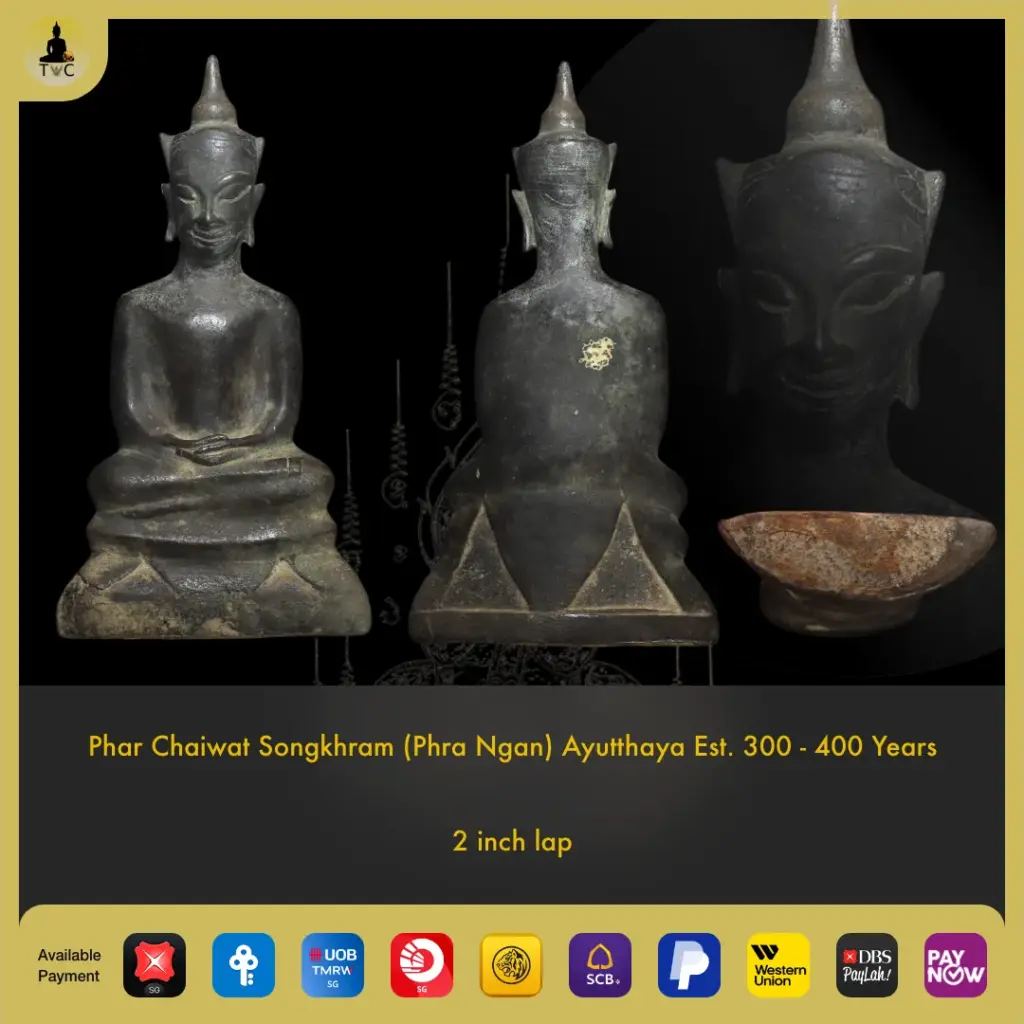
Phra Chaiwat Songkhram (Phra Ngan) • Ayutthaya (Est. 300–400 Years) Ancient bronze bucha image • Warrior tradition iconography • Original temple soil core Principal view — Ayutthaya-period bronze
Phra Chaiwat Songkhram (Phra Ngan) • Ayutthaya (Est. 300–400 Years)
Ancient bronze bucha image • Warrior tradition iconography • Original temple soil core
Principal view — Ayutthaya-period bronze with untouched surface tonality and soil core context.
Archaeological Provenance & Historical Significance
This Phra Chaiwat Songkhram (often identified with the Phra Ngan martial tradition) is datable to the middle–late Ayutthaya era (approx. 300–400 years). Such images were venerated by warriors and field commanders as devotional anchors for barami (accumulated merit) and protection, then enshrined upon safe return in temples or stupas. The piece shows period-consistent casting in bronze with retained original temple soil, a survival trait increasingly scarce among field finds.
Obverse detail — Crowned head and full-body robe (hom phra) typical of period aesthetics.
Contextual Insight: The epithet Songkhram (“warfare”) reflects its historical role as a votive for courage and safe return. In belief practice, this class supports Klaew Klaad (danger aversion) and the martial ideal of Kongkrapan (immunity) within Thai Buddhist folk tradition.
Sites of Origin & Monastic Tradition
Comparable finds emerge from Ayutthaya-region temples, crypt contexts, and occasionally embedded wall cavities, consistent with long-term ritual concealment. The lineage emphasizes disciplined casting, devotional use in meditation posture, and post-conflict enshrinement as acts of merit-making.
Reverse — Natural green oxidation and in-situ soil residues; no abrasive cleaning.
Materials & Craftsmanship
| Primary Material | Bronze shell (samrit-type alloy), thin-walled with original temple soil core |
| Iconography | Seated Buddha in meditation; crowned head; full robe drape; martial devotion context |
| Technical Note | Lost-wax lineage; aged cupric patina; soil integration at base/inner wall junctions |
Side profile — Intact edge lines and period wear; classic Ayutthaya stance proportions.
Historical Purpose & Spiritual Function
According to Thai Buddhist belief, this genre is associated with Kongkrapan Chatri (martial resilience), Klaew Klaad (danger evasion), and Maha Amnat (commanding authority). In oral histories, later civil servants and officers also prized such bucha for composure and safe outcomes in hazardous duty.
Rarity & Collector Significance
Assessed as extremely rare in original-condition examples retaining soil core and unstripped patina. Collectors study oxidation tonality, thin-shell junctions, and robe/crown geometry as period tells. Surviving pieces from Ayutthaya contexts are finite and increasingly difficult to source.
Related Articles
Thai Amulet Inquiries
For provenance and acquisition details, contact us via
WhatsApp.
Disclaimer: Spiritual attributes reflect traditional Thai Buddhist beliefs. The write-up supports cultural and academic appreciation; it is not legal or forensic certification.
Attributes reflect Thai Buddhist devotional tradition and are not measurable claims.