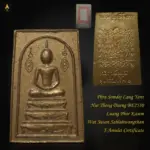
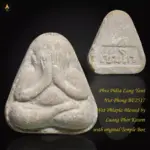
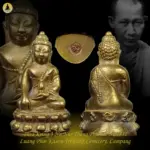
Phra Phong Rakang Luang Phor Kasem (Lp Kasem) Lang Yant BE2534 Trilak Cemetery, Lampang
| Monk | Luang Phor Kasem Trailak Cemetery, Lampang |
| B.E. Year | 2534 |
| SKU | TAC-0365 |
Authentic Phra Phong Rakang Luang Phor Kasem (Lp Kasem) Lang Yant BE2534 Trilak Cemetery, Lampang by Luang Phor Kasem Trailak Cemetery, Lampang.
What is the Phra Phong Rakang Luang Phor Kasem (Lp Kasem) Lang Yant BE2534 Trilak Cemetery, Lampang by Luang Phor Kasem Trailak Cemetery, Lampang?
The Phra Phong Rakang Luang Phor Kasem (Lp Kasem) Lang Yant BE2534 Trilak Cemetery, Lampang by Luang Phor Kasem Trailak Cemetery, Lampang is a late-period phong (sacred powder) amulet consecrated in BE2534 (1991 CE) at Trilak Cemetery, Lampang. Pressed from Phong Rakang with scripture ash, Itthijay and Pattamang powders, herb powders, and holy soil, it carries a Lang Yant (reverse yantra) impression and reflects LP Kasem’s cemetery-practice lineage.
LP Kasem and the cemetery lineage behind this piece
Luang Phor Kasem Khemako (1912–1996) spent the greater part of his monastic life at Trilak Cemetery in Lampang, practising in conditions most monks would not choose. Long solitary retreats, strict asceticism, and sustained samādhi (meditative absorption) defined his wicha (sacred discipline). That reputation — built over decades, not ceremony — is precisely why collectors take his late-period works seriously.
BE2534 falls in the final chapter of his active years. Pieces from this period are regarded within the broader Thai Buddhist amulet tradition as mature expressions of his empowerment practice, where the consecration process drew directly on prolonged chanting and meditation rather than large ceremonial gatherings. The cemetery setting itself is deliberate — it reinforces the mindfulness and protection themes woven into every piece he authorised.
What the muan sarn is and how this pim was made
Phong Rakang — literally bell-powder — takes its name from the temple bell, a symbol for broadcasting the Dhamma. The nuea (material substance) here combines that bell-powder base with scripture ash and two protective powder families: Itthijay and Pattamang. Herb powders and holy soil complete the muan sarn (sacred powder blend). The result is a matrix with a slightly gritty, stratified grain that ages well without crumbling.
The pim was compression-moulded and hand-finished at the edges. The obverse shows the characteristic press rhythm of a well-preserved bell-powder piece. On the reverse, the Lang Yant — the yantra (sacred inscription) that defines this variant — is pressed into the surface. Look for fine, stable lines and consistent micro-porosity across the yant field; both are signs that the matrix was properly prepared and has held its integrity over three decades.
- Obverse: crisp press rhythm, fine stratified powder grain
- Reverse: Lang Yant impression — check line definition and powder cohesion at the borders
- Edge: hand-finished; granularity should be consistent, not flaky or repaired
- Overall matrix: stable, no significant crack propagation, clear yantra lines
What collectors look for and how this piece is certified
Authentication centres on three things: texture, press consistency, and provenance of the cemetery-lineage pim. The Phong Rakang nuea has a specific ageing character — the powder surface should show natural oxidation and micro-wear at the high points without the matrix softening or losing granularity. A piece that looks too clean or too worn in the wrong places warrants scrutiny.
No third-party certificate is noted for this specimen. That is not unusual for temple-issued pieces from LP Kasem’s era; many were produced without the formal gammakan (committee) documentation that later became standard. Collectors compensating for the absence of a cert typically cross-reference against known niyom (collector-standard reference) examples and, for higher-value acquisitions, seek assessment from experienced LP Kasem specialists before committing.
This BE2534 Phong Rakang is one of the more grounded late-period LP Kasem pieces we carry at TAC — the cemetery-lineage context is well-documented, and the bell-powder nuea with Lang Yant reverse makes it a textbook study piece for collectors building familiarity with his powder work. No third-party certificate accompanies this specimen, which we have noted in the listing; we recommend buyers reference established LP Kasem niyom examples or seek specialist assessment for high-value decisions.
Attributes reflect Thai Buddhist devotional tradition and are not measurable claims.