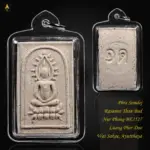
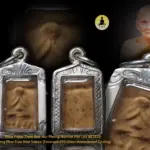
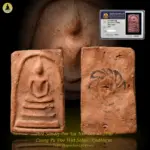
Sian Phra Phrom Si Na BE2517 Nur Phong Luang Pu Du Wat Sakae
| Monk | Luang Phor Doo (Lp Du) |
| Temple | Wat Sakae |
| B.E. Year | 2517 |
| Material | Phong |
| SKU | TAC-0450 |
Authentic Sian Phra Phrom Si Na BE2517 Nur Phong Luang Pu Du Wat Sakae by Luang Phor Doo (Lp Du), Ayutthaya. Phong. Certified Thaprachan.
What is the Sian Phra Phrom Si Na BE2517 Nur Phong Luang Pu Du Wat Sakae by Luang Phor Doo (Lp Du)?
The Sian Phra Phrom Si Na BE2517 Nur Phong Luang Pu Du Wat Sakae by Luang Phor Doo (Lp Du) is an early sacred powder amulet pressed at Wat Sakae, Ayutthaya in BE 2517 (1974). It depicts the four-faced Brahma in the Pim Si Na mould and was consecrated through a full phutthaphisek ceremony led by Luang Phor Doo himself. Certified by Thaprachan.
Luang Phor Doo and the Phra Phrom tradition at Wat Sakae
Luang Phor Doo (Lp Du), known formally as Phra Ajahn Du Phrommintho, built his reputation on meditative discipline — specifically Samatha-Vipassana practice — and the belief that amulet creation must come from a purified, settled mind. That approach shows in his work. His early-period pieces carry a calm, balanced quality that collectors still reference when discussing what “correct” Wat Sakae phong (sacred powder) looks and feels like.
Phra Phrom — the Thai Buddhist representation of Brahma — held particular importance at Wat Sakae during this era. The temple sits within Ayutthaya’s Brahmanic-Buddhist landscape, where veneration of the four-faced deity has long been woven into everyday devotional life. Luang Phor Doo’s wicha (sacred formula) for this batch drew on that tradition directly, combining muan sarn (sacred powder blend) with scripture powder, ritual ash, old temple soil, and pollen — a formula characteristic of his pre-BE 2520 production period.
The phong, the pim, and how this batch was made
The nuea (material/substance) here is Nur Phong — a compressed powder tablet rather than metal or clay. Luang Phor Doo’s formula for this run included sacred scripture powder, ritual ash, old temple soil, and a pollen mixture. These components are consistent with what collectors and competition judges recognise as his early-period blend, before any shift in material sourcing that occurred after BE 2520.
The pim (mould collectors authenticate against) is the Si Na — four-faced Brahma with a proportionate crown, clean facial lines, and a defined throne base. Pressing was done by hand, which is why you still see hand-press marks and the characteristic surface granularity on early Wat Sakae pieces. The phutthaphisek (consecration ceremony) ran a full day with extended Brahma mantra cycles led by Luang Phor Doo and the temple monks, following the wicha akson method — sacred activation grounded in mindfulness practice rather than rapid ritual repetition.
The result is a tablet where religious form and meditative intention sit together. That combination is what the original Thaprachan certification acknowledges, and what experienced collectors still look for when they assess this batch. For more on how Thai Buddhist amulets bridge devotional art and sacred practice, see the Thai Buddhist amulet tradition overview.
What collectors look for in this piece
Early BE 2517 powder casts from Wat Sakae are limited, and well-preserved examples have become harder to source. The batch is assessed as collector-grade rare. When evaluating a piece, experienced collectors focus on:
- Powder texture — the early-period granularity specific to Luang Phor Doo’s pre-BE 2520 blend
- Facial clarity — sharpness of the four Brahma faces and the crown definition within the Pim Si Na
- Edge compression — consistent hand-press marks without crumbling or heavy restoration
- Surface granularity — the original surface should show fine texture, not a smooth or filled appearance
- Certification — Thaprachan-certified examples have appeared in competition circuits; documented certification supports provenance
Pieces with sharp facial detail, intact original surfaces, and verifiable certification are the ones that hold standing in a serious Luang Phor Doo collection. This edition surfaces occasionally in Samakom circles, but clean examples do not stay available for long.
Luang Pu Du's pre-2520 Nur Phong editions from Wat Sakae are among the more quietly sought-after pieces in the Ayutthaya sacred-powder tradition, and this BE2517 Sian Phra Phrom Si Na represents that early production period at its most characteristic — a full Putthapisek consecration, a powder formula incorporating sacred scriptures, old temple soil, and ritual ash, and the four-faced Brahma iconography rendered in the restrained proportions associated with his wicha akson discipline. The Thaprachan certification is the standard reference point for pieces of this era, and we at TAC view it as a meaningful assurance of period authenticity for collectors who are building a considered Luang Pu Du holding.
Attributes reflect Thai Buddhist devotional tradition and are not measurable claims.