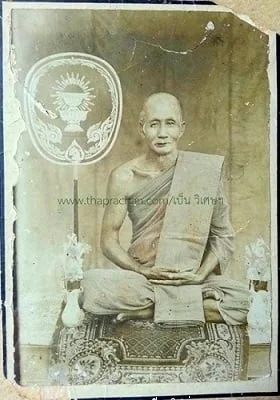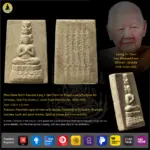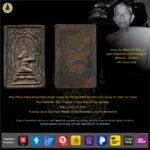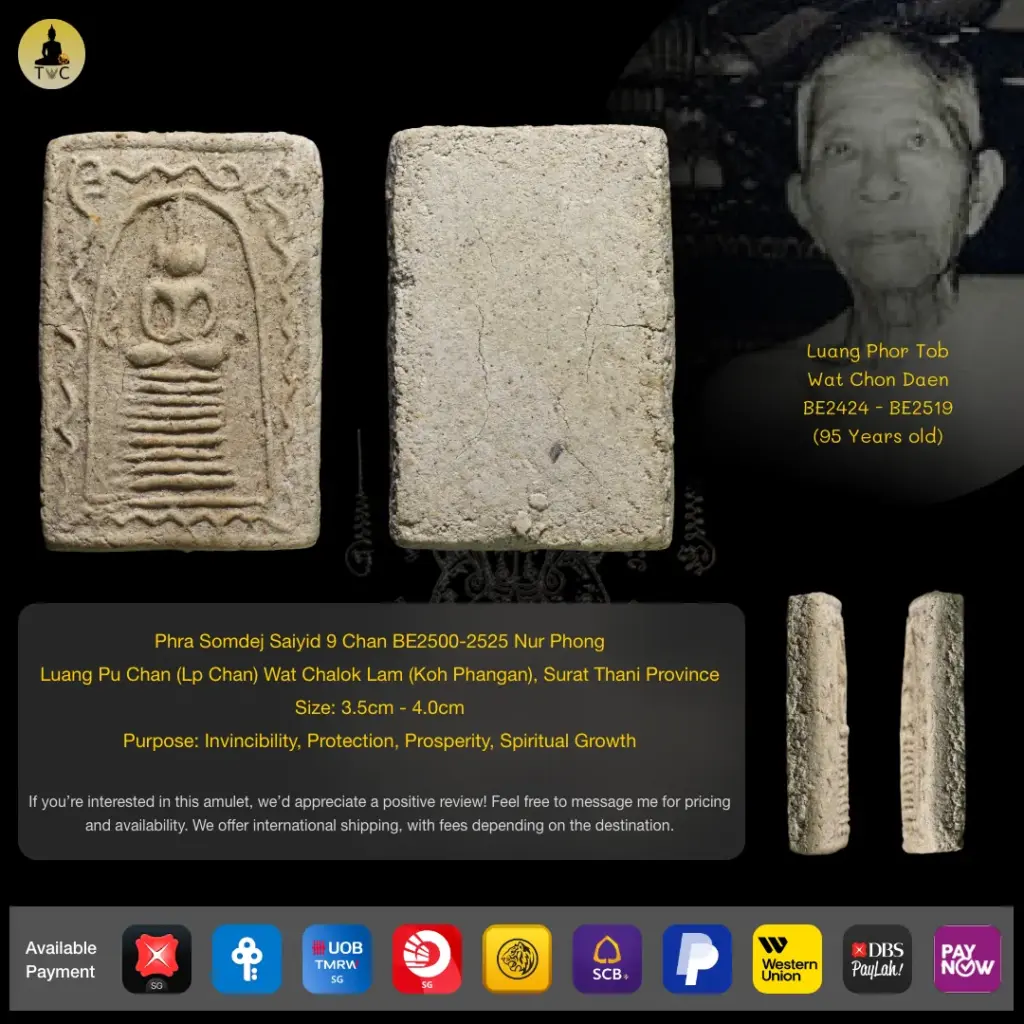
Phra Somdej Saiyid 9 Chan BE2500-2525 Nur Phong Luang Pu Chan (Lp Chan) Wat Chalok Lam (Koh Phangan), Surat Thani Province
| Type | Phra Somdej |
| Monk | Luang Pu Chan Wat Nakhu, Ayutthaya |
| Temple | Wat Chaloklum |
| B.E. Year | 2500 |
| Material | Phong |
| SKU | TAC-0500 |
Authentic Phra Somdej by Luang Pu Chan Wat Nakhu, Ayutthaya. Wat Chaloklum, Koh Phangan. BE 2500–2525, nuea phong. Singapore dealer TAC.
What is the Phra Somdej Luang Pu Chan Wat Nakhu, Ayutthaya from Wat Chaloklum?
The Phra Somdej Luang Pu Chan Wat Nakhu, Ayutthaya is a sacred phong (sacred powder) amulet produced at Wat Chaloklum on Koh Phangan, Surat Thani Province, under the guidance of Luang Pu Chan Wat Nakhu, Ayutthaya. Made from nuea phong — a pressed sacred powder blend — and consecrated across multiple sessions from BE 2500 to BE 2525, this piece spans a 25-year production period tied directly to Luang Pu Chan’s abbotship.
Luang Pu Chan and the 25-Year Span Behind This Amulet
Luang Pu Chan Wat Nakhu, Ayutthaya served as abbot of Wat Chaloklum during a period when Koh Phangan was still largely isolated from mainland Thai amulet markets. His practice centred on silent retreat and deep samadhi, and he was regarded across the south as a meditation monk of genuine depth. That reputation is what gives these pieces their standing among serious collectors today.
The Phra Somdej Saiyid 9 Chan was not produced in a single commemorative run. Batches were pressed and consecrated in multiple sessions between BE 2500 and BE 2525 — a span of 25 years. Each run was blessed with continuous chanting of the Itthipiso and Metta Sutta, and the consecration method drew on southern Thai traditions, specifically Khao Or techniques combined with meditation-based pluk sek (consecration ceremony). Most pieces were distributed locally, among island followers and devotees from surrounding communities, which kept them off the wider market for decades.
The Nuea Phong: What Goes Into the Material
The nuea (material/substance) here is phong — a muan sarn (sacred powder blend) pressed by hand before consecration. The ingredient base recorded for this amulet includes crushed old amulets and votive tablets, sacred soils from temple grounds, ashes from prayer offerings and incense, holy herbs and pollen, and powdered scriptures. These were combined, moulded, and pressed into the standard Somdej pim (mould collectors authenticate against): the Buddha seated in meditation posture on a nine-tiered throne.
The nine-tiered base — “Saiyid 9 Chan” — gives this pim its name. Each tier references a progressive stage of attainment, and the number nine carries additional auspicious weight in Thai Buddhist numerology. Sizes vary slightly by batch, but the overall form stays consistent with classic Somdej proportions: rectangular, moderately thick to hold the layered base without crumbling.
For context on where pressed-powder Somdej amulets sit within Thai Buddhist practice more broadly, the Thai Buddhist amulet tradition article gives a useful overview of the phong category and its historical roots.
What Collectors Look For in This Piece
Because production ran across 25 years, condition and batch period matter to valuation. Early-period pieces from the BE 2500s are the scarcer end of the spectrum — production per run was small, and most stayed within island communities until relatively recently. Pieces with clear pim definition, intact edges, and traceable provenance from Koh Phangan collectors or temple records are the ones that attract serious attention.
Key authentication points for this amulet:
- Sharp mould definition on the nine-tiered throne base — wear should be even, not selectively rubbed
- Phong surface consistent with aged sacred powder — fine texture, no obvious resin fill or modern binder
- Provenance documentation from Koh Phangan collector lines or temple archive records where available
- Overall proportions matching known Saiyid 9 Chan pim references for this temple
No third-party certificate is listed for this piece. Buyers relying on certification should confirm current status directly with TAC before purchase.
We at TAC sourced this Phra Somdej Saiyid 9 Chan from the Luang Pu Chan Wat Nakhu, Ayutthaya line at Wat Chaloklum — a piece that doesn't surface often outside southern Thai collector circles. What makes this worth holding is the 25-year production window: earlier-period pieces from BE 2500 onward are genuinely scarce, and Luang Pu Chan's reputation as a southern meditation master has only grown among collectors who track Koh Phangan material.
Attributes reflect Thai Buddhist devotional tradition and are not measurable claims.