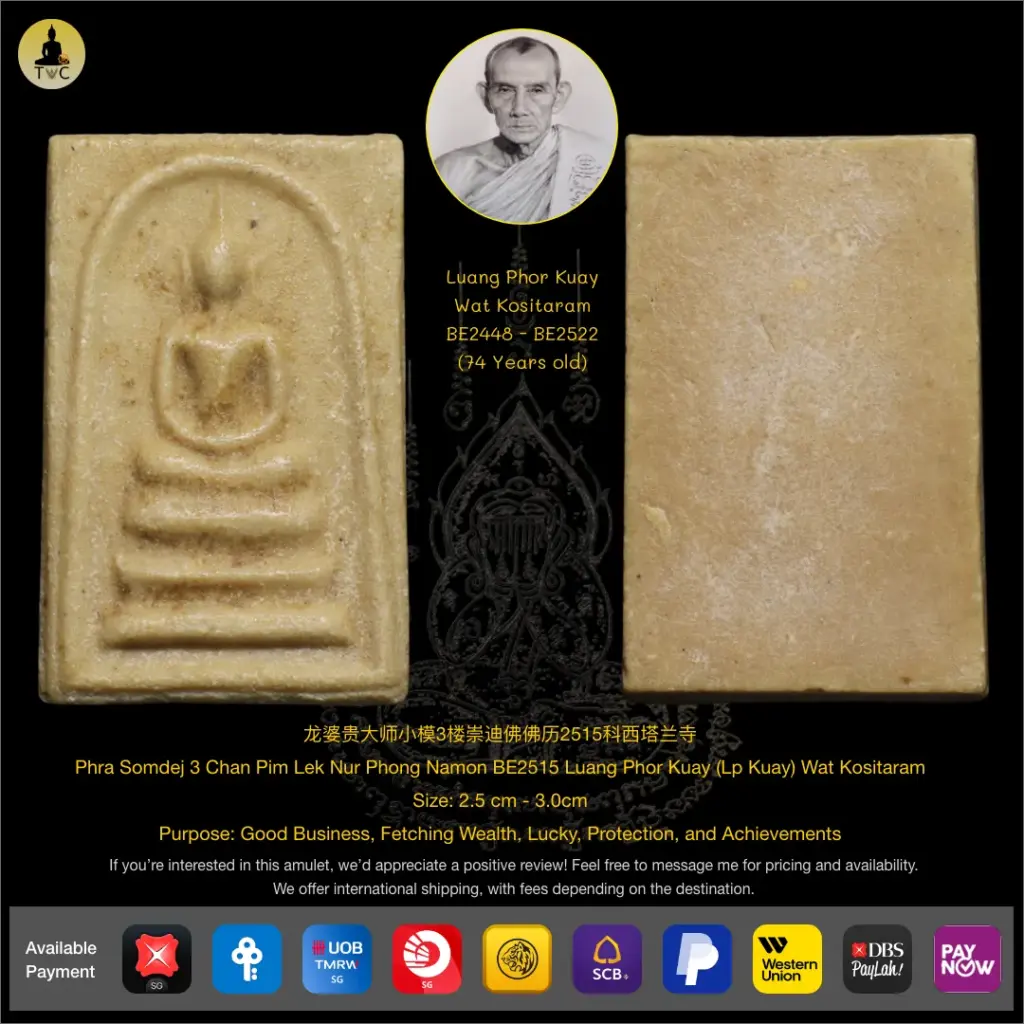
Phra Somdej 3 Chan Lang Yant Pim Lek Nur Phong Namon BE2515 Luang Phor Kuay (Lp Kuay) Wat Kositaram
| Type | Phra Somdej |
| Monk | Luang Phor Kuay Wat Kositaram |
| Temple | Wat Kositaram |
| B.E. Year | 2515 |
| Material | Phong Namon |
| SKU | TAC-0512 |
Authentic Phra Somdej by Luang Phor Kuay Wat Kositaram, BE 2515. Phong Namon nuea, pim lek, yant reverse. Temple-origin piece from Wat Kositaram.
What is the Phra Somdej by Luang Phor Kuay Wat Kositaram, BE 2515?
The Phra Somdej Luang Phor Kuay Wat Kositaram is a three-tiered Somdej amulet pressed in pim lek (small mould) from Phong Namon — a sacred powder nuea — consecrated at Wat Kositaram in BE 2515. The reverse carries a yant (sacred inscription). Size runs approximately 3.5–4.0 cm.
Luang Phor Kuay and why a BE 2515 temple-origin piece carries weight
Luang Phor Kuay Wat Kositaram is one of the most respected gaeji ajarn (senior masters of the central Thai tradition) of the 20th century. Collectors across Thailand, Singapore, Malaysia, and the Chinese-speaking markets have followed his editions for decades — not because of marketing, but because of his long record as an abbot who treated both meditation practice and phutthaphisek (consecration ceremony) with equal seriousness.
Wat Kositaram is where that authority was built and where the bulk of his editions were produced and blessed. A piece tied directly to that temple carries the lineage collectors care about — not a branch blessing, not a later reissue, but the source itself. For anyone building a focused collection around this master, temple-origin pieces from BE 2515 are the natural reference point.
The nuea, the pim, and what makes this pressing distinctive
The nuea here is Phong Namon — a phong (sacred powder blend) drawn from temple-consecrated materials. It is one of the classic muan sarn bases used in central Thai Somdej production, valued for its fine texture and the way it holds pim detail over decades. When the pressing is clean and the powder well-aged, the surface develops a dry, fine-grained character that experienced collectors read quickly under a loupe.
The pim is pim lek — the small mould variant of the 3 Chan (three-tiered throne) Somdej form. What sets this edition apart visually is the reverse: a yant rather than a plain back. Within the broader Thai Buddhist amulet tradition, a yant reverse on a Somdej is an authentication marker collectors go to first. The piece measures approximately 3.5–4.0 cm — compact enough for a daily pendant, large enough that the throne tiers and the yant inscription both read clearly.
Authenticating this piece: what to check
Luang Phor Kuay pieces from BE 2515 have been in the market long enough that both genuine examples and copies circulate. Knowing what to look for matters before any purchase.
- Pim definition: The 3 Chan throne lines should be crisp and proportionally consistent with the pim lek standard for this edition.
- Nuea surface: Aged Phong Namon reads dry and fine-grained — not glassy, not powdery-loose. Colour tends toward off-white to pale grey depending on how the piece has been stored.
- Yant reverse: The inscription should be legible and correctly formed. Blurring or asymmetry in the yant lines is a clear red flag.
- Overall size: Confirm the piece falls within the 3.5–4.0 cm range documented for this pim.
No certificate details are on record for this listing. Buyers who require a certified piece should confirm grading status directly before purchase.
We at TAC have handled a number of Luang Phor Kuay pieces from Wat Kositaram, and the BE 2515 pim lek with yant reverse is one of the more specific variants collectors ask about — the yant back distinguishes it clearly from the plain-reverse versions of the same era. For a collector building a focused Luang Phor Kuay holding, this is the kind of temple-origin, period-correct piece that anchors a run rather than filling it out.
Attributes reflect Thai Buddhist devotional tradition and are not measurable claims.