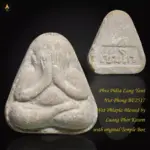
Phra Somdej Lang Yant Nur Thong Daeng BE2530 Luang Phor Kasem Wat Susan Sahlahwangth
| Type | Phra Somdej |
| Monk | Luang Phor Kasem Trailak Cemetery, Lampang |
| Temple | Wat Susan Sahlahwagth |
| B.E. Year | 2530 |
| Material | Thong Daeng |
| SKU | TAC-0515 |
Authentic Phra Somdej Lang Yant by Luang Phor Kasem Trailak Cemetery, Lampang. Wat Susan Sahlahwagth, BE 2530, thong daeng. T-Amulet certified.
What is the Phra Somdej Lang Yant by Luang Phor Kasem Trailak Cemetery, Lampang from Wat Susan Sahlahwagth?
The Phra Somdej Luang Phor Kasem Trailak Cemetery, Lampang is a BE 2530 (CE 1987) copper amulet issued by Wat Susan Sahlahwagth. Pressed in thong daeng (copper), it carries the classic Somdej image on the front and a lang yant (sacred inscription reverse) on the back. A T-Amulet certificate accompanies the piece.
Luang Phor Kasem Trailak Cemetery, Lampang and why this particular piece holds up
Luang Phor Kasem Trailak Cemetery, Lampang occupies a singular place in northern Thai devotional culture. His following is deep and genuinely affectionate — not built on media campaigns but on decades of ascetic practice and compassion. Amulets carrying his name carry that weight with them, which is why even late-period issues from BE 2530 attract serious collector attention rather than being dismissed as modern pieces.
A BE 2530 dating places this Somdej in a period when organised issue documentation was becoming standard practice. That matters for long-term collecting. The piece is not simply “a Luang Phor Kasem amulet” — it is a specifically named Somdej Lang Yant in thong daeng from a datable run, associated with Wat Susan Sahlahwagth as the lineage anchor. That specificity is what keeps an amulet legible and comparable over time.
Within the broader Thai Buddhist amulet tradition, the Somdej format has been the benchmark for protective amulets since the era of Somdej Toh. What distinguishes this piece is the lang yant reverse — a design choice that shifts the amulet from pure contemplative image toward something with more explicit ritual intentionality.
The nuea and what to read on this piece
Thong daeng — copper — is one of the most dependable nuea (material/substance) choices in Thai amulet production. It takes strike detail cleanly, holds surface definition over decades of wear, and develops a natural patina that experienced collectors can read as an age indicator. For a lang yant reverse, copper is particularly well suited: the struck lines of the yant (sacred inscription) remain readable even after years of handling, unlike softer materials that blur at the relief edges.
On the front, the pim (mould) follows the classic Somdej composition — the seated Buddha in bhumisparsha posture framed within tiered arches. On the reverse, the lang yant provides the stronger ritual identity. In practice this pairing gives the piece dual appeal: the serenity associated with the Somdej image and the protective symbolism carried by the yant.
- Front detail: Check strike clarity on the tiered arch framing and the seated figure — soft strikes suggest either a later pull from a worn die or a different pim entirely.
- Reverse yant: Lines should be clean and consistent. Uneven depth or blurring around the inscription edges warrants closer examination.
- Surface patina: Genuine copper of this age develops an uneven, naturally oxidised tone. Machine-polished or artificially uniform surfaces are a flag.
- Certificate: The T-Amulet certificate accompanies this piece and provides a baseline reference for grading and provenance documentation.
Collector value and what the certificate adds
Pricing for late-period Luang Phor Kasem pieces in thong daeng varies with condition, certificate status, and how clearly the piece can be classified against a known pim. This example benefits from three things working together: a named type (Somdej Lang Yant), a specific material (thong daeng), and a T-Amulet certificate that gives future buyers a documented starting point.
Without a certificate, a collector has to rely entirely on personal expertise and photographic comparison. The T-Amulet documentation here removes some of that uncertainty. It does not guarantee any particular valuation, but it makes the piece easier to present, easier to compare, and easier to sell on if the collector ever decides to move it.
Collectors who focus on Luang Phor Kasem amulets generally associate the broader category with barami (accumulated spiritual merit and influence), compassion, and protective blessings for the wearer. These are devotional interpretations within Thai belief — they inform collector sentiment around the piece but should not be taken as measurable claims.
This BE2530 Phra Somdej in nur thong daeng occupies an interesting position in the Luang Phor Kasem collecting canon — copper-bodied Somdej from Wat Susan Sahlahwangthan are less commonly encountered than the monk's better-known pressed-powder issues, and the deliberate pairing of a classic front iconography with a named lang yant reverse makes this a more legible and classifiable piece for the serious collector. The accompanying T-Amulet certificate provides a useful reference point for authentication and long-term documentation, which we at TAC consider a meaningful baseline for any collector building a provenance-conscious collection around the northern Thai lineage.
Attributes reflect Thai Buddhist devotional tradition and are not measurable claims.