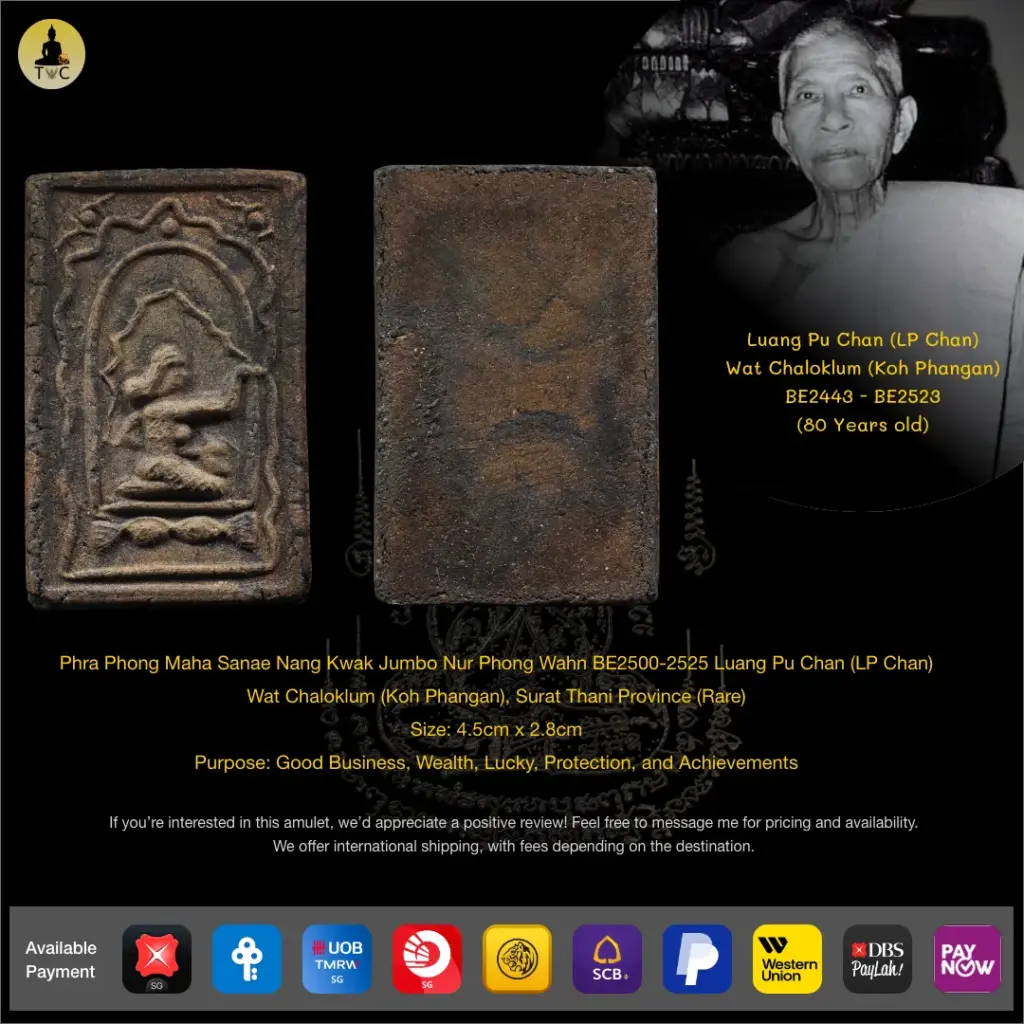
Phra Phong Maha Sanae Nang Kwak Jumbo Nur Phong Wahn BE2500-2525 Luang Pu Chan (LP Chan) Wat Chaloklum (Koh Phangan), Surat Thani (Rare)
| Monk | Luang Pu Chan (LP Chan) Wat Chaloklum (Koh Phangan), Surat Thani |
| Temple | Wat Chaloklum |
| B.E. Year | 2500 |
| Material | Phong Wahn |
| SKU | TAC-0528 |
Authentic Phra Phong Maha Sanae Nang Kwak Jumbo Nur Phong Wahn BE2500-2525 Luang Pu Chan (LP Chan) Wat Chaloklum (Koh Phangan), Surat Thani (Rare) by Luang Pu…
What is the Phra Phong Maha Sanae Nang Kwak Jumbo Nur Phong Wahn BE2500-2525 Luang Pu Chan (LP Chan) Wat Chaloklum (Koh Phangan), Surat Thani (Rare) by Luang Pu Chan (LP Chan) Wat Chaloklum (Koh Phangan), Surat Thani?
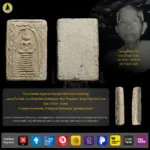
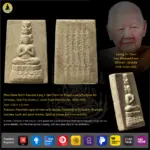
The Phra Phong Maha Sanae Nang Kwak Jumbo Nur Phong Wahn BE2500-2525 Luang Pu Chan (LP Chan) Wat Chaloklum (Koh Phangan), Surat Thani (Rare) is a large-format sacred powder amulet pressed from phong wahn (sacred herbal powder blend) at Wat Chaloklum on Koh Phangan between BE 2500 and BE 2525. Created under the direction of Luang Pu Chan (LP Chan) Wat Chaloklum (Koh Phangan), Surat Thani, it depicts Nang Kwak in a seated beckoning posture and is associated with charm, wealth attraction, and business prosperity.
Luang Pu Chan and Wat Chaloklum — why this piece carries weight
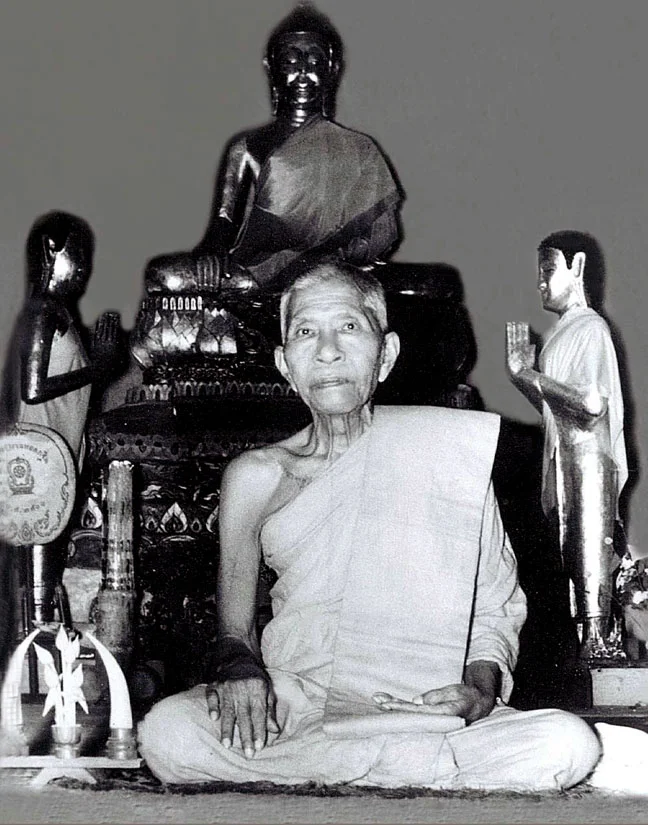
Luang Pu Chan Khantiko served as abbot of Wat Chaloklum on Koh Phangan, Surat Thani, a province better known to amulet circles for its island temples than for mainstream Bangkok lineages. That relative obscurity is exactly what makes pieces from this line interesting — the monk worked outside the high-volume central Thai market, and surviving examples in good condition are genuinely scarce. Collectors who follow the Thai Buddhist amulet tradition know that provincial abbots with strong local reputations often produced smaller runs that age out of circulation faster than Bangkok temple editions.
The production window ran from BE 2500 to BE 2525 — a twenty-five year span covering 1957 to 1982. That range matters because it means amulets from the earlier years have had over six decades of natural ageing in the phong wahn, which experienced eyes can read in the surface texture and density of the pressed powder. Pieces from Luang Pu Chan (LP Chan) Wat Chaloklum (Koh Phangan), Surat Thani are not commonly seen at Singapore or Kuala Lumpur amulet fairs, which reflects genuine scarcity rather than lack of merit.
The nuea — what goes into the phong wahn and how it was pressed
The nuea (material/substance) here is Nur Phong Wahn, a muan sarn (sacred powder blend) built from several named components. The core powders are Pong Phutthakun, derived from sacred Buddhist scripture rituals; Pong Itthijay, tied to protective mantras; and Pong Trinisinghe, associated with supreme protective blessings. Fragments of ancient Phra Somdej amulets were incorporated into the mix, connecting this piece to older spiritual lineages. Floral powders — jasmine and lotus petals from ceremonial use — and holy water (namon) were also blended in during the preparation stage.
The pim (mould) produces a jumbo-format tablet, larger than the standard Nang Kwak pressed pieces that circulate at most Thai temple fairs. The subject is Nang Kwak in a seated posture with one hand raised in the classic beckoning gesture — a figure well understood across Thai, Chinese, and Vietnamese devotional communities in this region. The larger format gives the relief more surface detail and is one of the authentication markers collectors compare against reference pieces.
The pluk sek / phutthaphisek (consecration ceremony) was conducted by Luang Pu Chan himself with additional respected monks present. The ceremony used astrologically selected dates, following traditional Thai practice to align the blessing timing with favourable conditions.
What a collector should check on this piece
For phong wahn amulets of this age, the surface tells you a great deal. Genuine pieces pressed from this blend will show consistent aging throughout the powder body — not just on the high points of the relief. The base material should have a matte, slightly granular character consistent with herbal powder rather than a smooth, plastic-looking finish that signals a modern reproduction.
- Confirm the jumbo pim dimensions against known reference pieces — the larger format is a fixed characteristic, not variable.
- Examine the Nang Kwak relief: the raised hand and seated posture should be clearly defined, with aged powder settlement visible in the recesses rather than artificial staining.
- Check that floral powder inclusions or visible herbal particles are distributed evenly through the body of the tablet — not just surface-applied.
- Cross-reference with collector records for Wat Chaloklum Phong Wahn pieces from this production window.
No certificate details are currently on file for this piece. Collectors buying at this age-bracket and rarity level should factor in consultation with recognised Thai amulet authentication committees or experienced club members before finalising.
We at TAC sourced this piece specifically because Wat Chaloklum editions from Luang Pu Chan's BE 2500–2525 production window rarely surface in the Singapore and Malaysia market — most collectors encounter this line only through private Thai networks. The combination of a named muan sarn blend, the jumbo pim format, and a genuinely scarce provincial origin makes this a meaningful gap-filler for collectors building across Thai amulet lineages beyond the Bangkok mainstream.
Attributes reflect Thai Buddhist devotional tradition and are not measurable claims.