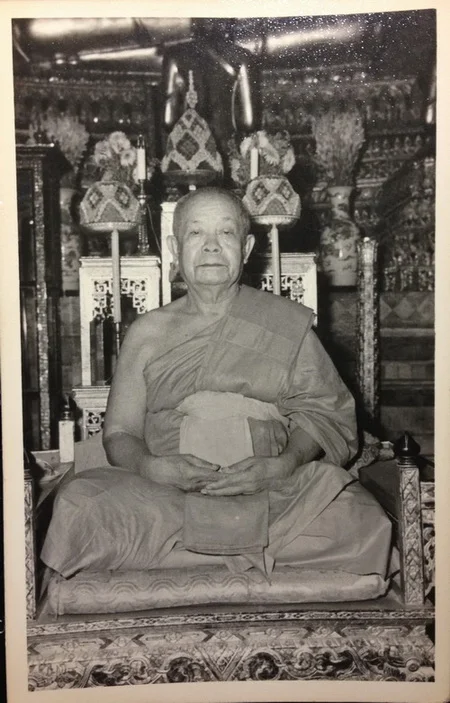
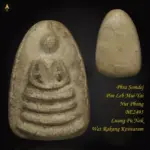
Phra Somdej Prok Pho 菩提叶崇迪佛 Run Mrigadayavan Nur Phong Namon BE2466, Luang Pu Nak (Lp Nak), Wat Hua Hin, Prachuap Khiri Khan Province, etc… participated in the blessing ceremony
| Monk | Luang Pu Nak Wat Rakang Kositaram |
| Temple | Wat Hua Hin |
| B.E. Year | 2466 |
| Material | Phong Namon |
| SKU | TAC-0591 |
Authentic Phra Somdej Prok Pho 菩提叶崇迪佛 Run Mrigadayavan Nur Phong Namon BE2466 consecrated by Luang Pu Nak Wat Rakang Kositaram at Wat Hua Hin.
What is the Phra Somdej Prok Pho 菩提叶崇迪佛 Run Mrigadayavan Nur Phong Namon BE2466 consecrated by Luang Pu Nak Wat Rakang Kositaram at Wat Hua Hin?
The Phra Somdej Prok Pho 菩提叶崇迪佛 Run Mrigadayavan Nur Phong Namon BE2466 is a royal-commissioned sacred amulet created in 1923 to mark the construction of Mrigadayavan Palace in Hua Hin. Pressed from a specialised phong namon (oil powder blend), it was consecrated at Wat Hua Hin with Luang Pu Nak Wat Rakang Kositaram presiding over the blessing ceremony.
A royal commission — why this run was created and what makes it historically significant
King Rama VI ordered this batch of Phra Somdej amulets to commemorate the construction of Mrigadayavan Palace in Hua Hin District, Prachuap Khiri Khan Province. That palace connection is the reason collectors call this the Run Mrigadayavan — run (batch/edition) named directly after the palace it was commissioned to honour. The royal mandate behind a BE2466 piece is not common, and that provenance alone places it in a different category from temple-issued batches of the same era.
The pim (mould) is a large Bodhi leaf form — prok pho in Thai, 菩提叶 in Chinese — with a shallow, detailed relief on the face and a smooth, flat back carrying no inscriptions. Measured at approximately 4.0 x 2.5 cm, the proportions are generous compared to standard Somdej pim of that period. The large Bodhi leaf format became a recognised prototype, and later pieces such as the Phra Somdej Bang Khun Phrom Bodhi Leaf Mold of BE2509 drew on the same formal language.
The nuea: what goes into a phong namon amulet from this period
The nuea (material/substance) here is phong namon — literally oil powder — bound with soy sauce oil (nam man tao jiao) applied in generous quantity. That binding agent is what gives authentic pieces from this run their characteristic juicy, slightly greasy surface and compact, smooth texture with a subdued sheen. Collectors handling a genuine example describe the feel as distinctly different from dry-pressed phong: the surface has a quiet gloss rather than a chalky matte.
The muan sarn (sacred powder blend) draws from serious lineage material. Included are powder from Somdej Phra Sangharaja Suk Kai Theun, powder from Somdej Phra Buddhachan Toh Phrommarangsi of Wat Rakhang, and sacred powder from Luang Phor Kaew of Wat Khrueawan, combined with ancient powders from other masters. The presence of Toh Phrommarangsi’s powder matters to collectors: it links this piece directly to the same source material behind the most referenced Somdej amulets in the Thai Buddhist amulet tradition. Some senior collectors regard this run as a legitimate stand-in for Phra Somdej Toh pieces, given the overlap in ingredient lineage.
The phutthaphisek (consecration ceremony) was presided over by Luang Pu Nak of Wat Hua Hin alongside other senior monks of the era. The ritual included intensive parittas chanting and meditative empowerment — standard for a ceremony of this scale and royal significance.
Luang Pu Nak and the place Wat Hua Hin holds in this piece’s story
Luang Pu Nak Wat Rakang Kositaram was born in BE2400 (1857) in Phetchaburi Province. He first ordained as a novice at age 19 at Wat Lang Pom, later re-ordained at Wat Ton Luang after a period as a layman. His wicha (magical sciences) training came from a string of respected masters: Luang Pho Tad of Wat Bang Wan Thong, Luang Pho Aiem of Wat San Dan, Luang Pho Phu of Wat Bang Ka Prom, and Luang Pho Suk of Wat Lang Pom. That breadth of lineage is relevant — he was not a one-master disciple.
The local community eventually invited him to serve as abbot of Wat Hua Hin in Prachuap Khiri Khan Province, where he drove both temple development and Dhamma teaching. He passed away on 4 July 1934, aged 77, after 42 years in the monkhood. The BE2466 Run Mrigadayavan sits near the midpoint of his abbotship — made when his practice and his standing in the region were fully established.
What a collector checks when authenticating this piece
There is no certification noted for this piece, so authentication falls entirely on physical reading. Collectors who know this run focus on several consistent characteristics:
- The nuea should feel oily and compact — not dry, not crumbly. Dry texture is a red flag.
- Surface sheen is subdued and even, not applied or polished after the fact.
- The large Bodhi leaf relief should show shallow but clean detail — over-sharp lines suggest a modern copy pressed from a different tool.
- Back surface is flat and smooth with no inscriptions or patterns.
- Overall dimensions should be close to 4.0 x 2.5 cm. Significant deviation warrants closer scrutiny.
Age-related patination on phong namon from BE2466 takes a specific form: the oil content causes the surface to darken unevenly over a century, often deepest in the recesses of the relief. Even colour throughout — especially bright white — is inconsistent with a genuine piece of this age.
This is a BE2466 piece with genuine historical weight behind it — royal-commissioned, consecrated by Luang Pu Nak of Wat Hua Hin, and pressed from a phong namon blend that includes Somdej Toh Phrommarangsi lineage powder. We at TAC regard the muan sarn lineage and the royal commission context as the key points of interest for a collector approaching this run for the first time.
Attributes reflect Thai Buddhist devotional tradition and are not measurable claims.