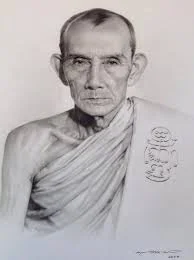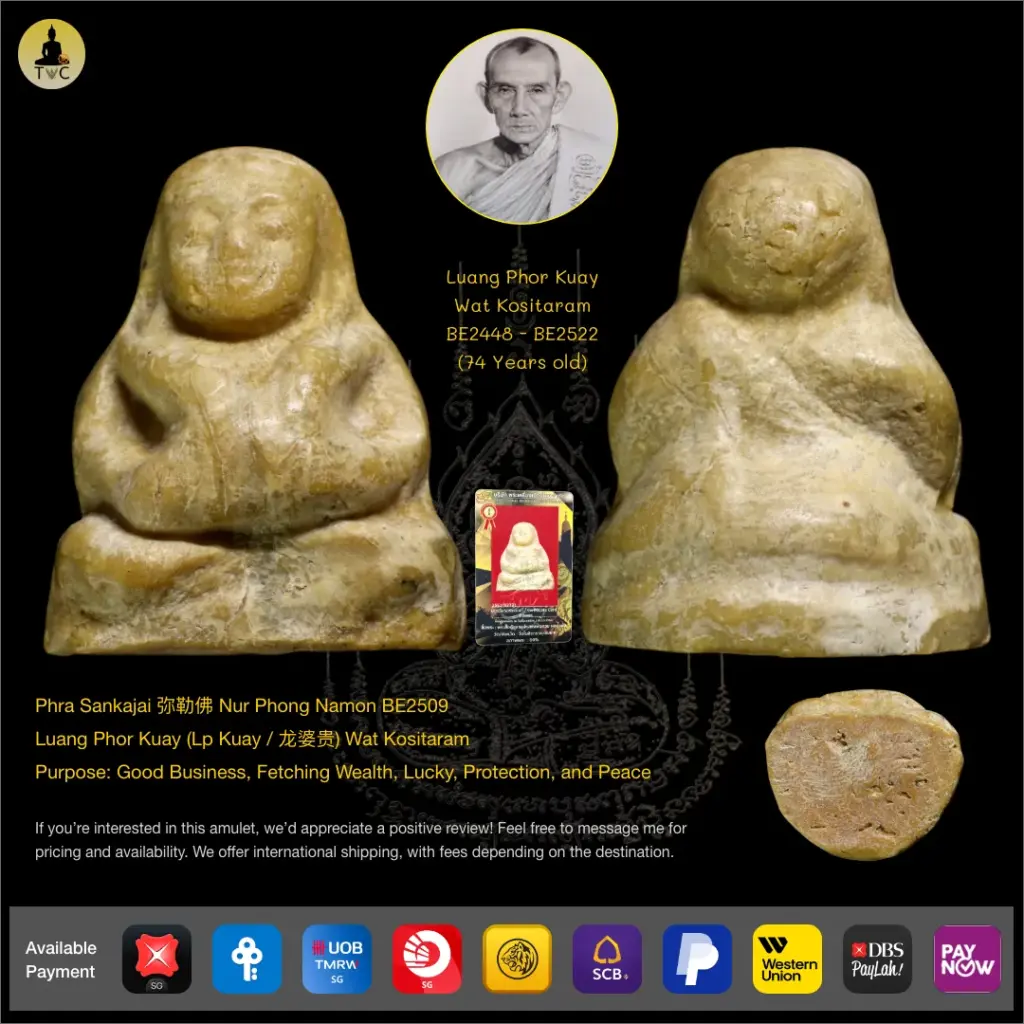
Phra Sankajai 弥勒佛 Nur Phong Namon BE2509 Luang Phor Kuay (Lp Kuay / 龙婆贵) Wat Kositaram
| Monk | Luang Phor Kuay Wat Kositaram |
| Temple | Wat Kositaram |
| B.E. Year | 2509 |
| Material | Phong Namon |
| SKU | TAC-0626 |
Authentic Phra Sankajai 弥勒佛 Nur Phong Namon BE2509 Luang Phor Kuay (Lp Kuay / 龙婆贵) Wat Kositaram by Luang Phor Kuay Wat Kositaram. Phong Namon, BE2509.
What is the Phra Sankajai 弥勒佛 Nur Phong Namon BE2509 Luang Phor Kuay (Lp Kuay / 龙婆贵) Wat Kositaram by Luang Phor Kuay Wat Kositaram?
The Phra Sankajai 弥勒佛 Nur Phong Namon BE2509 Luang Phor Kuay (Lp Kuay / 龙婆贵) Wat Kositaram by Luang Phor Kuay Wat Kositaram is a sacred powder amulet pressed in BE 2509 (1966 CE) at Wat Kositaram, Chainat Province. The nuea (material/substance) is Phong Namon — ritual writing-erasure powder blended with temple Phong kru — and the piece carries a T-Amulet Certificate for authenticity.
LP Kuay and Why His BE 2509 Powder Work Still Moves
Luang Phor Kuay Wat Kositaram built his reputation on disciplined wicha (esoteric Buddhist practice) and careful powder preparation. Collectors across Thailand, Singapore, and Taiwan have long tracked his early issues precisely because the muan sarn (sacred powder blend) from that period shows consistent hand-preparation and meditative chanting throughout the process. That combination is harder to find as supply thins.
BE 2509 sits in a window when devotees were actively seeking stability — both economic and personal — and LP Kuay’s output from those years reflects that mood in the iconography. The Sankajai figure, with its serene posture and balanced torso, was a deliberate choice: contented wisdom over martial force. Early Phong Namon issues from Wat Kositaram remain liquid in regional markets for that reason. Demand has stayed steady without needing hype to sustain it.
The Phong Namon Nuea — What Goes Into It and How It Was Made
Phong Namon is a specific class of phong (sacred powder) produced through a ritual sequence of writing sacred yant (sacred inscriptions) in chalk or similar media and then collecting the erasure residue. At Wat Kositaram, this was integrated with Phong kru — powders sourced from the temple’s own consecrated stores. Herbal and mineral particulates were added for structural cohesion and symbolic auspiciousness, standard practice for the period.
The resulting nuea presses with a matte surface that develops fine micro-pitting over time. On pieces that have aged properly, you see coherent edge compression at the knees and base — the contours stay crisp rather than crumbling. That surface maturity, consistent with six decades of stable storage, is one of the first things collectors check. The Thai Buddhist amulet tradition places considerable weight on the integrity of the powder blend itself, and LP Kuay’s muan sarn from this run is considered well-balanced by collector records.
The pim (mould) produces a Sankajai figure with gentle shoulder curvature, a stable base, and confident overall modelling. According to Thai collector records, these early LP Kuay powder issues are admired for balanced iconography — nothing overworked, nothing rushed.
What Collectors Look For, and the Certificate
Authentication for this piece centres on a few observable points:
- Surface texture: Fine micro-pitting and age-toned particulate clustering consistent with hand-pressed Phong Namon aged from BE 2509.
- Edge compression: Crisp contours at the knees and base indicate careful storage and period-consistent material compaction.
- Iconographic balance: The serene Sankajai form — torso, shoulder line, base — should read as confident and unhurried, not sharp-edged from over-tooling.
- T-Amulet Certificate: This piece is accompanied by a T-Amulet Certificate, providing institutional verification of material and provenance.
Collectors who are new to LP Kuay’s powder work should handle the certificate alongside — not instead of — physical examination. The certificate establishes a paper trail; the surface tells you about storage history and material integrity. Both matter.
In terms of tradition and belief, collectors associate the Sankajai image with metta (kind regard toward others) and metta mahaniyom (social goodwill). It is also traditionally linked to chok-lap (prosperity) and clarity of speech — particularly relevant for business owners and householders. These associations come from Thai Buddhist practice, not from any claim TAC makes about the piece’s function.
We at TAC sourced this Phra Sankajai 弥勒佛 Nur Phong Namon BE2509 from Luang Phor Kuay Wat Kositaram's BE 2509 issue — a period when his Phong Namon work was particularly well-regarded among Chainat collectors. What makes this example worth attention is the combination of T-Amulet certification and the material integrity you typically only see in pieces that have been carefully stored since the sixties.
Attributes reflect Thai Buddhist devotional tradition and are not measurable claims.