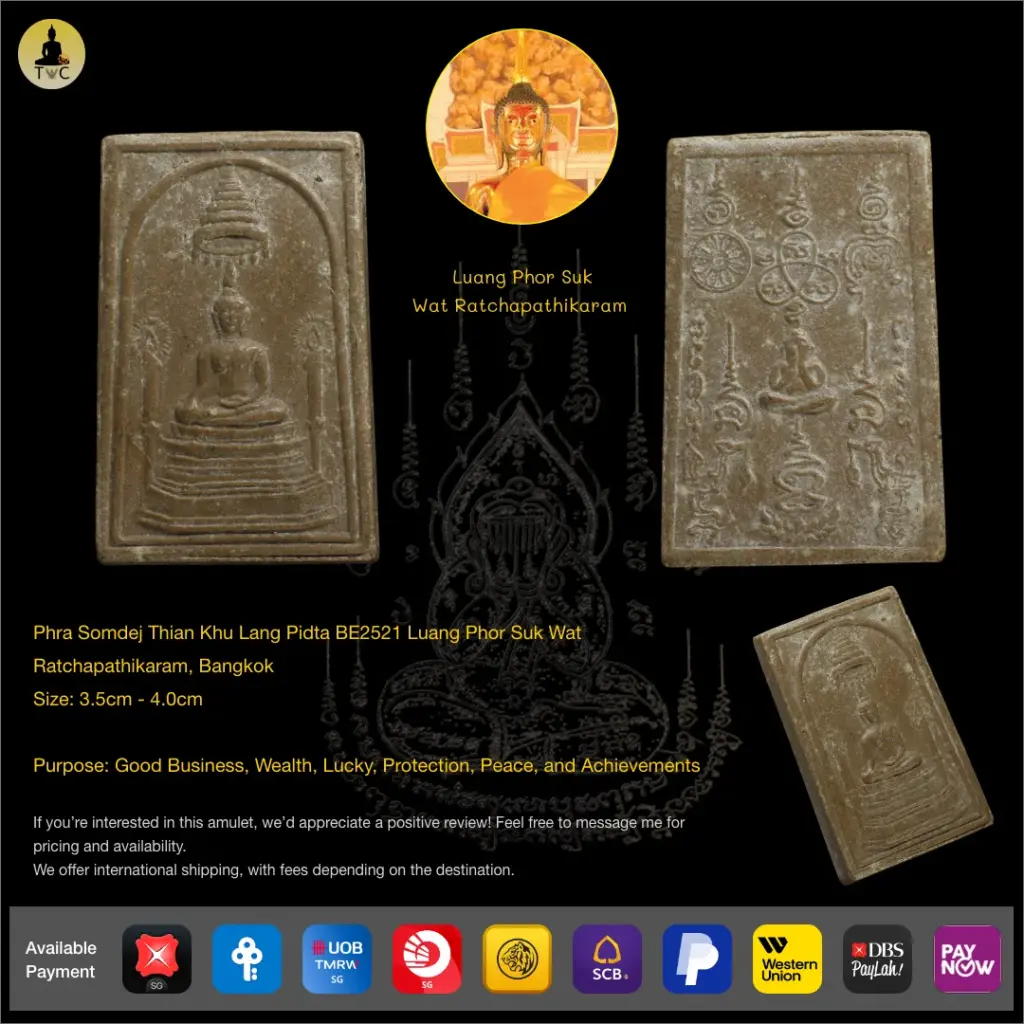
Phra Somdej Thian Khu Lang Pidta BE2521 Luang Phor Suk (Lp Suk) Wat Ratchapathikaram, Bangkok
| Type | Phra Somdej |
| Monk | Luang Phor Suk |
| Temple | Wat Ratchapathikaram |
| B.E. Year | 2521 |
| SKU | TAC-0630 |
Authentic Phra Somdej Luang Phor Suk, Wat Ratchapathikaram Bangkok, BE 2521. Twin-candle front, Pidta reverse.
What is the Phra Somdej Thian Khu Lang Pidta by Luang Phor Suk, BE 2521?
The Phra Somdej Luang Phor Suk from Wat Ratchapathikaram, Bangkok, is a double-candle Somdej pim with a Pidta image on the reverse, created in BE 2521. Pressed under the authority of Luang Phor Suk, this piece represents one of the more distinctive runs to come out of that temple during his tenure.
Luang Phor Suk and the Temple Behind This Piece
Wat Ratchapathikaram sits in Bangkok and carries a lineage of sacred amulet production tied closely to Luang Phor Suk. His name is well-regarded among collectors in Thailand and across the region — not through marketing, but through consistent results in authentication circles and the enduring demand for pieces traced to his hand.
The broader Thai Buddhist amulet tradition has long produced Somdej-type pieces where the reverse carries secondary iconography. The Pidta image on the back of this pim (mould; the specific pressed form collectors authenticate against) is not decorative padding — it doubles the devotional identity of the piece, combining the Somdej’s protective association with Pidta’s widely-held connection to fortune and self-sufficiency.
The Pim, the Nuea, and What Makes This Run Distinct
The defining feature of this piece is the pim itself: a Somdej seated above two paired candles on the front face — Thian Khu, meaning twin candles — with a Pidta meditating figure pressed into the reverse. That combination on a single tablet is less common than a plain-back Somdej, and it narrows the authentication field considerably.
The nuea (material/substance the tablet is pressed from) follows the muan sarn (sacred powder blend) tradition standard to Wat Ratchapathikaram issues of that period. Details on the specific phong composition are documented against the original temple records. Collectors examining this piece should look at the clarity of the Somdej’s throne detail on the front and the crispness of the Pidta’s posture on the reverse — both degrade quickly in worn or fake pressings.
- Front face: Phra Somdej seated, twin candles (Thian Khu) flanking the base
- Reverse: Pidta figure in closed-eye meditation posture
- Pim edges and surface texture consistent with BE 2521 Wat Ratchapathikaram production
- Muan sarn composition traceable to temple-documented sacred powder blends of that era
Collecting This Piece: What to Verify
A BE 2521 piece from this temple is now over four decades old. Age alone does not confer value, but it does mean the nuea surface should show natural settling — not artificial ageing, not heavy cleaning. Colour, surface porosity, and the sharpness of the pressed detail are the first things any serious collector checks.
No external certificate is documented for this piece at present. That puts the authentication weight squarely on physical inspection against known reference pieces (niyom — collector-standard examples held in established Thai amulet clubs and publications). Buyers sourcing through TAC can request a detailed condition assessment before purchase.
This BE 2521 Phra Somdej Luang Phor Suk Thian Khu Lang Pidta from Wat Ratchapathikaram is a specific pim — the paired Thian Khu framing on the front and the Pidta reverse distinguish it from the standard single-face Somdej issued in the same period. We at TAC present it as a collectable example of Luang Phor Suk's later consecration work, for collectors who study this monk's documented editions seriously.
Attributes reflect Thai Buddhist devotional tradition and are not measurable claims.