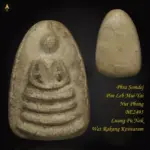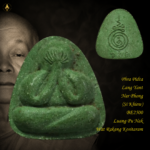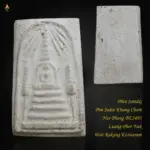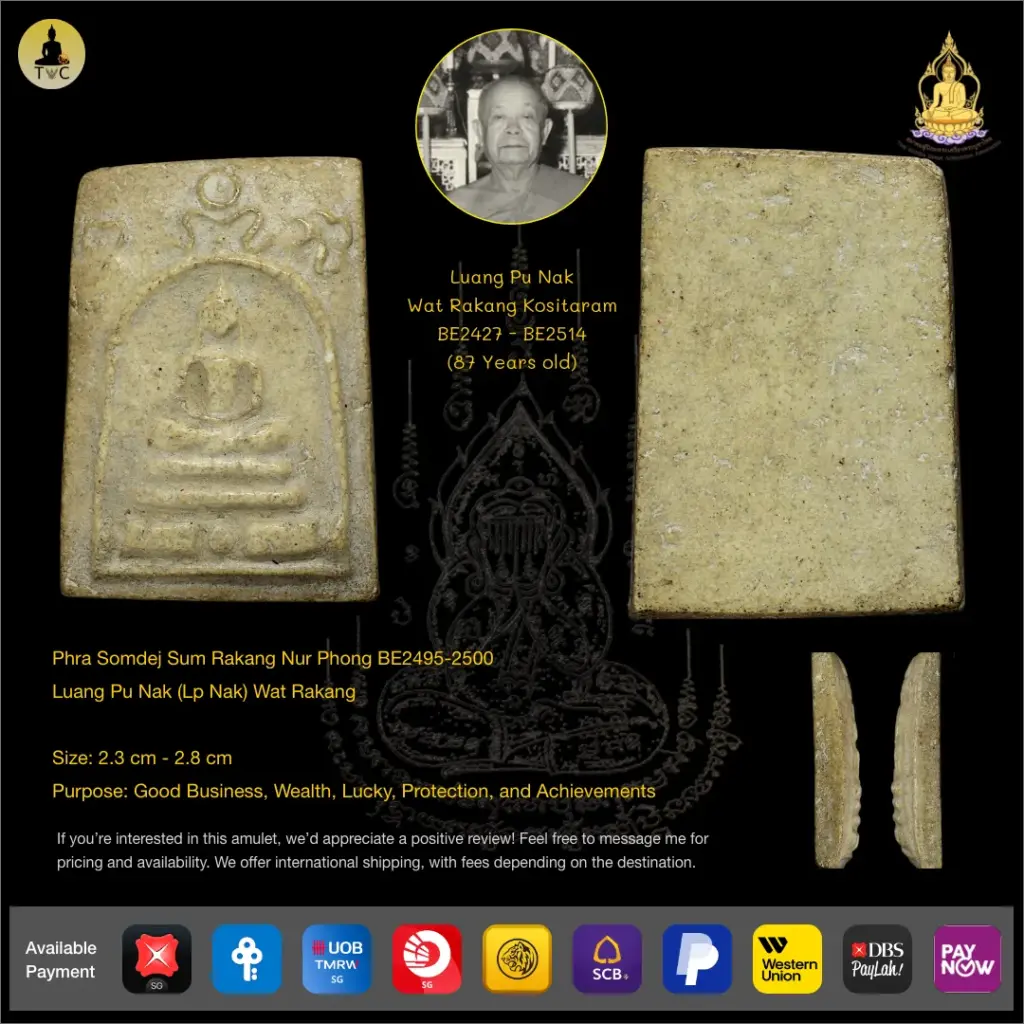
Phra Somdej Sum Rakang Nur Phong BE2495-2500 Luang Pu Nak (Lp Nak) Wat Rakang
| Type | Phra Somdej |
| Monk | Luang Pu Nak Wat Rakang Kositaram |
| Temple | Wat Rakang |
| B.E. Year | 2495 |
| Material | Phong |
| SKU | TAC-0672 |
Authentic Phra Somdej Luang Pu Nak Wat Rakang Kositaram, BE 2495–2500. Pressed phong with Somdej Toh lineage powders. No certificate.
What is the Phra Somdej Luang Pu Nak Wat Rakang Kositaram BE 2495?
The Phra Somdej Luang Pu Nak Wat Rakang Kositaram BE 2495 is a pressed phong amulet produced at Wat Rakang between BE 2495 and 2500 (1952–1957 AD). Made under the direct supervision of Luang Pu Nak Wat Rakang Kositaram, it continues the Somdej lineage established at that temple in the 19th century.
Luang Pu Nak and his place in the Wat Rakang lineage
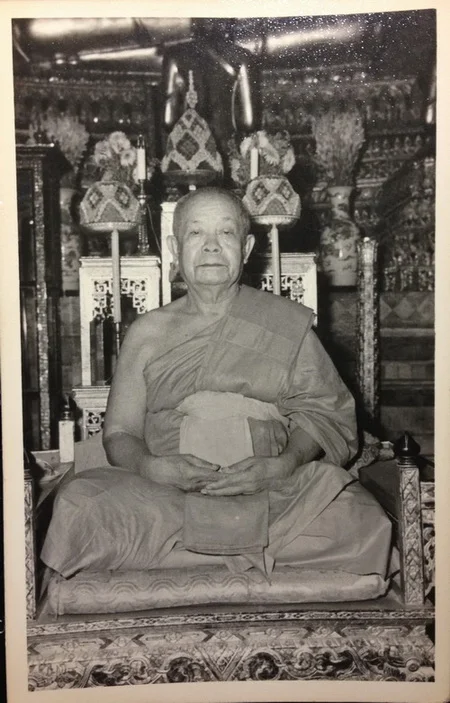
Luang Pu Nak served as abbot of Wat Rakang Kositaram and was regarded as one of the key monks keeping the temple’s amulet tradition alive after the era of Somdej Phra Buddhachan Toh — the 19th-century master whose Phra Somdej remain the benchmark of the Thai Buddhist amulet tradition. That connection mattered. LP Nak was not simply issuing a new batch — he was working within a specific ritual and material framework that traced back to Somdej Toh’s original formulas.
Collectors who follow the Wat Rakang lineage treat this series as the most direct post-Somdej Toh continuation produced at the temple itself. The fact that it was made by the sitting abbot of Wat Rakang, rather than an outside monk invoking the name, carries weight in the niyom (collector-standard reference) community.
Nuea and how this piece was put together
The nuea (material/substance) is phong — a muan sarn (sacred powder blend) built from multiple components. The original formulation included Phong Itthijay, Phong Maharaj, and Phong Tri Ni Singhe, three classical Buddhist powders that appear in Wat Rakang amulets across generations. Ground fragments of original Phra Somdej Wat Rakang amulets made by Somdej Toh were folded into the blend to preserve material continuity with the earlier lineage.
Further ingredients included powdered herbs and sacred substances collected from temples and holy sites, traces of gold leaf, natural minerals, and charcoal derived from the burning of ancient sacred scriptures. LP Nak personally chanted and consecrated the powders before pressing began. The physical result — the pim (mould collectors authenticate against) — follows the classic Somdej form: a seated Buddha in meditation posture set above layered steps, with some variations carrying sacred inscriptions or stamps on the reverse.
Surface texture varies across pieces from this run. Some show visible grain from the powder mixture; others pressed out with a smoother finish. Both are consistent with the production method and period.
The consecration and what collectors look for today
The pluk sek (consecration ceremony) was held at Wat Rakang itself. LP Nak led multiple chanting sessions and meditation rituals, and senior monks of the era were invited to add their blessings. Collectors associate pieces from this temple and period with Metta (loving-kindness), Kongkrapan (invulnerability), and Maha Ud (protection from harm) — these are the traditional qualities attributed to the Wat Rakang Somdej line.
When assessing a piece from this series, experienced collectors focus on several points:
- Consistency of the phong surface — aged muan sarn from this period has a specific dry, settled texture distinct from later reproductions
- Correct pim profile — the layered steps, the proportions of the seated image, and the edge finish must align with known reference pieces
- Reverse markings — where present, stamps or yant (sacred inscriptions) should match documented examples from the BE 2495–2500 production window
- Overall patina and ageing — genuine pieces from this period show consistent surface ageing across all faces
No certificate accompanies this piece. For a series this age from Wat Rakang, authentication rests on physical comparison against niyom reference pieces and, where possible, third-party expert assessment. Buyers should factor that into any acquisition decision.
We at TAC acquired this Phra Somdej Luang Pu Nak Wat Rakang Kositaram from the BE 2495–2500 run — a series that carries genuine material lineage back to Somdej Toh through the muan sarn composition. For a collector focused on the Wat Rakang lineage, this edition represents one of the more traceable post-Somdej Toh productions, and its scarcity in the market today reflects that standing.
Attributes reflect Thai Buddhist devotional tradition and are not measurable claims.