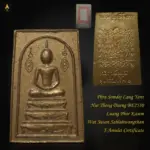
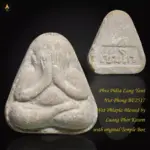
Phra Kring 3 Na Nur Thong Phasom BE2531 Luang Phor Kasem Tri Lakk Cemetery, Lampang
| Type | Phra Kring |
| Monk | Luang Phor Kasem Trailak Cemetery, Lampang |
| B.E. Year | 2531 |
| Material | Thong Phasom |
| Condition | Very Good |
| SKU | TAC-0680 |
Authentic Phra Kring 3 Na by Luang Phor Kasem Trailak Cemetery, Lampang. BE 2531, Thong Phasom alloy, no certificate. Available from TAC Singapore at SGD 188.
What is the Phra Kring 3 Na by Luang Phor Kasem, Tri Lakk Cemetery, Lampang — BE 2531?
The Phra Kring Luang Phor Kasem Trailak Cemetery, Lampang in the 3 Na pim, cast in Thong Phasom — nuea (material/substance) referring to a mixed-metal alloy — dates to BE 2531 and is attributed to Luang Phor Kasem at Tri Lakk Cemetery, Lampang. No formal certificate accompanies this piece. Collector evaluation rests on casting sharpness, surface tone consistency, and base evidence.
Luang Phor Kasem and the Tri Lakk Cemetery connection
Luang Phor Kasem Trailak Cemetery, Lampang is the named master behind this piece. The attribution places him at Tri Lakk Cemetery in Lampang — a northern Thai province with a long tradition of producing Phra Kring pieces that collectors in the region track closely. Within the broader Thai Buddhist amulet tradition, Luang Phor Kasem’s name carries weight among collectors who focus on the northern lineage.
The listing does not specify a release name (run), an issuing committee (gammakan), a production count, or a documented purpose for this batch. That is worth stating plainly. What the listing does confirm: BE 2531, Tri Lakk Cemetery, and the 3 Na pim — the face arrangement used by collectors as a quick front-of-piece identifier.
Reading the nuea — what Thong Phasom tells a collector
Thong Phasom — a mixed-metal alloy — is a standard nuea for Phra Kring across Thai amulet production. The alloy composition varies by temple and batch, which is exactly why surface behaviour matters more than a single photograph. Consistent metal tone across the front, back, and base is what you want to see. Uneven patches, or a colour that shifts dramatically between surfaces, are worth questioning.
For this 3 Na pim specifically, the authentication cues a collector should check:
- Detail sharpness: fine lines in the facial features should remain readable under close-up — not soft or washed out from heavy buffing.
- Alloy tone: look for consistency across all three surfaces, not just the front hero shot.
- Base finishing: the base often reveals casting quality and finishing style — it is where confidence in a piece is often confirmed or lost.
- High points and recesses: how the metal ages around raised and recessed areas gives clues to authenticity that polished surfaces alone cannot.
No certificate is attached to this piece. That is not unusual for pieces from this period, but it does mean photo evidence carries the full weight of evaluation. Front, back, and base shots together — not a single image — are what a serious buyer should ask for.
What a collector makes of the BE 2531 dating
BE 2531 places this piece in the late 1980s. Pieces from this era without formal documentation are common in the secondary market, and their collector value is driven by the strength of attribution, casting quality, and how well the nuea has held up over the decades. Production quantity for this batch is not stated in the listing, so rarity cannot be claimed as a confirmed fact.
What does support collector interest here is the clear category — Phra Kring — the named master, the specific pim designation (3 Na), and the availability of multi-angle photo references. For a photo-led evaluation, those are the working pieces you have. Any additional provenance — a temple booklet page, a prior ownership note, or a catalog citation — would strengthen the case further.
We at TAC are listing this BE 2531 Phra Kring 3 Na in Thong Phasom, attributed to Luang Phor Kasem at Tri Lakk Cemetery, Lampang — a northern Thai lineage piece that collectors of the era will recognise immediately by the 3 Na pim. No certificate accompanies this piece, which is typical for the period, and the listing price of SGD 188 reflects that honestly.
Attributes reflect Thai Buddhist devotional tradition and are not measurable claims.