![[SOLD] The Somdej Ketsamangkhon Lang Yant Nur Phong BE2497 Luang Phor Toon Wat Pho Nimit Thai amulet](https://tac-media.sgp1.digitaloceanspaces.com/2026/03/the-somdej-ketsamangkhon-lang-yant-nur-phong-be2497-luang-phor-toon-wat-pho-nimit-1024x1024.webp)
[SOLD] The Somdej Ketsamangkhon Lang Yant Nur Phong BE2497 Luang Phor Toon Wat Pho Nimit
| Type | Phra Somdej |
| Monk | Luang Phor Toon (Lp Toon) Wat Pho Nimit |
| Temple | Wat Pho Nimit |
| B.E. Year | 2497 |
| Material | Phong |
| SKU | TAC-0723 |
Somdej Ketsamangkhon Lang Yant • Nur Phong BE2497 • Luang Phor Toon • Wat Pho Nimit • Encased with Italy Gold Casing Overview of Somdej Ketsamangkhon (สมเด็จเกศมงคล) with Lang Yant (หลังยั
Somdej Ketsamangkhon Lang Yant • Nur Phong
BE2497 • Luang Phor Toon • Wat Pho Nimit • Encased with Italy Gold Casing
Overview of Somdej Ketsamangkhon (สมเด็จเกศมงคล) with Lang Yant (หลังยันต์) in Nur Phong (เนื้อผง), dated BE2494 and attributed in the listing to Luang Phor Toon of Wat Pho Nimit.
What This Piece Represents (Collector Lens)
In Somdej collecting, “Ketsamangkhon” is often appreciated for its dignified profile—classic Buddha silhouette, clean framing, and a focus on devotional calm rather than flashy decoration. This piece adds a second collector layer through “Lang Yant” (rear yantra), which many collectors treat as a direct signal of blessing intent: protection, stability, and the monk’s script identity placed behind the Somdej image. With a BE2494 dating and an attribution to Luang Phor Toon (Wat Pho Nimit), this becomes the kind of Somdej that collectors commonly catalogue by year, rear-yant style, and powder texture—because those are the markers that separate genuine early pressings from later look-alikes.
Amulet Information
Name: Somdej Ketsamangkhon Lang Yant
Material: Nur Phong
Year (BE): 2497
Monk: Luang Phor Toon
Temple: Wat Pho Nimit
Casing: Encased with Italy Gold Casing
SKU: Not specified in the listing.
Price:
SGD 308
History & Lineage Context
This amulet is presented as a Somdej Ketsamangkhon Lang Yant made in Nur Phong, dated B.E. 2497, and attributed to Luang Phor Toon (Wat Pho Nimit). In Thai amulet terminology, “Somdej” signals a revered format that collectors often associate with merit, composure, and long-term wearability. The phrase “Ketsamangkhon” (เกศมงคล) is commonly read as an auspicious naming—often used to express blessings connected to good fortune, stability, and dignified spiritual presence.
The “Lang Yant” (หลังยันต์) feature matters for both devotion and identification. For devotees, a rear yantra is traditionally treated as an added layer of protective intent—an encoded blessing that reinforces faith in the piece. For collectors, it is also a practical authentication cue: the yant layout, line weight, and placement often remain consistent within a batch, making it useful for comparison against known examples. This is why search terms like Somdej Lang Yant, BE2497 Somdej, Luang Phor Toon Wat Pho Nimit, and Nur Phong Somdej commonly appear in collector cataloging and marketplace discovery.
The listing also notes that the amulet is encased with Italy gold casing. While casing is not part of the original pressing, it is a common collector practice for preservation and presentation—especially for powder-based Somdej amulets, where edge protection can help maintain condition over time. The listing does not specify a formal batch name (รุ่น), issuing objective, or production quantity; therefore, provenance should be documented as listing-based unless additional supporting references are available.
About the Material (Nur Phong)
Nur Phong (เนื้อผง) refers to a sacred powder-based composition. For Somdej pieces, collectors typically study powder grain, firmness, natural aging tone, and how fine relief lines hold definition. In close-up, authentic-looking powder surfaces often show subtle variation—rather than a flat, uniform “paint-like” finish.
- Powder cue: look for natural grain and depth, especially around the Buddha silhouette and frame lines.
- Edge cue: corners and rim areas often reveal authentic compression and aging behavior.
- Back-yant cue: check clarity of yant lines and consistency of placement relative to the border.
Design / Pim / Variant Notes
The listing identifies the piece as “Somdej Ketsamangkhon Lang Yant.” The exact pim diagnostics (แม่พิมพ์) are not specified, so deeper classification should be done through side-by-side comparison of proportions, frame geometry, and yant layout against reference sets. In Somdej collecting, small differences—Buddha shoulder angle, base steps, and border thickness—often matter more than the name label alone.
Traditional Spiritual Attributes & Metaphysical Properties
Somdej-format amulets are traditionally worn for a calm protective presence and steady personal composure. With a rear yant, devotees often describe the piece as more “complete” in protective intent. These are belief-based traditions and not guaranteed outcomes; the listing does not specify a dedicated wicha (วิชา) beyond the amulet’s attributed lineage.
- คุ้มครอง (Protection): commonly worn as a daily safeguard.
- เมตตา (Metta): often associated with smoother social interactions.
- ตั้งสติ (Mindfulness): many collectors treat Somdej as a reminder to stay composed and disciplined.
Rarity Assessment & Collector Significance
The listing does not provide production numbers or formal documentation references, so rarity cannot be stated as a confirmed figure. Collector significance here is driven by clear searchable identity markers: Somdej Ketsamangkhon, Lang Yant, Nur Phong, BE2497, and Luang Phor Toon • Wat Pho Nimit, plus the preservation-oriented casing note.
Conclusion
This Somdej Ketsamangkhon Lang Yant in Nur Phong, dated BE2497 and attributed to Luang Phor Toon of Wat Pho Nimit, is a clean collector category piece: classic Somdej format, identifiable rear yant, and protected in Italy gold casing. If you want a Somdej that balances devotional presence with practical catalog identity, this sits as a strong, straightforward option.
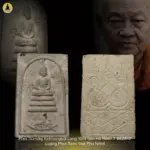
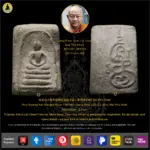
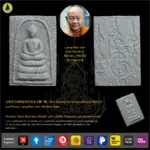
Front view — Somdej silhouette, frame lines, and powder surface reference.
Back view — Lang Yant layout and line clarity reference.
Reference image — included as provided in the listing for context.
Attributes reflect Thai Buddhist devotional tradition and are not measurable claims.