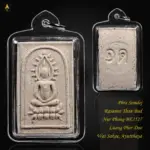
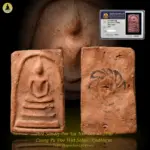
Phra Pidta Than Bua Nur Phong Namon Pim Lek BE2524 Luang Phor Doo Wat Sakae
| Type | Phra Pidta |
| Monk | Luang Phor Doo (Lp Du) |
| Temple | Wat Sakae |
| B.E. Year | 2524 |
| Material | Phong Namon Pim Lek |
| SKU | TAC-0077 |
Authentic Phra Pidta Luang Phor Doo (Lp Du), Wat Sakae BE 2524. Pim Lek Than Bua in Phong Namon. No certificate. SGD 188. Available from TAC Singapore.
What is the Phra Pidta Luang Phor Doo (Lp Du) from Wat Sakae, BE 2524?
The Phra Pidta Luang Phor Doo (Lp Du) from Wat Sakae, Ayutthaya, dated BE 2524, is a compact lotus-base Than Bua (ฐานบัว) amulet pressed in Phong Namon (ผงนะโม — sacred Na Mo powder) in the Pim Lek (พิมพ์เล็ก — small mould) format. Blessed within Luang Phor Doo’s Wat Sakae tradition, this piece is presented in a 925 silver waterproof casing.
Luang Phor Doo and the Wat Sakae Tradition
Luang Phor Doo (Lp Du), ordained as Phra Phrompunyo (พรหมปัญโญ), was born in BE 2447 (1904 CE), entered the monkhood in BE 2468 (1925 CE), and passed in BE 2533 (1990 CE). He spent decades at Wat Sakae in Ayutthaya, building a reputation grounded in meditation practice and quiet, consistent compassion — not public ceremony or grand claims.
Collectors who follow his lineage tend to describe it the same way: simple instructions, steady conduct, and a teaching style that showed more than it told. The pieces he blessed carry that same character — devotional, unpretentious, made for daily wear rather than display.
BE 2524 falls in the later active years of his period. Amulets from this era are valued less for year-chasing and more because the moulds and powders from Wat Sakae’s workshop reflect a mature, settled character. They aged alongside their owners. That quality is part of what collectors return to.
The Pim Lek Format and Phong Namon Nuea
The nuea (นวะ — here referring to the material/substance) is Phong Namon, a sacred powder tradition built around the chant syllables “Na–Mo” (นะโม). Within the broader Thai Buddhist amulet tradition, phong (sacred powder blend) bodies of this type are valued for their devotional character — soft, prayer-centred, and suited for pieces worn close to the body rather than kept on an altar shelf.
The Pim Lek Than Bua format is compact and clean-lined. The lotus base gives it a complete, classical temple profile even at small scale. For a Pidta, the pim (mould collectors authenticate against) focuses attention on specific details: the hand-closure gesture, the depth of the facial plane, the shoulder slope, the lotus-base contour, and the back imprint as visible through the casing.
Powder-based pieces age in readable ways — tone shifts, surface dryness, and fine texture are all comparison cues. On a cased piece like this one, edges and back details are evaluated through the 925 silver waterproof casing. Clarity through the casing matters.
What Collectors Look For in This Piece
Phra Pidta Luang Phor Doo (Lp Du) pieces from BE 2524 in Pim Lek format are appreciated for wearability and balanced proportions. Rarity here is judged by evidence, not marketing. Exact production numbers are not confirmed, so the collector approach is straightforward: compare against known Wat Sakae examples and verify the provenance trail.
Key authentication points for this piece:
- Mould sharpness consistent with known Wat Sakae Pim Lek examples — hand-closure lines, shoulder slope, lotus-base contour
- Powder tone that looks naturally aged — not freshly repowdered or artificially smoothed
- Back imprint clarity and compression marks readable through the casing
- Casing fit — properly seated with no distortion at the edges that would obscure authentication details
- “Powder presence” that reads as natural — not overly glossy, consistent in compression
No certificate accompanies this piece. For a collector comfortable with comparison-based verification against reference examples, that is workable. For those who require a certified slip, factor that into your decision before purchase.
Collectors associate Pidta imagery with a quiet kind of protection — the figure closes off the senses not to withdraw, but to maintain composure. In a Luang Phor Doo context, that reads as a piece for daily steadiness: speak carefully, act cleanly, keep the heart level. Traditionally, devotees carry it for klaew-klad (แคล้วคลาด — avoidance of harm through clarity and restraint), metta (เมตตา — calm social energy), and what collectors call jai-ning (ใจนิ่ง — a steady, focused mind).
This Phra Pidta Pim Lek in Nur Phong Namon, produced at Wat Sakae in BE2524, represents a considered choice for collectors who follow Luang Phor Doo's lineage — the Na Mo powder base gives the piece a quiet material integrity that suits the closed-eyes motif well, and the small mold (Pim Lek) format has historically been favored by those who wear rather than display. Within our holdings at TAC, BE2524 Wat Sakae issues in powder material are not commonly encountered in this degree of presentation, and the 925 silver casing adds a practical layer of preservation without obscuring the form.
Attributes reflect Thai Buddhist devotional tradition and are not measurable claims.