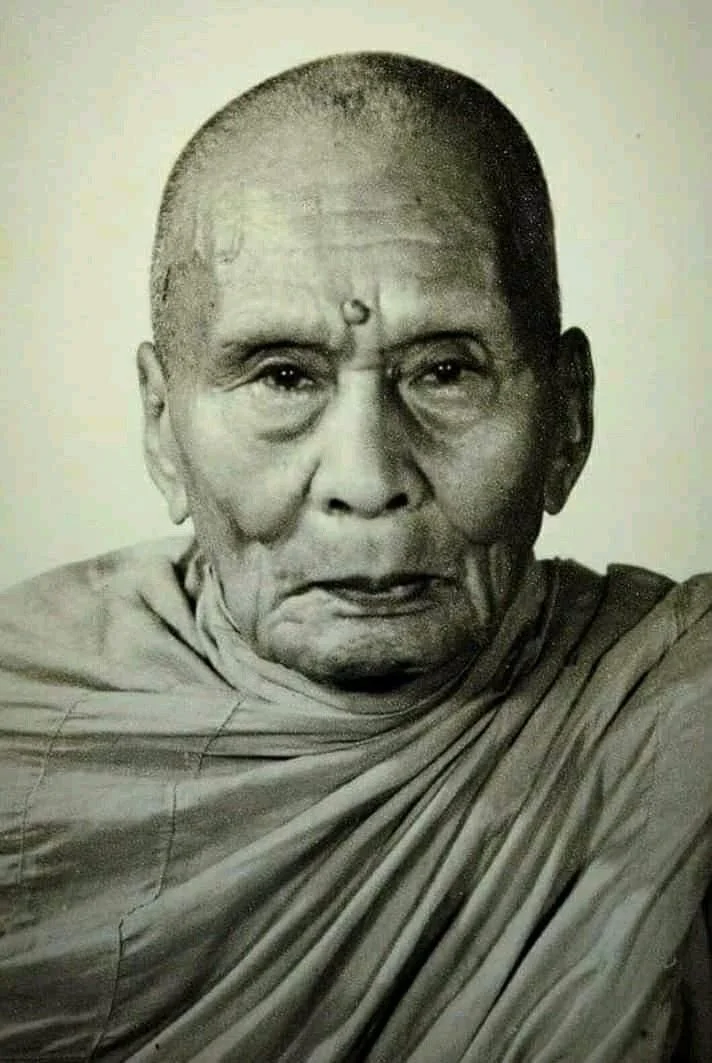
Archan Nam Chinwaro Wat Don Sala
Phra Ajarn Nam Chinwaro, Wat Don Sala, Phatthalung Province Legacy of Sacred Objects and Amulets Phra Ajarn Nam was well-known for creating highly revered amulets and sacred objects, many of which remain popular among devotees today. His connection to Wat Khao Or, an ancient temple renowned for its significance in art, archaeology, and mystical knowledge, ... Read more ↓
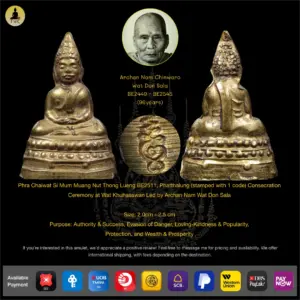
Amulets by Archan Nam Chinwaro Wat Don Sala 1 total · 1 available
Biography
Phra Ajarn Nam Chinwaro, Wat Don Sala, Phatthalung Province
Legacy of Sacred Objects and Amulets
Phra Ajarn Nam was well-known for creating highly revered amulets and sacred objects, many of which remain popular among devotees today.
His connection to Wat Khao Or, an ancient temple renowned for its significance in art, archaeology, and mystical knowledge, played a pivotal role in shaping his spiritual path. Located in Makok Nuea Subdistrict, Khuan Khanun District, Phatthalung Province, the temple has long been a center for occult sciences, mystical spells, and ancient wisdom, which have been passed down through generations of learned monks.
Early Life and Education
Born on Friday, August 9, 1891, in Ban Don Nud, Tambon Pantae, Phatthalung, Phra Ajarn Nam was the son of Mr. Kliang and Mrs. It Kaewchan. His mother passed away when he was still a child, shortly after giving birth to his youngest sibling.
His father, a lay master skilled in mystical sciences, introduced him to the basics of occult knowledge from an early age. Recognizing his potential, his father sent him to study with Phra Ajarn Thong Thao of Wat Khao Or, a renowned master of that era.
At 20 years old, he was ordained as a monk at Wat Don Sala, with:
- Phra Khru Intharamoli of Wat Prang Mu Nok as his preceptor, and
- Phra Khru Dit as his kammavajacariya (ordination teacher).
During his first six years of monkhood, he devoted himself to the study of Buddhist scriptures, incantations, and Vipassana meditation, under the guidance of Phra Khru Sithaya Phirat.
Later, he left the monastic life, got married, and had four children—one son and three daughters.
Return to Monkhood and Spiritual Contributions
In 1963, Phra Ajarn Nam suffered from a severe illness and was on the brink of death. It was said that a disciple, possessed by a spiritual medium from Wat Khao Or, conveyed a message that his illness would be cured if he returned to monkhood.
He made a solemn vow that if he recovered, he would reordain immediately. Remarkably, his health improved, and he fulfilled his promise by re-entering the monkhood on July 5, 1963, at Wat Don Sala.
Throughout his monastic life, he made significant contributions to the spiritual and social welfare of his community.
Role in Law Enforcement and Crime Suppression
Before reordaining, Phra Ajarn Nam played a key role in assisting law enforcement in the suppression of criminal activities.
In 1923, when Nakhon Si Thammarat Province dispatched Phraya Wichai Prachaban, the Commander of the Nakhon Si Thammarat Provincial Police, to combat bandits and criminals in Phatthalung, Phra Ajarn Nam served as a vital advisor and investigator, helping authorities track and arrest dangerous outlaws.
His knowledge and strategic insights made him a valuable asset to the police force during that time.
Creation of Sacred Objects and Amulets
Phra Ajarn Nam was involved in numerous amulet consecration ceremonies, both individually and in collaboration with other great masters. Some of the most notable amulets and sacred objects he created include:
- Maha Wan amulets (1940) – Created alongside Phra Khru Sitthiyaphirat (Iad), these amulets, available in white and black versions, were given to soldiers fighting in the Indochina War.
- Mahayan amulets – Another powerful series distributed to soldiers for protection.
- Phra Pidta Wat Don Sala (1970) – Made from lead alloy, this became one of the most respected Phra Pidta amulets of its time.
- Various sacred cloths and protective talismans, which were widely sought after by believers.
These sacred objects remain highly revered among collectors and devotees, believed to offer protection, prosperity, and spiritual strength.
Construction of Wat Don Sala’s Temple
One of Phra Ajarn Nam’s most significant contributions to Wat Don Sala was the construction of its main temple.
- After consulting with his disciples, he initiated a fundraising effort through Kathin and Pha Pa ceremonies.
- Construction began in 1970 and was completed in 1976, leaving a lasting legacy for future generations.
Final Years and Passing
Phra Ajarn Nam was known for his kindness, humility, and ever-present smile. He was deeply respected for his unwavering dedication to Buddhism and his continuous efforts to help those in need.
On October 25, 1976, he passed away peacefully at the age of 85.
In recognition of his immense spiritual contributions, His Majesty King Bhumibol Adulyadej the Great graciously granted royal permission for his cremation, which took place on September 8, 1977.
Legacy and Lasting Influence
Phra Ajarn Nam Chinwaro remains one of the most revered monks in Phatthalung. His teachings, amulets, and contributions continue to inspire and protect many to this day.
His name is forever etched in the history of Wat Don Sala and the Khao Or lineage, as a monk whose life was dedicated to spiritual wisdom, compassion, and service to society.
Explore more from Thai Amulets Collection: browse all amulets, monk biographies, or discover katha sacred chants.
For broader context on Thai Buddhist traditions, see Thai amulets on Wikipedia.
Other monks