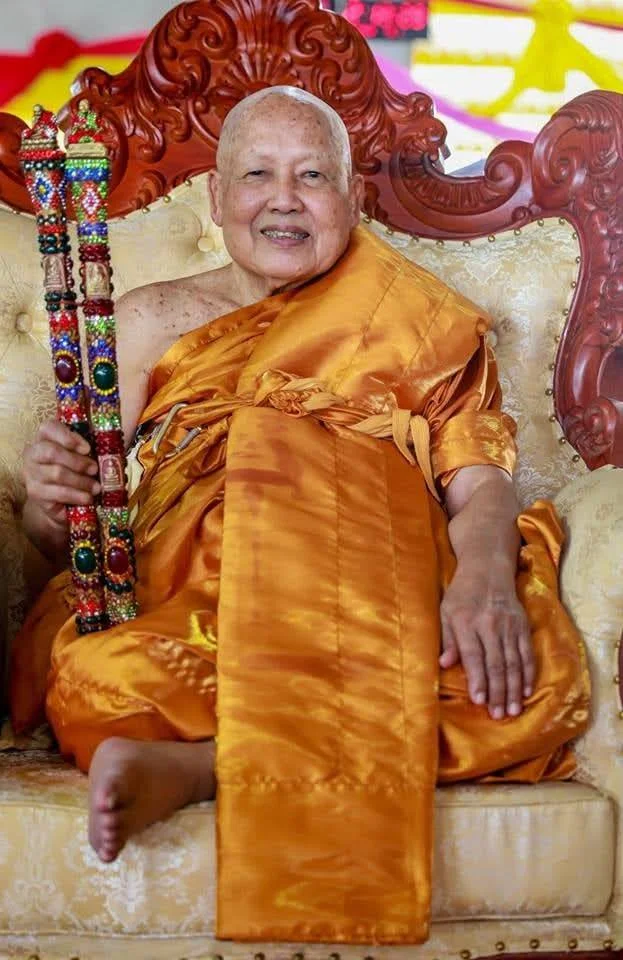
Luang Phor Chamnian Wat Tham Suea Vipassana
Luang Pho Chamnien Silasettho was born on 1 May 1936, a Friday, on the 11th day of the 6th lunar month, in the Year of the Rat. His birthplace was Ban Pak Nakhon, Village No. 4, Tambon Tha Rai, Amphoe Mueang, Nakhon Si Thammarat Province. His father was named Phet and his mother Ta, of ... Read more ↓
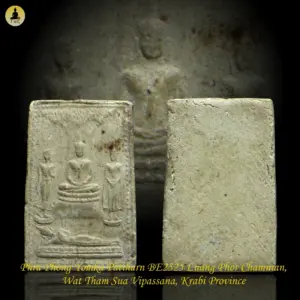
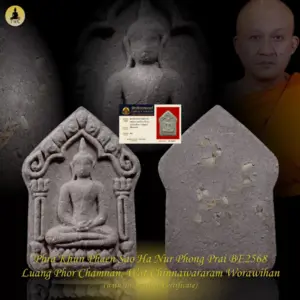
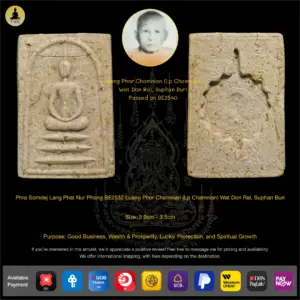
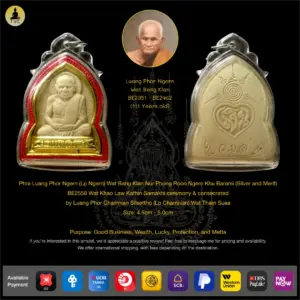
Amulets by Luang Phor Chamnian Wat Tham Suea Vipassana 4 total · 4 available
Biography
Luang Pho Chamnien Silasettho was born on 1 May 1936, a Friday, on the 11th day of the 6th lunar month, in the Year of the Rat. His birthplace was Ban Pak Nakhon, Village No. 4, Tambon Tha Rai, Amphoe Mueang, Nakhon Si Thammarat Province. His father was named Phet and his mother Ta, of the Cholsakorn family. He was one of seven children. Among his siblings were Phra Mani, who later resided in Malaysia; Mrs. Chamrat; Mrs. Champi, who had once ordained as a mae chi (nun) at Wat Tham Suea; Phra Chamnong, who has since passed away; Mrs. Chamnan; and the youngest, Chamroen, who died in childhood.
He grew up in a family whose life revolved around the waterways. Their home stood beside a canal leading to the sea, and most of the villagers were fishermen. His father believed in raising children to be strong and fearless. When Chamnien was just a year old, his father taught him to swim by tossing him into the water and letting him struggle toward the shore, where two coconuts were placed for him to cling to. It was a harsh method by modern standards, but it shaped him early. Within days, he became confident in the water — something essential for a child growing up by the sea.
Before marriage, his father had been a wandering monk. He carried with him deep knowledge of meditation, astrology, herbal medicine, and traditional incantations. From the time Chamnien was only three or four years old, his father trained him in meditation. One night, at just five years old, the young boy sat in meditation until dawn. His mind became completely calm. He later described a state of emptiness and quiet happiness, free from pain or discomfort, with no desire to move from his seat. That experience left a lasting impression. From then on, he developed a deep love for meditation and would sometimes slip away to practice quietly in the cemetery.
His father was also well known for his skill in fortune telling, often combining it with meditative insight. People sought him out for predictions and for healing — especially those who believed they were afflicted by black magic or mysterious illnesses. He treated them with herbal remedies and spiritual methods, and his reputation spread widely. After studying his son’s horoscope, his father predicted that Chamnien was destined to become a leader and an important pillar of Buddhism. No ordinary harm would easily touch him, he said. But he also warned that if the boy fell into bad company, his strength and fearlessness could lead him down a dark path. For that reason, he trained him strictly from a young age.
Part of that training was to cultivate courage. The boy was made to enter canals where crocodiles lived and to go out into the sea where tiger sharks swam. Fear had to be faced directly. At the same time, he was taught meditation using the sun as an object of concentration, along with astrology, herbal knowledge, and sacred chants — all that his father had learned during his wandering monk years.
Tragedy struck when his mother passed away. He was only six years and four months old. After her death, he was raised by a foster mother who patiently taught him to read and write. He learned quickly — within just fifteen days he could already read and write on his own.
By the age of seven, he wanted to ordain as a monk. The loss of his mother left him with a strong sense of impermanence, and he believed that monastic life would give him the chance to meditate deeply and find true peace. His father, however, did not allow it yet. He wanted his son to stay and help support the family first.
From the age of eight or nine, Chamnien began taking on adult responsibilities. He helped with fortune telling, treated illnesses with herbal medicine, and assisted people who believed they were under spiritual attack. At the same time, he worked in fishing and other labor to provide for the household.
At nine years old, he began studying the Tripitaka at Wat Phra Borommathat in Nakhon Si Thammarat. The journey from his home to the temple and back was over 20 kilometers. He sometimes walked the entire distance just to study.
By the time he was about ten, he had already built two fishing boats and employed several workers — a sign of both determination and leadership from a young age.
In 1956, his father passed away. After completing the funeral rites, Chamnien made his decision. He told his elder brother that he would give away whatever anyone wanted and distribute the rest of his possessions to the poor. He would take nothing with him — no money, no property. He declared that he would no longer live as a layman and would dedicate his life entirely to the monkhood.
On 2 July 1957, at the age of 21, he was ordained at Wat Nari Pradit in Tha Rai Subdistrict, Mueang District, Nakhon Si Thammarat. His preceptor was Phra Khru Ka-derm of Wat Buranaram, and his karma-vachariya was Phra Khru Pradit Suwannawat. He received the monastic name “Silasettho.”
After ordination, he wished to go on tudong — wandering pilgrimage. But the abbot instructed him to remain at the temple for at least five years to properly study the Vinaya and monastic discipline. He agreed and ended up staying for seven years. During that time, he carried out all temple duties diligently. At night, he often went to the cemetery to meditate in solitude.
He practiced under various meditation methods — mindfulness of breathing (rising and falling), contemplation of name and form, Dhammakaya meditation, and the repetition of “Buddho.” He also studied earth and wind kasina meditation under a mysterious wandering monk named Luang Pho Daeng, who would appear and disappear unexpectedly. Luang Pho Daeng was known for his mastery of kasina, and Luang Pho Chamnien learned these techniques thoroughly.
After completing seven years at Wat Nari Pradit, he quietly left with only his umbrella and alms bowl, heading to the meditation center at Wat Thao Khrot (now known as Wat Chai Na). There, he studied the Four Foundations of Mindfulness and the Noble Eightfold Path in great depth. He remained there for two years. His dedication was so evident that even when the head teacher was absent, he was entrusted with instructing monks, novices, and nuns.
During this period, he made a strict vow not to lie down while resting. What began as a three-year vow was eventually extended to nine years.
In 1966, he left Wat Chai Na and moved on to reside at Wat Sukronthawas in Phru Phri Subdistrict, continuing his path of practice and service.
Explore more from Thai Amulets Collection: browse all amulets, monk biographies, or discover katha sacred chants.
For broader context on Thai Buddhist traditions, see Thai amulets on Wikipedia.