Luang Pu Thong (Lp Thong) Wat Rachayota
Luang Pu Thong — First Abbot of Wat Rachayota, Bangkok Luang Pu Thong, the first abbot of Wat Rachayota in Bangkok, is one of the most consequential yet relatively lesser-known monks in Thai Buddhist history. Despite governing Wat Rachayota for nearly a century, he chose a life of quiet discipline — strictly observing the Buddha’s ... Read more ↓
Amulets by Luang Pu Thong (Lp Thong) Wat Rachayota 21 total · 18 available


 SGD 100 off
Vesak Day Sale
SGD 100 off
Vesak Day Sale
Biography
Luang Pu Thong — First Abbot of Wat Rachayota, Bangkok
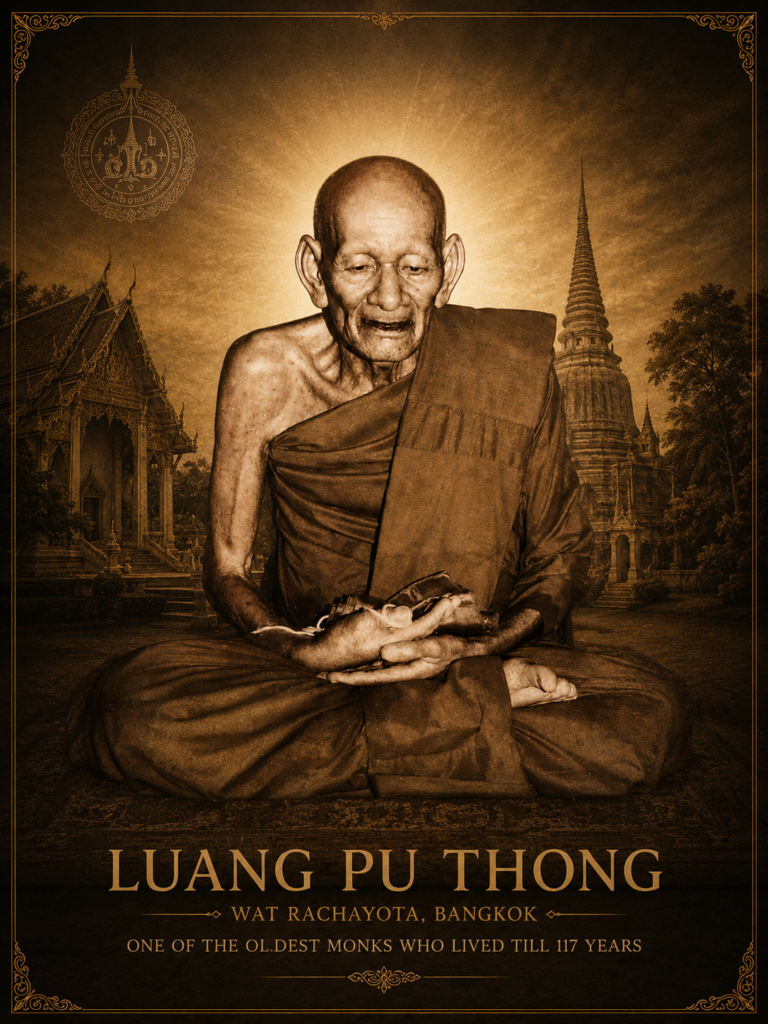
Luang Pu Thong, the first abbot of Wat Rachayota in Bangkok, is one of the most consequential yet relatively lesser-known monks in Thai Buddhist history. Despite governing Wat Rachayota for nearly a century, he chose a life of quiet discipline — strictly observing the Buddha’s teachings and practising deep meditation — rather than seeking public renown.
Lineage and Ordination
During the reign of King Rama IV, Luang Pu Thong was among the most respected monks of his era. He was a disciple of Phra Acharn Seng of Wat Manichonkarn in Lopburi — the same teacher who mentored the celebrated Somdej Phra Buddhachan Toh of Wat Rakang. Luang Pu Thong studied meditation and sacred sciences alongside Somdej Phra Buddhachan Toh, though the two masters’ works remained distinct.
Though many details of his early life remain unclear — including his exact birthplace and year of birth — it is known that he received ordination at Wat Ngernbangprom in Bangkok’s Talingchan District, with Jao Kun Vinaikijjarithera serving as his preceptor. He remained at that temple for several years, studying the sacred sciences under his mentor before being invited to serve as abbot of Wat Rachayota, a position he held for the remainder of his long life.
A Life of Exceptional Length
Luang Pu Thong lived to the remarkable age of 117, making him one of the longest-living monks — and among those with the longest monastic careers — in Thai Buddhist history.
Spiritual Lineage: Disciples of Luang Pu Thong
One of Luang Pu Thong’s lesser-known legacies is that he mentored and taught many of the most celebrated monks in Thai history. The breadth of this lineage reflects the depth of his learning and the trust placed in him as a teacher.
- Luang Pu Ler — Wat Saochango, Chachingsao
- Luang Phor Jong — Wat Natangnok, Ayutthaya
- Luang Phor Kong — Wat Bangkrapong
- Luang Phor Chat — Wat Bangkrabao
- Luang Phor Sod — Wat Paknam Paicharoen
- Luang Phor Klai — Wat Suan Kan, Nakonsrithamarak
- Luang Phor Thongyu — Wat Mainongpraong, Samut Sakhon
- Luang Phor Yee — Wat Sattaheep (disciple of Luang Pu Ler)
- Luang Phor Poch — Wat Rayotha (2nd abbot)
- Phraku Kitti Witmon — Wat Rayotha (3rd abbot and nephew of Luang Pu Thong)
- Luang Phor Parn — Wat Bangnomko, Ayutthaya
- Luang Pu Preak — Wat King Keow (direct disciple)
- Luang Pu Rod — Prachinburi
- Luang Pu Patch — Wat Samplum
Among these disciples, several went on to become masters of particular renown in their own right: Luang Phor Jong of Wat Natangnok is recognised for his wealth-attraction amulets; Luang Phor Sod of Wat Paknam Paicharoen is counted among the nine great monks of that temple; and Luang Phor Parn of Wat Bangnomko, Ayutthaya, is known as the foremost creator of wealth and sacred-creature Chao Sua amulets.
Amulets of Luang Pu Thong
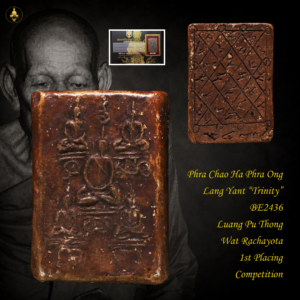
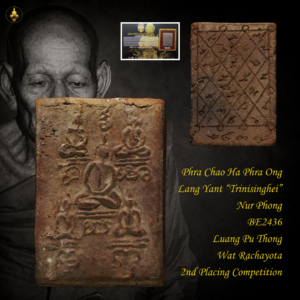
Phra Chao Ha Pra Ong
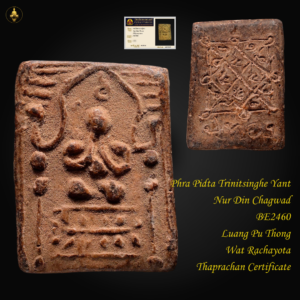
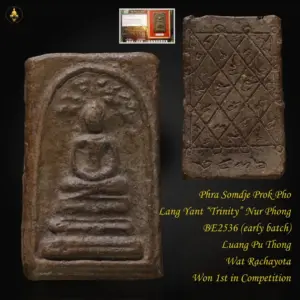
Luang Pu Thong’s most celebrated amulets take the form of five Buddha images arranged together, known as Phra Chao Ha Pra Ong. Although his amulets were frequently associated with those of Somdej Phra Buddhachan Toh — owing to his shared teacher and contemporaneous practice — they bear no resemblance to Somdej Toh’s designs in form or composition.
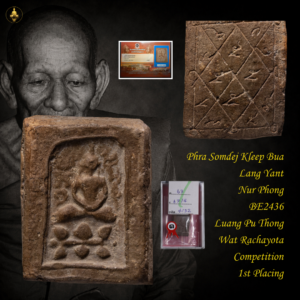
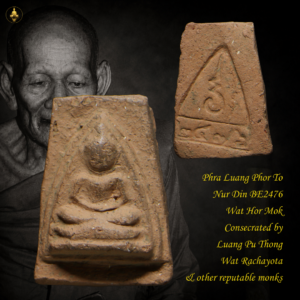
This stylistic connection is the reason why amulets discovered at Wat Bung Praya Suren came to be called Pra Somdej: they shared recognisable similarities with Luang Pu Thong’s work. His amulets are now held in considerable regard among collectors for their heritage, their distinctive craftsmanship, and the depth of the sacred lineage behind their creation.
Documented Accounts of Spiritual Power
Protection of the Temple Grounds
Residents living near Wat Rachayota were, by many historical accounts, not uniformly Buddhist, and theft from the temple’s fish pond was a recurring problem. According to traditional accounts, Luang Pu Thong performed a ritual that caused fish taken by the thieves to transform into human bones — an event said to have deterred further theft entirely. He was also recorded as summoning protective spirits to guard the temple grounds.
Healing During the Cholera Outbreak
During a cholera epidemic, many afflicted people sought Luang Pu Thong’s assistance. His consecrated water was widely said to have saved numerous lives, and his reputation as a healer spread considerably as a result.
Exorcism and Removal of Black Magic
Among the spiritual abilities most closely associated with Luang Pu Thong was his practice of exorcism. Those suffering from ghostly hauntings or the effects of black magic (known in Thai tradition as saiyasat) sought his counsel, and he was said to treat such cases using specialised sacred herbs, powders, and ritual procedures — with results that established his reputation far beyond the immediate vicinity of Wat Rachayota.
Explore more from Thai Amulets Collection: browse all amulets, monk biographies, or discover katha sacred chants.