Phra Chao Ha Pra Ong Lang Yant “Trinity” Nur Phong BE2436 (early batch) Luang Pu Thong Wat Rachayota
| Type | Phra Chao Ha Pra Ong |
| Monk | Luang Pu Thong (Lp Thong) Wat Rachayota |
| Temple | Wat Rachayota |
| B.E. Year | 2436 |
| Material | Nur Phong |
| Pim / Mold | Phra Chao Ha Pra Ong |
| Condition | Good |
| Certificate | Thaprachan #60100541 |
| SKU | TAC-0062 |
Authentic Phra Chao Ha Pra Ong by Luang Pu Thong (Lp Thong) Wat Rachayota, BE2436. Nur Phong, Lang Yant Trinity reverse. Certified Thaprachan.
What is the Phra Chao Ha Pra Ong by Luang Pu Thong (Lp Thong) Wat Rachayota?
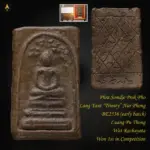
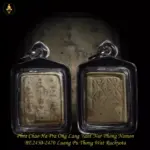
The Phra Chao Ha Pra Ong Luang Pu Thong (Lp Thong) Wat Rachayota is an early-batch sacred powder amulet from BE2436 (CE1893), pressed in nur phong (sacred powder blend) and attributed to the lineage of Luang Pu Thong (Lp Thong) Wat Rachayota. The front carries a five-Buddha composition; the reverse bears a Lang Yant Trinity inscription. It is certified by Thaprachan.
Why BE2436 and the Five-Buddha Format Matter to Collectors
Early-batch status is not just a marketing label in Thai amulet circles. A BE2436 attribution places this piece inside the living religious atmosphere of late 19th-century Bangkok — well before the modern certification era — which is precisely why the Thaprachan documentation carries extra weight here. Without it, a piece this old is difficult to place with confidence.
The five-Buddha format — Phra Chao Ha Pra Ong — is less common than single-figure compositions, and collectors treat it differently. Rather than anchoring devotion to one sacred figure, the grouped arrangement suggests layered presence and a broader protective field. Combined with the Lang Yant Trinity reverse, both sides of the amulet carry distinct typological identity. That makes classification cleaner and comparison against reference pieces more straightforward.
For collectors who track the Thai Buddhist amulet tradition seriously, this kind of convergence — early batch, specific reverse yant (sacred inscription), named five-Buddha pim (the mould collectors authenticate against), documented lineage — is what separates a study piece from a generic devotional tablet.
Luang Pu Thong, Wat Rachayota, and the Lineage Behind This Piece
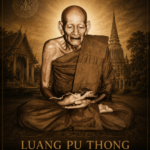
Wat Rachayota is the temple context that anchors this amulet’s lineage. The piece is associated with Luang Pu Thong (Lp Thong) Wat Rachayota, and it is that association — monk, temple, and early-batch period together — that gives this amulet weight beyond its material age. Lineage pieces are treated differently from anonymous old tablets because there is a sacred current to trace.
In collector practice, the lineage framing also changes how the object is studied. You are not simply reading the surface condition; you are placing the piece within a known sacred family and asking whether the pim, the nuea (material/substance), and the reverse yant structure all align with what that lineage produced. This one carries all three markers clearly.
Reading the Nur Phong Body and What Authenticates This Piece
Nur phong is historically significant in Thai amulet culture because the body is built from phong (sacred powder blend) rather than cast metal or clay. Old powder pieces preserve visible evidence of compression, age, and devotional handling in ways that cast pieces do not. On an amulet of this period, the surface tells a story — maturity of texture, fine pore structure, softened edges, and a stable body that holds its form without looking artificially rigid.
Collectors reading a nur phong piece from BE2436 focus on natural age character as much as design clarity. A surface that reads too clean or too sharp raises questions. What you want to see is honest dryness, settled compression, and a five-Buddha arrangement that remains legible despite age.
Authentication here rests on the Thaprachan certificate, which provides the documentation context that anchors the piece for serious buyers. Key points collectors cross-check:
- Pim consistency: Five-Buddha arrangement on the front aligns with the known Phra Chao Ha Pra Ong format.
- Reverse identity: Lang Yant Trinity inscription is a distinguishing typological marker for this variant.
- Surface condition: Natural age texture, fine pores, no artificial treatment or retouching.
- Thaprachan documentation: Certificate supports lineage attribution and period claim.
We at TAC are offering this early-batch Phra Chao Ha Pra Ong from BE2436, attributed to the Luang Pu Thong (Lp Thong) Wat Rachayota lineage — a nur phong piece that carries both the five-Buddha front composition and the distinctive Lang Yant Trinity reverse, supported by Thaprachan certification. For collectors focused on documented early-batch powder amulets with clear typological identity, this is a well-defined study piece with genuine period attribution.
Attributes reflect Thai Buddhist devotional tradition and are not measurable claims.