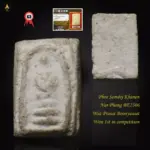
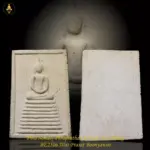
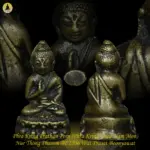
Phra Sankajai Nur Loha Phasom BE2506 Wat Prasat Boonyawat (Big Ceremony – 108 monks)
| Temple | Wat Prasat |
| B.E. Year | 2506 |
| Material | Loha Phasom |
| SKU | TAC-0745 |
Authentic Phra Sankajai Nur Loha Phasom BE2506 Wat Prasat Boonyawat (Big Ceremony - 108 monks), Lamphun. Sacred alloy, Thaprachan certified. SGD 199.
What is the Phra Sankajai Nur Loha Phasom BE2506 Wat Prasat Boonyawat (Big Ceremony – 108 monks)?
The Phra Sankajai Nur Loha Phasom BE2506 Wat Prasat Boonyawat (Big Ceremony – 108 monks) is a sacred alloy Sankajai image produced at Wat Prasat Boonyawat, Lamphun, in BE 2506. Cast from nuea Loha Phasom — a mixed alloy incorporating old temple bronze and ritual metal components — it was consecrated in a formal phutthaphisek presided over by 108 senior monks. Certified by Thaprachan.
A Lamphun edition from a ceremony that counted its monks by the hundred
Most mid-century metal amulets from Northern Thailand came out of small, single-master consecrations. This one did not. The BE2506 batch from Wat Prasat Boonyawat was empowered in a full phutthaphisek (consecration ceremony) with 108 reputable monks chanting in unison — a scale of ceremony that was deliberately chosen to maximise the accumulation of Metta Mahaniyom (loving-kindness and charm) and Maha Lap (great fortune) within the alloy.
Wat Prasat Boonyawat sits in Lamphun, a city whose Buddhist lineage predates Bangkok by centuries. The temple’s consecration style draws on Wicha Lanna Boran — the ancient Lanna ritual sciences — with emphasis on purity of chanting cycles, metal blessing, and the Kata Chinabanchorn, a protective prosperity chant central to their Sankajai empowerments. That distinct Northern ritual grammar sets this piece apart from contemporaneous Bangkok editions of the same Sankajai image type.
The Thai Buddhist amulet tradition places the Sankajai figure — the jovial, round-bellied disciple of the Buddha — among the most consistent images for prosperity and interpersonal harmony. The Lamphun casting tradition adds its own layer: a characteristic surface density and facial rounding that collectors familiar with 2500s-era Northern metalwork recognise immediately.
The nuea and what the pim tells a collector
Nuea (material/substance) here is Loha Phasom — a sacred mixed alloy combining old temple bronze, votive metal fragments, and Lanna-consecrated components. This was not a commercial casting. The alloy components were accumulated specifically for the ceremony, which is why authentic examples show a particular consolidation density and surface texture consistent with mid-century Lamphun metallurgy rather than the smoother pours common to Bangkok foundries of the same era.
The pim (mould collectors authenticate against) presents the classic Sankajai form: round-bellied silhouette, relaxed posture, early Lamphun casting surface. Ageing on genuine pieces shows consistent oxidation across the alloy layers — not the uneven discolouration that appears on later copies. The reverse carries strong alloy consolidation marks that align with known BE2506 Lanna casting practice.
- Consistent alloy ageing across the full surface, front and back
- Facial rounding and round-bellied silhouette matching early Lamphun mould characteristics
- Casting density and surface texture consistent with 2500s-era Northern Thai metalwork
- Thaprachan certificate confirming authenticity and period correctness
Certification for this piece is by Thaprachan, which places it among competition-accepted specimens in the collector community. That certification matters practically: it confirms period correctness and supports resale confidence across markets in Singapore, Malaysia, Taiwan, and Hong Kong where documented provenance is increasingly expected.
We at TAC sourced this Phra Sankajai Nur Loha Phasom BE2506 Wat Prasat Boonyawat (Big Ceremony - 108 monks) specifically for collectors who want a documented Northern Thai metal piece from a large-scale consecration — 108 monks is not a routine ceremony, and that provenance is reflected in the Thaprachan certificate accompanying it. At SGD 199, it sits at an accessible entry point for Lamphun Loha Phasom pieces of this period and ceremony scale.
Attributes reflect Thai Buddhist devotional tradition and are not measurable claims.