Phra Bucha Jatukam Ramatep Nur Thong Archan Lek BE2550 Wat Mahathat
| Temple | Wat Mahathat |
| B.E. Year | 2550 |
| Material | Thong |
| SKU | TAC-0367 |
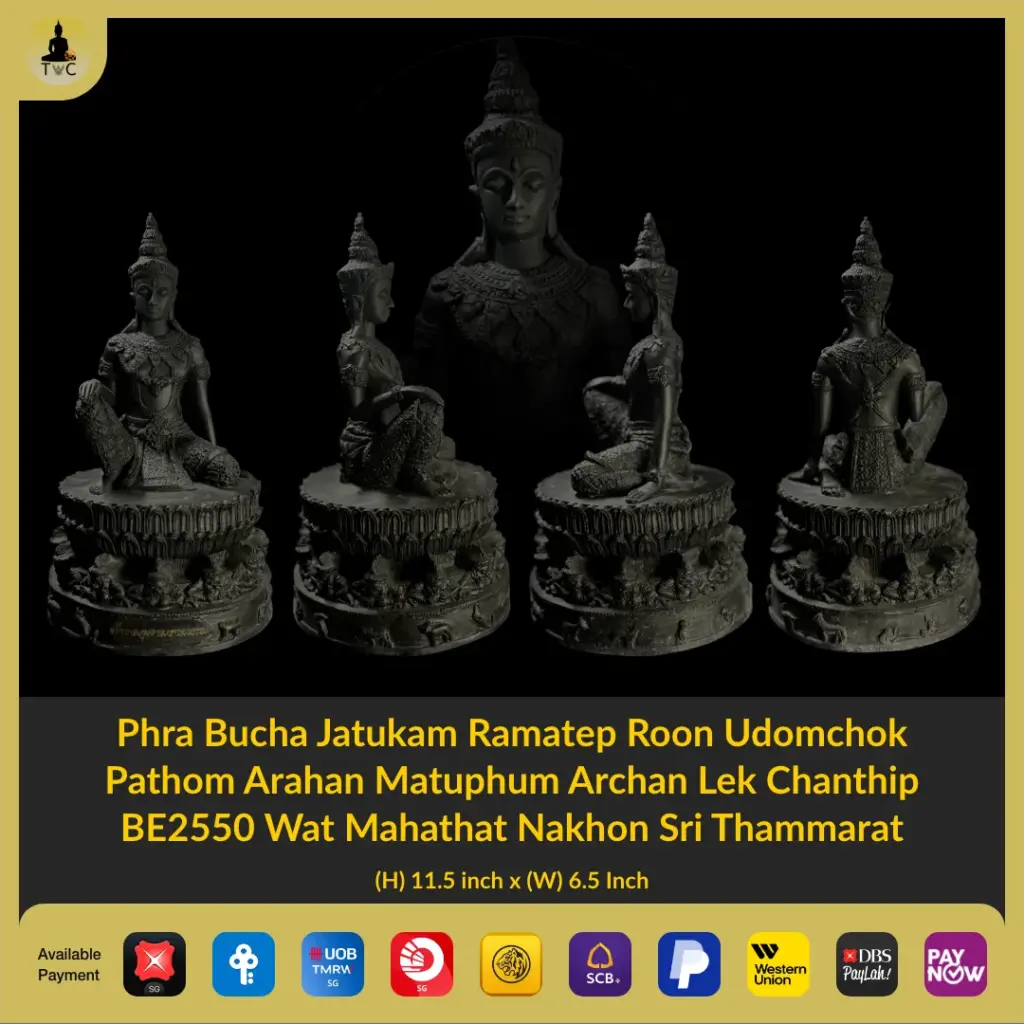
Authentic Phra Bucha Jatukam Ramatep Nur Thong Archan Lek Chanthip BE2550 Wat Mahathat. Cast metal alloy, 11.5×6.5 in. Great Stupa precinct consecration.
What is the Phra Bucha Jatukam Ramatep Nur Thong Archan Lek Chanthip BE2550 Wat Mahathat?
The Phra Bucha Jatukam Ramatep Nur Thong Archan Lek Chanthip BE2550 Wat Mahathat is a cast metal alloy altar image produced at Wat Mahathat (Wat Phra Mahathat Woramahawihan), Nakhon Si Thammarat, in BE2550 (CE2007). Issued under the Roon Udomchok Pathom Arahan Matuphum batch name and consecrated in the Great Stupa precinct under Phutthaphisek rites guided by Archan Lek Chanthip, it measures 11.5 × 6.5 inches and is designed for altar placement rather than personal wear.
The Jatukam Ramatep tradition and why Wat Mahathat is the only site that matters for it
Jatukam Ramatep (จตุคามรามเทพ) is a guardian deity tradition specific to Nakhon Si Thammarat. The figure’s origins tie to two ancient protective spirits of the city pillar, venerated as a combined deity of protection and prosperity from the 1980s onward — initially through the efforts of the local police community and senior spiritual practitioners. Every substantive amulet and Bucha in this lineage traces back to one site: the Great Stupa at Wat Mahathat, the oldest relic monument in southern Thailand and the place believed to enshrine relics of the historical Buddha. That connection is foundational, not incidental.
The revival period for Jatukam Ramatep peaked around BE2549–2550 (CE2006–2007), driving demand across Thailand, Singapore, Malaysia, Taiwan, and Hong Kong. By BE2550, the later phase of that revival, serious collectors had begun filtering out generic commemorative issues and focusing on editions with clear temple provenance and named ritual guidance. That shift is directly relevant to understanding this piece. For anyone interested in the broader Thai Buddhist amulet tradition, the Jatukam Ramatep revival remains one of the most documented mass-phenomenon events in the modern market.
Archan Lek Chanthip’s role and what the batch name tells a collector
Archan Lek Chanthip (อาจารย์เล็ก จันทิพย์) is a practitioner within the Nakhon Si Thammarat devotional network who took an active ritual guidance role in Jatukam Ramatep consecrations during the revival period. For a Phra Bucha (พระบูชา — stationary altar worship image, as distinct from a wearable pendant amulet), that matters. The phutthaphisek (consecration ceremony) for a large-format altar image requires sustained meditative intention, correct invocation sequence, and ritual oversight. Having a named practitioner on record gives the collector a traceable anchor for the consecration, something many anonymously produced Jatukam pieces from the same period simply do not have.
The run (batch/edition) name carries its own weight here. Udomchok (อุดมโชค) means abundant auspicious fortune. Pathom Arahan (ปฐมอรหันต์) references the purity of the earliest enlightened disciples. Matuphum (มาตุภูมิ) frames the piece as rooted in a sacred homeland — meaning the specific spiritual geography of Nakhon Si Thammarat and the Great Stupa environment. Taken together, the batch name sets a deliberate doctrinal intention: prosperity pursued through clean conduct and spiritual rootedness, not fortune as an end in itself.
Material, scale, and what to look at when assessing this piece
The nuea (material/substance) here is cast metal alloy with an antique-bronze toned finish. For a Bucha intended to anchor years of daily altar practice, cast metal is the right choice — it carries genuine weight and structural stability, and it ages with a natural patina variation in areas of regular veneration contact that experienced collectors read as evidence of genuine use. Hollow-cast reproductions are identifiable by handling; the settled density of a solid casting is difficult to fake at this scale.
At 11.5 × 6.5 inches, the piece is sized for serious altar placement — large enough to serve as a primary focal point on a domestic or commercial shrine without overwhelming a standard Thai household altar space. The Jatukam figure sits in a formal seated posture on a lotus base, wearing royal ceremonial crown and shoulder regalia, consistent with its identity as a guardian of civic and household order. When assessing condition, collectors focus on:
- Proportional balance between the upper figure and the lotus base — well-executed editions integrate cleanly at the join
- Relief crispness in the crown and shoulder ornament detail — the resolution of fine elements indicates casting quality
- Surface finish consistency across the antique-bronze tone — even settlement into the sculpted relief is a positive indicator
- Base finishing quality — the rear panel and base edge give a clear reference for overall casting standards
Large-format Bucha pieces in intact condition are less commonly encountered than small wearable pendants from the same period. Altar placement history means condition varies considerably across surviving examples.
This Phra Bucha Jatukam Ramatep Nur Thong Archan Lek Chanthip BE2550 is one of the more purposefully documented Bucha editions from the later revival phase — the Roon Udomchok Pathom Arahan Matuphum batch name, Archan Lek Chanthip's named ritual guidance, and the Great Stupa consecration environment at Wat Mahathat give it three clear provenance anchors that many BE2550 Jatukam pieces simply lack. At SGD 368 for a large-format solid-cast altar image with this level of batch documentation, we consider it well-positioned for a collector building a serious Jatukam Ramatep reference set.
Attributes reflect Thai Buddhist devotional tradition and are not measurable claims.