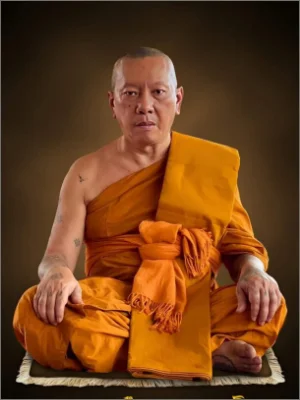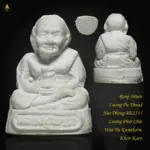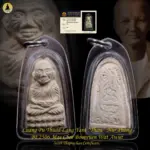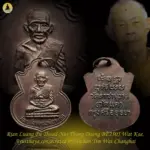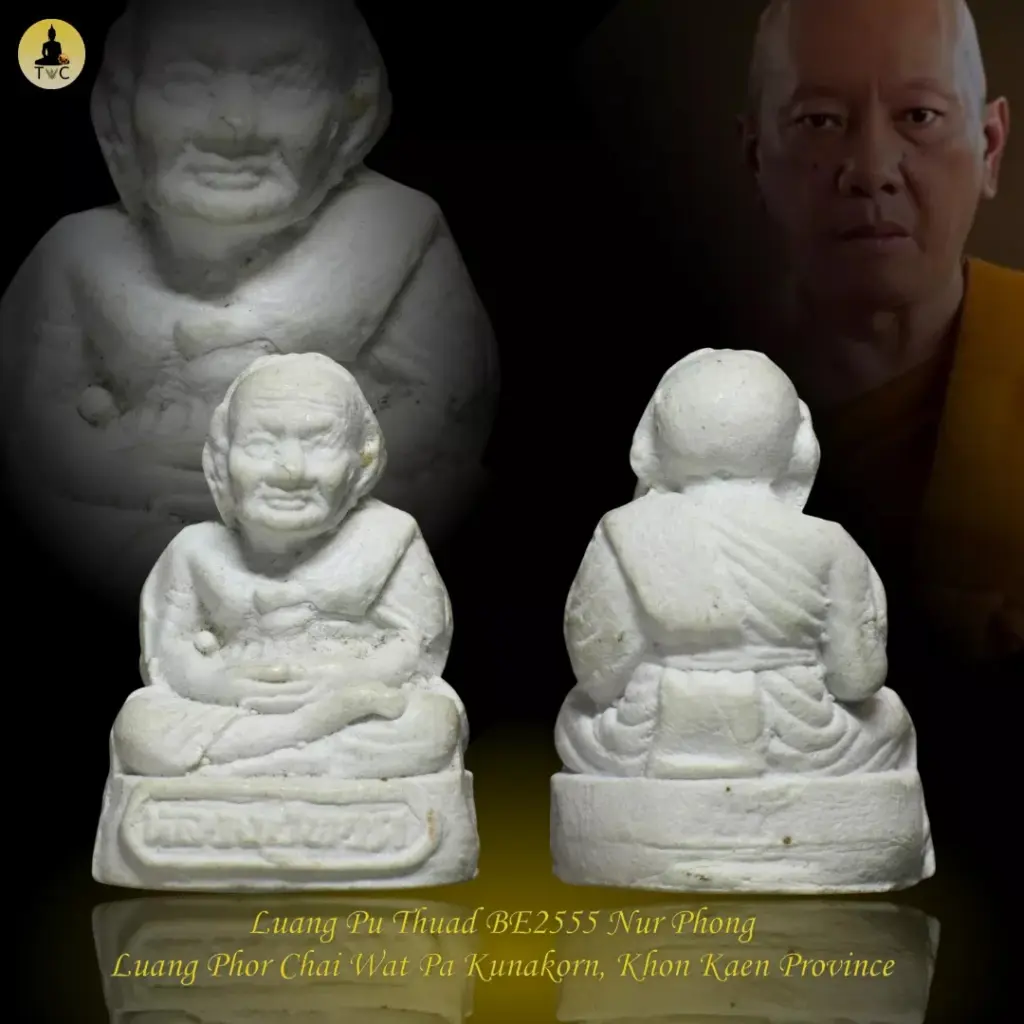
Phra Luang Pu Thuad BE2555 Nur Phong Luang Phor Chai Wat Pa Kunakorn, Khon Kaen Province
| Monk | Luang Phor Chai (Lp Chai), Wat Pa Kunakorn, Khon Kaen |
| Temple | Wat Pa Kunakorn |
| B.E. Year | 2555 |
| Material | Phong |
| SKU | TAC-0156 |
Authentic Phra Luang Pu Thuad BE2555 Nur Phong Luang Phor Chai Wat Pa Kunakorn, Khon Kaen Province by Luang Phor Chai (Lp Chai), Wat Pa Kunakorn, Khon Kaen.
What is the Phra Luang Pu Thuad BE2555 Nur Phong Luang Phor Chai Wat Pa Kunakorn, Khon Kaen Province by Luang Phor Chai (Lp Chai), Wat Pa Kunakorn, Khon Kaen?
The Phra Luang Pu Thuad BE2555 Nur Phong Luang Phor Chai Wat Pa Kunakorn, Khon Kaen Province by Luang Phor Chai (Lp Chai), Wat Pa Kunakorn, Khon Kaen is a phong (sacred powder) devotional amulet issued in BE 2555 from Wat Pa Kunakorn, a forest temple in Khon Kaen Province, under the issuance of Luang Phor Chai. It presents Luang Pu Thuad in a seated portrait format pressed from phong, the powder-based sacred material blend, with a plain reverse consistent with a forest-temple release.
Wat Pa Kunakorn and what the forest-temple context tells a collector
Wat Pa Kunakorn sits in Khon Kaen Province in Thailand’s Northeast — a region with its own strong tradition of forest-monastery practice. Wát pàa (วัดป่า), or forest temples, tend to operate with less commercial infrastructure than urban counterparts. That restraint usually shows in the amulets they produce: straightforward materials, disciplined mold work, and an absence of decorative flourish for its own sake. This piece fits that pattern.
For collectors who follow the broader Thai Buddhist amulet tradition, forest-temple issues from the Northeast occupy a specific niche. The credibility of the piece rests primarily on the coherence of its attribution — Wat Pa Kunakorn, Khon Kaen, BE 2555, issued under Luang Phor Chai — rather than on rarity claims or limited-edition documentation, neither of which the listing specifies.
The phong material and what you are actually looking at in the mold
Phong, or nuea phong (ผงพุทธคุณ) — the powder-based sacred material used here — is one of the most common and culturally significant substance families in Thai amulet making. The term covers a broad range of prepared powders that may incorporate devotionally significant ingredients, temple-mixed binders, and ritual-linked components. The listing does not specify the exact formula for this batch, so that detail is recorded as not stated rather than assumed.
What phong does tell you as a collector is straightforward: assess the surface for mixing consistency, press clarity, and stability rather than finish or decoration. On this piece, the portrait presents Luang Pu Thuad with a clear facial relief and readable robe lines — the two areas where mold sharpness matters most for identity recognition. The reverse is plain. That is not a shortcoming; many forest-temple releases deliberately avoid layered yant (sacred inscription) on the reverse, keeping the focus on the portrait itself.
- Surface texture: powder-based body — assess for consistency of mix and stability, not gloss
- Portrait relief: facial structure and robe lines are the primary authentication reference points for the pim
- Reverse: plain — no yant specified in the listing, consistent with devotional simplicity (เรียบง่าย)
- Condition priority: edges and facial relief are the first areas to inspect for wear or handling history
The listing does not specify a formal pim name, batch name, or official consecration program title. The correct collector discipline here is to document those details as not stated rather than fill the gap with inference.
Reading the collector significance plainly
Luang Pu Thuad (หลวงปู่ทวด) as a devotional figure has been expressed across generations and temples throughout Thailand. A modern issue like this one does not compete with antique-era pieces on age or rarity. Its value to a collector sits elsewhere: a documented temple context, a specific issuing year, a named presiding monk, and material honesty in the phong composition. Those four factors together are what give the piece a verifiable identity.
Luang Phor Chai (Lp Chai), Wat Pa Kunakorn, Khon Kaen is the attributed issuing monk. The listing records this as the issuance attribution. Independent verification of deeper provenance is, as with any amulet, the collector’s own due diligence. The listing does not specify certification for this piece.
This fits well in a cabinet focused on Luang Pu Thuad devotion, forest-temple releases from the Northeast, or later-era Thai sacred material culture. It is not presented as scarce. It is presented as what it is: a straightforward devotional piece with a clean, disciplined mold and an honest attribution.
We at TAC are listing this Phra Luang Pu Thuad BE2555 Nur Phong from Wat Pa Kunakorn, Khon Kaen, attributed to Luang Phor Chai's issuance — a clean, straightforward forest-temple piece that documents a specific place, year, and monk without embellishment. For collectors building a focused Luang Pu Thuad or northeastern Thailand cabinet, this fits well at an accessible price point — honest attribution, legible portrait, and the restrained character you expect from a วัดป่า release.
Attributes reflect Thai Buddhist devotional tradition and are not measurable claims.